Category: Sermons

  • Be like Jesus

    Be like Jesus

    [ video ]

    Last Sunday after Epiphany
    St Paul’s Church, Ipswich
    2 March 2025

    This morning we are in a liminal space, as we prepare to move from the season of Epiphany into the season of Lent.

    For 8 weeks we have been reflecting on some of the many ways that we experience epiphanies; moments of insight and recognition. 

    Moments when we glimpse something new about the grace of God among us.

    The greatest epiphany of all, of course, is Jesus himself. 

    I have always appreciated the way that Bishop John A.T. Robinson described Jesus as “the human face of God” when crafting a title for his 1973 book. As a young seminarian his ideas and especially this poignant phrase impressed me deeply. It still does.

    Today we are encouraged to focus on Jesus.

    The Prayer of the Day catches the multiple levels of attentiveness, as it imagines each and every one of us being changed in the likeness of Jesus “from glory to glory:”

    • perceive his glory
    • listen to him
    • walk in his way

    That is one big idea and it is worth pausing to let it sink in.

    The point of faith is to be become more and more like Jesus.  That is a lifelong process of persistent transformation as we pass from one stage of glory to another stage of glory.

    Let’s briefly unpack each of those steps.

    Perceive his glory

    We recognise—in our process of epiphany moments—that Jesus is more than just another human being.

    He certainly was human, and that is the basis of our connection with him. Yet at the very heart of our faith is the amazing insight that when we look at Jesus we are—in some sense—looking at God.

    Of course we struggle to put that into words, but it is the first and foundational epiphany.

    “This is my Son, my Chosen; listen to him!”

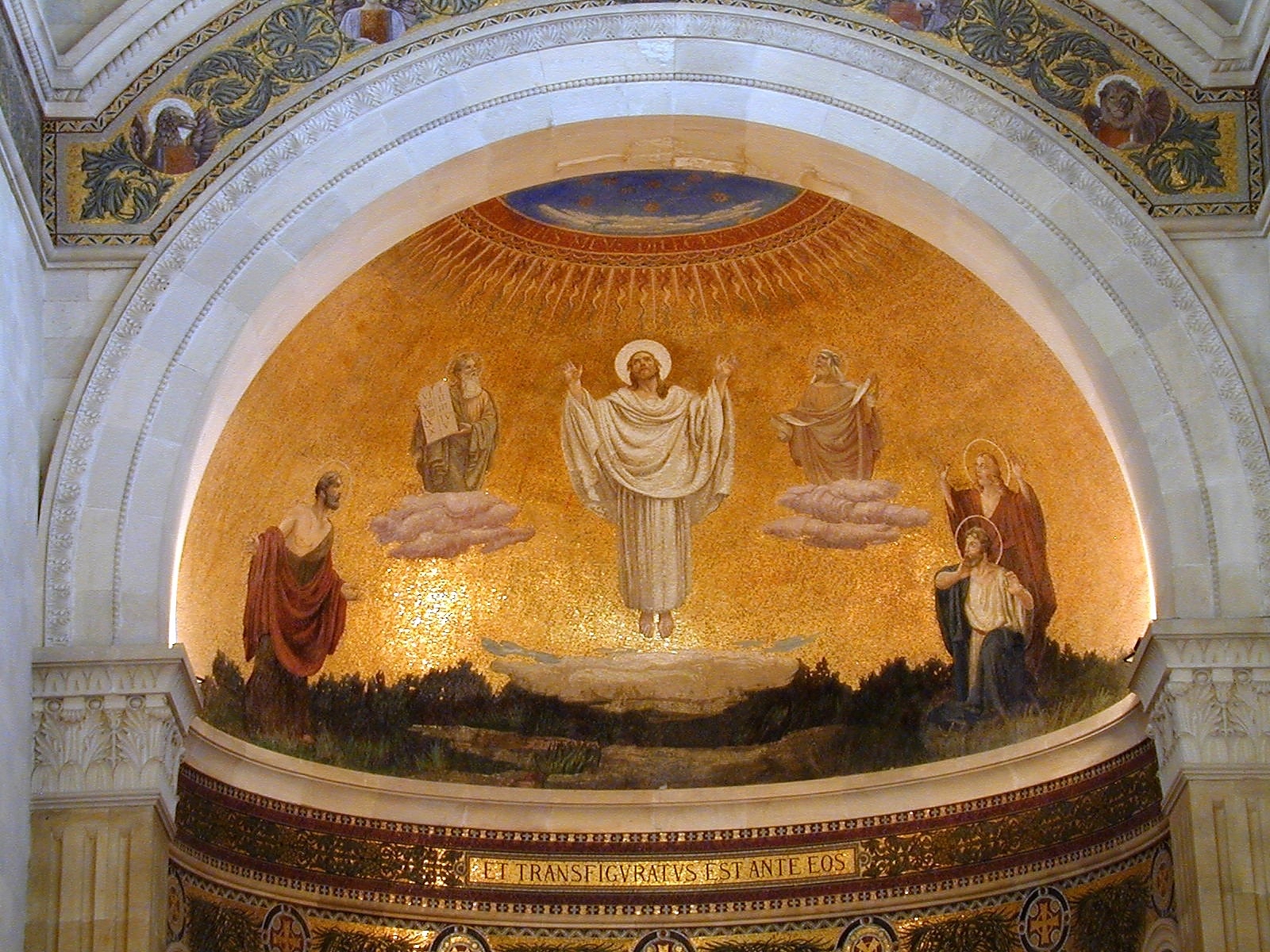
    The visitors from the East, the voice from heaven at his own Baptism, the water that becomes wine, the familiar stranger in the Nazareth synagogue, the fishermen who haul in the catch of a lifetime, the confronting wisdom of the Galilean sage … these all draw us to the mountain top revelation (epiphany) of the Transfiguration.

    In this person we catch a glimpse of what God would look like as a human being, as one of us.

    And we catch a glimpse of what God sees when God looks at us!

    Listen to him

    Why do we stand when the Gospel is read?

    It is because listening to Jesus is more important than hearing anything else from the Bible.

    Some Christians express that same insights when they choose Bible with the words of Jesus in red.

    Simply put, the most important thing we can ever do as people of faith is to listen to Jesus.

    Not just the words of Jesus in the Bible, but the guidance of Christ in our own lives.

    Prayer, mindfulness and reflection are essential as we seek to listen to him. Along with conversation and discernment as we seek to understand the mind of Christ.

    This is a shared task, and not simply a sport for heroic individuals.

    Of course, we are always testing what we discern Jesus to be saying to us against the witness of the Bible and the wisdom of the church. But being in a conversation with Jesus each and every day is of the very essence of our faith.

    Walk in his way

    The final and necessary step in this process of lifelong transformation is to walk the way of Jesus.

    Jesus chose to live—and he called others to live—as if the reign of God was already a reality here among us.

    See Jesus. Listen to him. Be like him.

    In the end it really is that simple.

    Recognise God in the person of Jesus.

    Listen for the wisdom of Jesus in our own lives.

    Act like Jesus. Be like him.

    Without that third and final step, the other stages are pointless.

    It is no surprise then, that one of the very early names of the Jesus people, was simply The Way.

    We are people of the Way, the Way of Jesus.

    What matters most is not what we think about Jesus or how well we know the Bible.

    What matters most is that we act like Jesus.

    It is that simple. And that hard.
  • Looking for happiness

    Looking for happiness

    St Paul’s Church, Ipswich
    Epiphany 6C
    16 February 2025

    [ video ]

    Two of our three readings today revolve around the question of happiness. Expressed in other terms, these readings deal with the recipe for a good life.

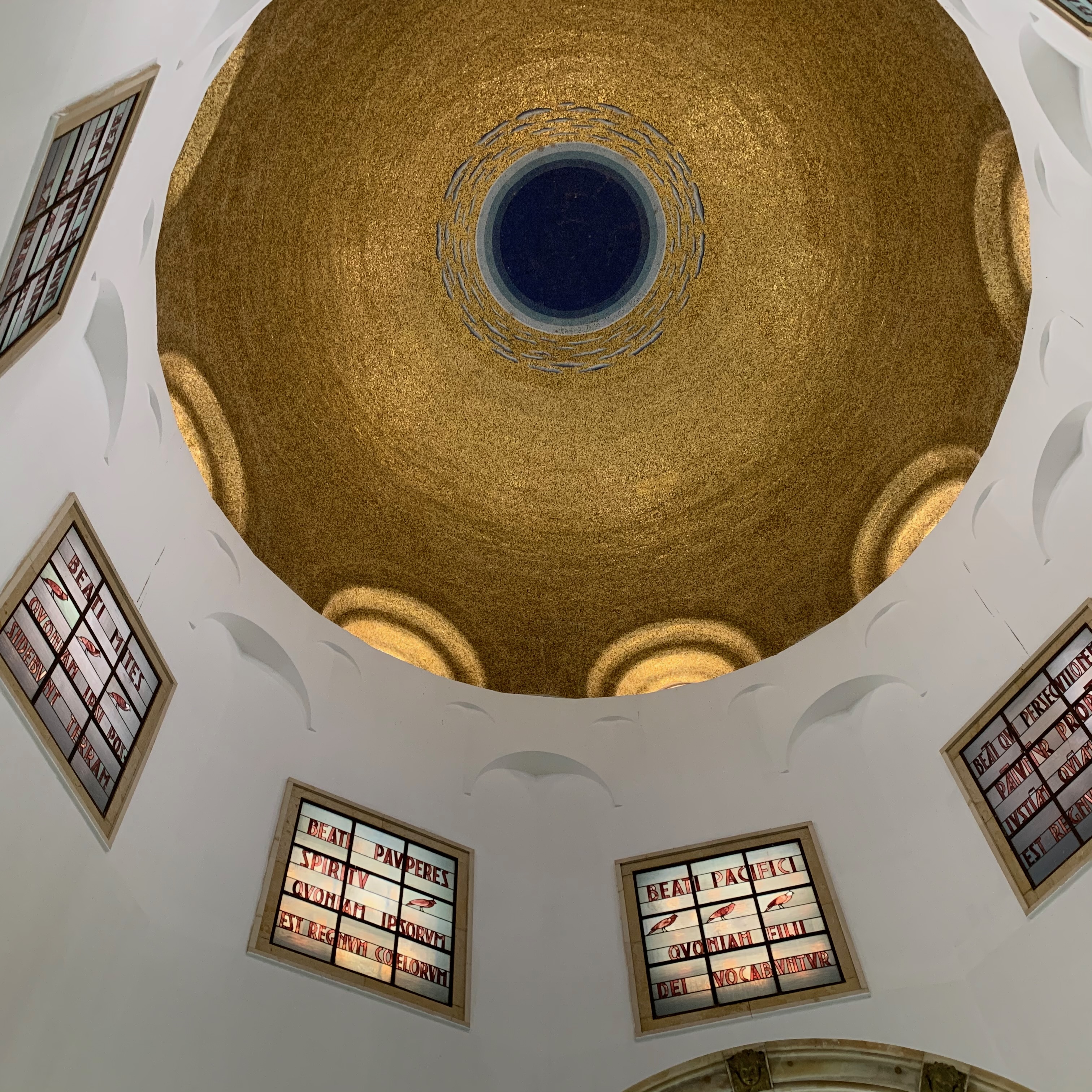
    This idea is conveyed through the concept of beatitudes, which are essentially a form of wisdom teaching where the master urges the disciples to embrace the good life—and find true happiness—by acting in certain ways.

    Blessed (happy) is the person who …

    That idea is introduced in the Old Testament reading from Jeremiah 17, with a carefully crafted set of parallel exhortations:

    Cursed are those … blessed are those

    That doubling of the form, with both blessings and curses, is especially significant as that is what we find in Luke’s version of the Beatitudes as well.

    I suspect that many sermons will be delivered on the Beatitudes on Luke today, and I am pretty confident that some of them will focus on the ways Luke’s version of the Beatitudes resonate (or not) with the extreme “Christian Nationalist” agenda being implemented at considerable speed by the new administration in the USA.

    But I want us engage with these texts from a different angle.

    While the natural focus with today’s Gospel is the double set of in-your-face Beatitudes, there is a back story mentioned in the opening paragraph and an even deeper back story in the previous paragraph that has not been read today.

    You may recall that last Sunday we had the story of miraculous catch of fish in Luke 5:1–11.

    In the meantime we have skipped over the rest of chapter 5 and much of chapter 6.

    In those missing episodes Jesus has been quite busy:

    • He heals a blind man (5:12–16)
    • He heals a paralysed man whose friends make a hole in the roof of the house (5:17–26)
    • He calls Levi the hated tax collector to join his band of followers, and then has a meal at Levi’s house with a wider circle of Levi’s colleagues (5:27–32)
    • Jesus gets into an argument with the Pharisees about his poor choice of company (5:33–38)
    • He then upsets them further by picking grain to eat while walking through a field on Shabbat (6:1–5)
    • He adds further salt to their wounds by healing a man with a withered hand on Shabbat (6:6–11)

    All of that has been happening prior to the paragraph that directly precedes our Gospel passage today. In that final missing bit of the story, Jesus spends a night in prayer up a mountain as he decides which people to call as his followers, and which ones to designate as apostles (6:12–16).

    Only after all that do we get the opening scene of today’s Gospel:

    He came down with them and stood on a level place, with a great crowd of his disciples and a great multitude of people from all Judea, Jerusalem, and the coast of Tyre and Sidon. They had come to hear him and to be healed of their diseases; and those who were troubled with unclean spirits were cured. And all in the crowd were trying to touch him, for power came out from him and healed all of them. (6:17–19)

    When we were exploring today’s readings in the online Thursday evening discussion group, I was struck by Luke’s portrayal of the impact Jesus was having.

    As Luke tells the story, people were coming from the far south (all Judea, Jerusalem) as well as from the southern coast of Lebanon (coast of Tyre and Sidon). They not only came from far away, but they came in huge numbers.

    And they were a demanding lot. Everyone was trying to touch Jesus. As they did so, spiritual power came out from him and everyone received whatever blessings they were seeking that day.

    Luke even tells us why they came, and what they were looking for:

    They had come to hear him and to be healed of their diseases; and those who were troubled with unclean spirits were cured. (6:18)

    • Some came for spiritual wisdom (to hear him) …
    • Others came with some health problem (to be healed of their diseases) …
    • And some came with powerful personal problems (troubled with unclean spirits) …

    So the question that the text poses for us this morning may simply be: why are you here?

    What blessing are you seeking in order to enjoy a happy life?

    Note that Jesus is not offering any kind of prosperity gospel here. 

    The harsh terms of the beatitudes in Luke make that very clear.

    Those seeking wisdom will find it. Those seeking healing will be cured. Those needing to deal with their own demons with find the power to do that.

    • But they will still be poor.
    • They will still be hungry.
    • They will still be sad.
    • And they will still have people talking badly about them!

    What does the Gospel of Jesus look like?

    It looks like wisdom for everyday life, healing of our diseases and overcoming our demons.

    True happiness—the good life—is not measured by wealth, food, laughter or popularity. 

    Rather, true happiness is ours when we find in Jesus the wisdom we need for everyday life, strength to lives with our diseases, and the strength to overcome our personal demons.

    May you find those blessings today as you join us here in church or connect with us online.

  • The home town crowd

    The home town crowd

    St Paul’s Church, Ipswich
    Epiphany 4C
    2 February 2025

    [ video ]

    Another week and another awesome set of biblical texts calling us to discern what the Spirit is saying to the church.

    As mentioned in the bulletin, for me this is the time of year when I mark the anniversaries of my ordinations: first as a Deacon on 5 February 1978 and then as a Priest on 11 February 1979.

    Let me save you the trouble of doing the maths. That is 47 and 46 years respectively.

    The Spirit speaks to us—or maybe whispers to us—when we bring our own lived experience into conversation with the great story of faith found in the Bible.

    So I engage with the story of Jeremiah in Jerusalem and the story of Jesus in Nazareth through the lens of my own experience as some called into prophetic and priestly ministry, and as someone who is familiar in the streets of both those ancient towns.

    The call of Jeremiah is a powerful scene.

    Let me paraphrase God’s words as follows:

    Since before you were conceived I had a plan for you. Do not try to wriggle out of this calling. Do not claim a lack of experience. Do not be afraid of those to whom I send you to speak. You will sometimes pluck up and destroy, other times you will build and plant, but at all times you will speak my words.

    Jeremiah’s vocation took him into a long journey of controversy, imprisonment, hardship and eventually exile. That is way too complex a story for one sermon, but perhaps we can tease it out over several weeks in the Tuesday Bible study group?

    Meanwhile, in the Gospel today we have the second part of Luke’s story about Jesus visiting the synagogue in his hometown of Nazareth. What started so well had turned nasty. By this week’s episode the locals are ready to throw him of the hill on which their village was built. It is a tense scene as Jesus stares down his critics and almost dares them to try. It seems that they blinked. No one laid a hand on Jesus. He passed through their midst and went on his way.

    So far as we know, Jesus never went back to Nazareth ever again.

    Jesus utters one of those rare sayings found in all four gospels: Truly, no prophet is accepted in the prophet’s hometown. (Compare: Mark 6:4 & Matthew 13:57; Luke 4:24; and John 4:44 as well as GThomas 31.)

    The people who know us best are the toughest audience for our ministry.

    That applies to us all, of course. Not just to clergy and messiahs!

    Our faithfulness to God’s call may be patchy, but the crowd will never be happy.

    You may recall that we saw another echo of that tough truth in Luke’s version of the Beatitudes last week:

    Blessed are you when people hate you, and when they exclude you, revile you, and defame you on account of the Son of Man. Rejoice in that day and leap for joy, for surely your reward is great in heaven; for that is what their ancestors did to the prophets.

    Woe to you when all speak well of you, for that is what their ancestors did to the false prophets.” [Luke 6:22 & 26]

    With that grim reality always in mind, it remains true that a life spent in the ministry of the Church is a life of blessing and great privilege.

    Sharing your faith journeys and being invited into your lives is a huge privilege. We dream dreams together, we shed tears together. We celebrate holy, moments, new life and fresh insights into the meaning of life. 

    The tough moments are transformed by our shared participation in the grace of God.

    So I am glad that in between the tough readings from Jeremiah and Luke, the lectionary committee offers us the great Hymn to Love in 1 Corinthians 13.

    That second reading is not just a respite from the challenges of embracing God’s call on our lives. It is also a reminder that even prophets and messiahs—not to mention regular priests—need to act in ways that are loving.

    Prophetic speech and powerful actions and are worthless unless they are both motivated and implemented by love.

    Now that is a reality check for anyone called into ministry.

    Being (in the) right is not enough. We also need to be loving.

    Maybe that is our homework this week: to read and reflect on this call to the one thing that matters: love.

    St Paul knew a thing or two about tough times in ministry, but he ends with these words:

    And now faith, hope, and love abide, these three; and the greatest of these is love. [1 Cor 13:13]

  • Learning to be brave

    Learning to be brave

    St Paul’s Church, Ipswich
    Australia Day
    26 January 2025

    [ video ]

    What a week to be preaching.

    Every week the sermon is an awesome responsibility for any preacher. Some weeks the weight seems heavier.

    This is one of those weeks.

    Today we observe Australia Day.

    That alone puts the preacher between a rock and a hard place. How does the gospel of Jesus connect with the reality of a society constructed on lands that were stolen from its ancient inhabitants?

    How do we speak truth to power, or even simply to ourselves?

    Meanwhile, this has been the week when a new administration comes to power in the United States of America, and we have seen the sparks fly as an Anglican bishop challenges the core values of the man now wielding immense power as his party controls both houses of Congress after he has previously stacked the US Supreme Court with conservative justices.

    Let’s not even mention the coalition of oligarchs with wealth largely derived from their pervasive commercial technologies who have backed this man into power and now wait to reap their unjust rewards.

    It seems that the mighty have climbed back onto their thrones. The lowly have been cast down once more. The hungry have been refused food. The alien and the strangers have been targeted for deportation. And the rich get richer by the day.

    How do the readings set for this Sunday speak into these realities?

    Nehemiah 8

    Now that is a fascinating reading. 

    This is very first time we have a description of the Bible being read to an assembly of people by a professional Scripture scholar.

    As the storyteller imagines the scene, the crowd cannot even understand the Hebrew language of the Bible, so it needs a simultaneous translation into Aramaic by a team of support teachers (the Levites).

    Ezra stands at a podium on an elevated platform. We still do that some 2,500 years later!

    This was no pious devotional exercise. Ezra was establishing the principle that the sacred scriptures of the Torah—the first five books of the Old Testament—formed the constitutional basis for the province of Yehud within the Persian Empire.

    Let that little fact sink in.

    The very first time we hear about the Bible being read in public, it was being used for politics.

    So much for keeping religion out of politics, or politics out of religion.

    Not that we ever have.

    And these were nasty xenophobic politics, that justified the cruel deportation of residents who were deemed to be aliens and outsiders by the narrow-minded theological purists led by Ezra.

    I am speaking of Jerusalem ca 400 BCE, not Washington in 2025.

    Families were to be separated and torn apart, and the so-called foreign women—actually they were simply worshippers of God from the northern tribes rather than the southern tribe—were to be divorced and expelled; along with their children. These women were the grand daughters and great nieces of Elijah and Elisha, but that mattered nothing to the conservative hardliners who wanted a society defined by purity; at least by their definition of purity.

    The books of Jonah and Ruth may have been written to offer an alternative vision of God’s inclusive love, but the hardline policies of the right wing prevailed.

    Then as now.

    Luke 4

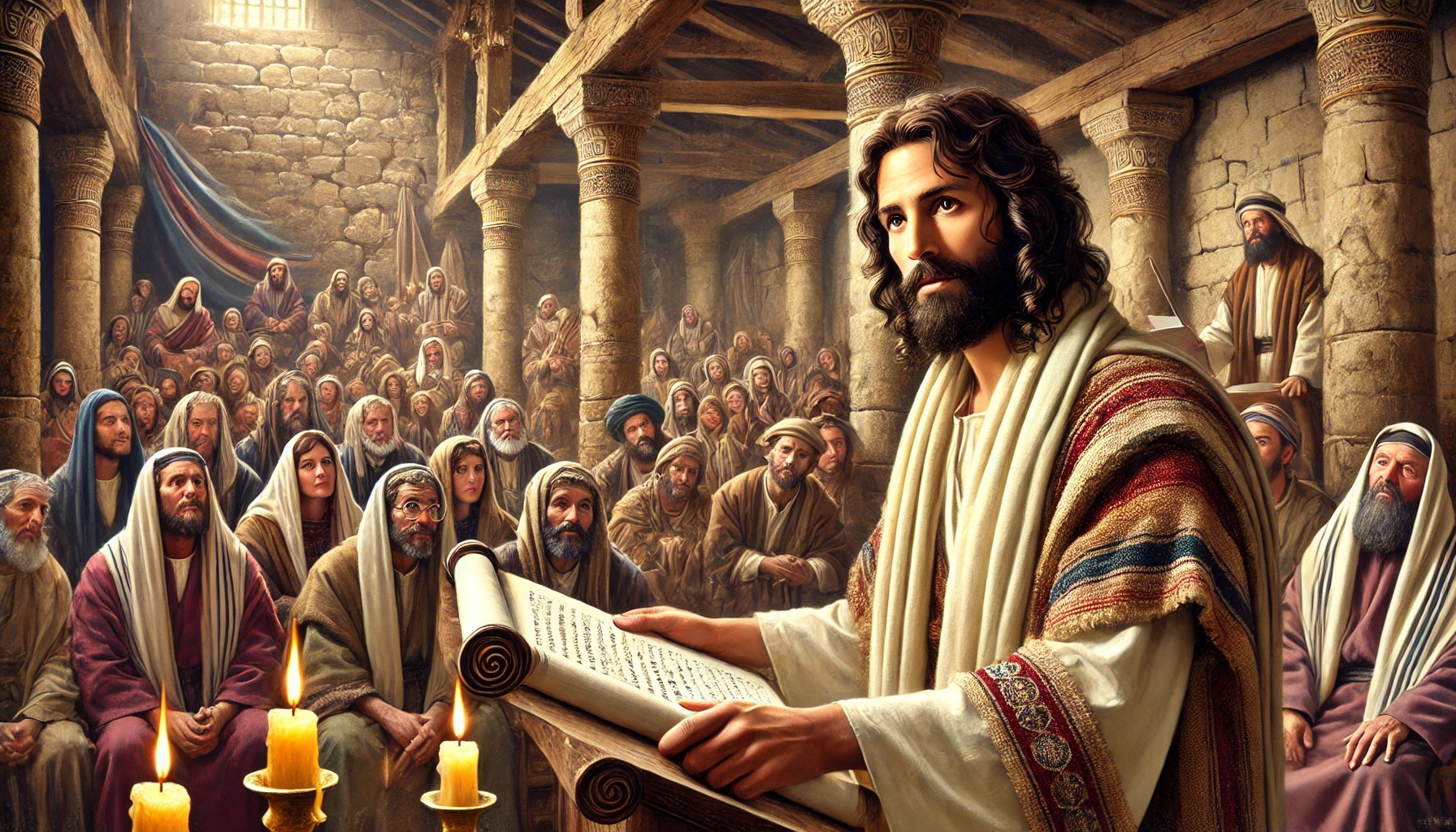
    Meanwhile in today’s Gospel we have the famous inauguration scene—yes, you heard me correctly, the inauguration scene—where Jesus announces his program as the prophet of the reign of God. What a contrast with the inauguration charade in Washington this past week.

    “The Spirit of the Lord is upon me, because he has anointed me to bring good news to the poor. He has sent me to proclaim release to the captives and recovery of sight to the blind, to let the oppressed go free, to proclaim the year of the Lord’s favour.”

    And he rolled up the scroll, gave it back to the attendant, and sat down. The eyes of all in the synagogue were fixed on him. Then he began to say to them, “Today this scripture has been fulfilled in your hearing.” [Luke 4:18–21]

    As Luke tells the story, Jesus follows the ritual set in place by Ezra some 400 years earlier. He stood up to read, presumably at the bamah, or high place. What we would call a lectern or a pulpit.

    Jesus finds the passage set for that day, perhaps following an early form of the Jewish lectionary. He highlights the prophetic words of the haftarah, the secondary text read alongside the Torah passage set for that Shabbat.

    He says that the following words had been fulfilled in their hearing that very day, right there in the tiny synagogue of Nazareth:

    “The Spirit of the Lord is upon me, because he has anointed me to bring good news to the poor. He has sent me to proclaim release to the captives and recovery of sight to the blind, to let the oppressed go free, to proclaim the year of the Lord’s favour.”

    This was a message of hope, freedom, liberation, healing and divine blessing.

    That, my friends, is the agenda of Jesus.

    We find it elaborated in the Beatitudes from the Sermon on the Mount, which Luke preserves in this form:

    “Blessed are you who are poor, for yours is the kingdom of God.

    Blessed are you who are hungry now, for you will be filled.

    Blessed are you who weep now, for you will laugh.

    Blessed are you when people hate you, and when they exclude you, revile you, and defame you on account of the Son of Man. Rejoice in that day and leap for joy, for surely your reward is great in heaven; for that is what their ancestors did to the prophets.

    But woe to you who are rich, for you have received your consolation.

    Woe to you who are full now, for you will be hungry.

    Woe to you who are laughing now, for you will mourn and weep.

    Woe to you when all speak well of you, for that is what their ancestors did to the false prophets.” [Luke 6:20–26]

    The good news of Jesus is not for those who are doing just fine in the present system, thank you very much.

    That point is made very clear in Luke’s version of the Lord’s Prayer, which of course the church has never asked us to learn by heart so we can recite it together when we gather at the table of Jesus:

    Father, hallowed be your name. Your kingdom come. Give us each day our daily bread. And forgive us our sins, for we ourselves forgive everyone indebted to us. And do not bring us to the time of trial. [Luke 11:2–4]

    The message of Jesus and therefore our message to the Commonwealth of Australia is to promote a vision of liberation and empowerment for the oppressed and the dispossessed. 

    We do not back one party over another. They have all failed to embrace the radical vision of Jesus Christ.

    But we do speak truth to power, and sometimes that begins by speaking truth to the person we see in the mirror.

  • Baptism as epiphany

    Baptism as epiphany

    Baptism of the Lord
    St Paul’s Church, Ipswich
    12 January 2025

    We are now in the season of Epiphany.

    This is an elastic season that can be shorter or longer depending on the date of Easter each year. 

    This year Epiphany last for 7 weeks, or 8 Sundays if we count last week when we had the feast of the Epiphany itself.

    This is a time when the church invites us to pause and reflect on the many epiphanies—moments of insight and revelation—when we catch a fresh glimpse of God among us.

    Last we celebrated the birth of Jesus and the visit of the magi. The greatest epiphany moment of them all.

    This Sunday we are invited to reflect on Baptism as an Epiphany moment.

    Over the next few weeks we shall reflect on various other epiphany moments:

    • The miracle of the water becoming wine for the wedding at Cana (John 2).
    • The epiphany of Jesus in the synagogue at Nazareth (Luke 4). We shall spend two Sundays on that episode.
    • The epiphany of the miraculous catch of fish (Luke 5).
    • The epiphany of Jesus that call us to think differently (Luke 6).
    • And finally the epiphany of the transfiguration (Luke 9).

    In today’s Gospel, Jesus is baptised by John.

    This is a familiar story, and indeed we already heard the larger background story during Advent when we reflected on the role of John the Baptiser as a trail blazer— but also a spiritual master—for Jesus.

    Finally today we get to the part of the story where Jesus gets to be baptised by John.

    It is something of an anticlimax, and quite unlike the way the story is told in Mark and Matthew.

    For Luke, the actual Baptism of Jesus is simply mentioned in passing:

    Now when all the people had been baptised and when Jesus also had been baptised …

    Luke is about to describe an epiphany moment for Jesus, but he makes no fuss at all about the actual Baptism itself.

    We could rephrase Luke this way:

    When everyone had been baptised, including Jesus …

    Around the world today preachers will wax eloquent about the importance of the epiphany that Jesus experienced following his Baptism. The heavenly words and the outpouring of God’s Spirit upon Jesus, will be talked about at some length.

    They are pretty amazing words, and it may be that we have a rare insight into the spiritual life of Jesus himself here.

    Take some time during the week to read that section of Luke again. Perhaps the whole of chapter 3 in one go?

    But today I want us to reflect on an aspect of the story where we may find a fresh epiphany, and one which we might so easily overlook.

    I want us to think about the idea that Jesus was just one person in the crowd.

    Now when all the people had been baptised and when Jesus also had been baptised …

    We often think of Baptism as a very individual moment. 

    This is especially so when an adult is being baptised.

    There is something powerful when we hear an adult express their desire to be a follower of Jesus.

    But for most Christians throughout most of history that has not been the case. They were baptised as infants and often in large ceremonies with many children being baptised at the one time.

    Fundamentally, Baptism is about God’s choice of us; and that is always in the context of us being part of the people of God. Not simply me as an individual.

    Later this morning I shall be baptising a little girl, Arabella. She turned 1 just a few weeks ago, so this is not something that Arabella has requested.

    Rather, this is something that her home faith community, her family, has arranged for her.

    They are claiming Arabella for Jesus, and they are claiming a place for Arabella among the people of Jesus.

    There is a beautiful simplicity about the Gospel when we baptise a baby.

    The child has not done anything special or expressed any faith. It is all about God’s action on our behalf, and also about the role of the wider community as we come to faith and then as we form our lives faithfully.

    Even when the candidate for Baptism is an adult, there remains that collective element.

    The adult candidate will speak for themselves, but they have sponsors who bring them to the water and then walk with them as companions on the way after the Baptism.

    Indeed, the entire congregation are both witnesses and companions for each baptism candidates, regardless of their age.

    We cannot be a solo Christian.

    We need each other.

    And that, I suggest, is the epiphany moment for us this week.

    Look around the room and see the people God has placed us among.

    We do this Jesus thing together with everyone else, just as Luke describes Jesus being baptised along with everyone else.

    We are in this together.

    That is our epiphany for this week.

    And it is good news.

  • an outside-in church

    an outside-in church

    IMAGE: Ethiopian icon of the adoration of the magi. From the collection of the Centre for Coins Culture & Religious History, St John’s Cathedral, Brisbane. #3218

    Feast of the Epiphany
    St Paul’s Church, Ipswich
    5 January 2025

    [ video ]

    For much of the Twelve Days of Christmas we focus on the beautifully crafted story to be found in the Gospel of Luke.

    Over seven successive episodes, Luke invites us into story of two boys—John and Jesus. We hear about the unusual circumstances of their respective conceptions and we glimpse the lives of two observant Jewish households (one based in a small village outside Jerusalem and the other in an even smaller village up north in Galilee). The parents of Jesus undertake a demanding 4-day journey by foot that takes them from Nazareth to Bethlehem just around the time that Jesus is born. Shepherds from the rocky limestone hills around Bethlehem come to see the Christ Child, after angels tell them of this child’s significance for all humanity. After prayers for the week-old baby in the temple, the family return to their home in Nazareth. Finally, some 12 years later, the holy family is back in Jerusalem once more and we find Jesus engaged in conversation with the religious leaders at the temple.

    That’s the way Luke tells the story, and he tells it very well.

    But there is another Christmas story in the NT, and we find it in the Gospel of Matthew.

    Where Luke seeks to connect the birth of Jesus with the famous Roman legend of Romulus and Remus, Matthew wants his readers to link the birth of Jesus with the ancient Jewish legends of Moses and the great exodus from slavery in Egypt.

    In Matthew the family do not come from Nazareth. Indeed, they only move there after returning from a brief period as refugees in Egypt. They are locals from Bethlehem and Jesus is born at their house.  There was no searching for somewhere for Mary to give birth to her first child. It was a home birth!

    There is no mention of John or his parents in Matthew’s story, but Joseph has dreams that guide his actions, just like Joseph in the OT stories.

    There are no shepherds in Matthew, and angels in the night sky but—as read just now—there is another and very different set of visitors, and a king who seeks to destroy the Christ Child along with all the other baby boys in the area around Bethlehem. Another echo of the exodus story, but this time the holy family seeks refuge in Egypt until the evil king had died.

    Matthew is telling the story of Jesus for Jewish Christians, and he wants them to understand Jesus as Moses 2.0; a bigger and more significant version of the great leader from the past.

    As I have done for the past few services, I encourage you to read the opening chapters of Matthew’s Gospel. You will see that it tells a very different story from Luke, although we have somehow learned how to blend these two different stories so well in our minds that we do not even notice the massive differences between them.

    Most of the time we do not pay attention to what the Bible says about the birth of Jesus, because we think we already know that story so well.

    As always, my advice is to read the Bible—carefully and with our eyes-wide-open.

    We miss the messages that both Luke and Matthew are seeking to convey if we do not listen to each of their stories in their own words and for their own sake.

    We need to stop mortgaging Christmas to the nativity play.

    So here is the thing, Matthew was writing for Jewish disciples of Jesus.

    These were people who valued tradition, and in their religion there were lots of rules.

    They were a bit like us in some ways.

    One of the most important rules related to outsiders.

    Jews and only Jews were God’s chosen people. Everyone else was an outsider. The covenant blessings were only for the insiders. For the Jews.

    Insiders and outsiders. Honour and shame. Us and them.

    But Matthew had some tough news for his Jewish Christian readers (hearers, actually).

    Matthew could see that the good news that Jesus both lived and proclaimed was for everyone.

    By the last scene of his Gospel, Matthew will have Jesus sending the disciples out to all nations:

    Go therefore and make disciples of all nations, baptizing them … and teaching them to obey everything that I have commanded you. And remember, I am with you always, to the end of the age. [Matthew 28:19-20]

    Just as Luke created his opening two chapters as kind of overture for the whole story he would present in Luke and Acts, so Matthew has created an overture for his account of Jesus.

    His overture draws heavily on major Jewish themes: a genealogy tracing Jesus’ descent back to Abraham, Joseph the dreamer, an evil king seeking to murder all the Jewish boys, and the miraculous preservation of the child of destiny who escapes to Egypt (of all places).

    All of that would only confirm Matthew’s readers in their view that God favours the insiders, the chosen people.

    So Matthew adds one special extra detail: a visit by pagan astrologers from the East.

    We are so familiar with this bit of the story in Matthew that we fail to appreciate what he was doing.

    These people should not have been in the story.

    They were not Jews.

    Worse still, they were astrologers. Everything about them made them outsiders, and their religion was forbidden by the Old Testament.

    But these despised outsiders with their false religion were the only people who recognised Jesus as the Christ Child.

    In his nearby party palace, all Herod saw was a threat to his own power.

    The stargazers were the ones who got it right, and they embodied the upside-down news that Matthew wanted his readers to understand.

    Like them, we can be a church that values our traditions so much that the rules come first and people come last.

    We have lots of rules.

    But not so many people these days.

    I wonder why that might be?

    As he tells the story of Jesus, Matthew is going to take his readers on a journey so they eventually understand that God’s love is for everyone.

    The outsider belongs inside.

    The kingdom of God is an outside-in society.

    We exist for the sake of those who are not yet here.

    As we celebrate the Epiphany—the manifestation of Christ to the nations—we ask God to erase the boundaries between us and them, insiders and outsiders, pure and impure.

    Everything we do is help those who are not yet part of our community discover God’s love for them, and for us.

    We too were once outsiders.

    Now we all have a place at the table of Jesus.