Category: Sermons

  • Faith hope and love

    Faith hope and love

    [ video ]

    Season of Holy Women 3
    Ipswich Anglican Community
    3 August 2025

    It has been quite a journey since that first Sunday in May last year.

    In my sermon that day, I reflected on the question: Are we there yet?

    Perhaps that was a question the women asked themselves as they made their way through the city streets of Roman Jerusalem in the darkness of the early morning. They were heading for the place where Jesus had been hastily laid to rest—not yet buried, but at least laid inside the chamber of the rock tomb—on Friday evening.

    The question we were pondering last year year was whether we were yet at that time when God would begin something new here in the Ipswich Anglican community?

    The question that they did now even know how to ask, was whether this was the time for God to do something new in human history?

    It did not occur to them that this was even a possibility. They were simply coming to the tomb to complete the burial process for their friend and master. They had no expectations of a whole new beginning.

    In May last year, we said the time was not yet.

    But today we can say, the time is now.

    We are about to see the beginning of a whole new phase of mission and ministry within and by the Ipswich Anglican community.

    The time has come. 

    The new beginning is about to unfold.

    As we reflect on this place of grace where we stand this morning, my thoughts are mostly shaped by the reading from Colossians.

    So if you have been raised with Christ, seek the things that are above, where Christ is, seated at the right hand of God. Set your minds on things that are above, not on things that are on earth, for you have died, and your life is hidden with Christ in God. When Christ who is your life is revealed, then you also will be revealed with him in glory. Do not lie to one another, seeing that you have stripped off the old self with its practices and have clothed yourselves with the new self, which is being renewed in knowledge according to the image of its creator. In that renewal there is no longer Greek and Jew, circumcised and uncircumcised, barbarian, Scythian, slave and free; but Christ is all and in all!

    As I have reflected on that passage during the past week, I find myself noting how this passage plays with same key themes found in the great summary of faith that Paul offers at the end of 1 Corinthians 13:

    And now faith, hope, and love remain, these three, 
    and the greatest of these is love.

    So let’s take each of those three elements in turn.

    Faith

    We are people of faith, but the faith that matters most is not our own faith but that faith which Jesus himself demonstrated towards God.

    Jesus lived and died as one comprehensive and consistent act of faith. He trusted God to death and beyond.

    Easter is God’s response to the faith—or the faithfulness—of Jesus.

    Paul tells us in Galatians and in Romans, that just as Abraham’s faith was the basis for God blessing the Jewish people, so the faithfulness of Jesus is the basis for God blessing all of us. 

    All of us.

    And not just us.

    Rather, everyone.

    That is profoundly good news, and it takes us way beyond arguing over beliefs and doctrines.

    Faith is about trusting that God has this: whether that be the future of the world, or our own personal situation. We are in God’s hands, and all is well.

    That is faith.

    It is not about having a formula—a set of words—that meets some theological correctness test, but living with an attitude that trusts God for now and for tomorrow.

    This is the kind of trust we see in the Lord’s Prayer: give us today our daily bread.

    We seek to live that faith and share that faith, as we shape a community of loving practice here in the heart of Ipswich.

    Unless we live it we cannot share it

    The first challenge, then—as we move into the new future God has for us—is to be people of faith.

    Hope

    That faith will be expressed in our hope and in our love, but let’s think next about hope.

    How do we unpack the concept of hope?

    May I suggest that it means the opposite of fear. If we are afraid we shall not be exercising hope. Fear will limit our imagination and harden our responses to one another.

    Fear erodes hope and taints the wellsprings of compassion.

    Fear makes us hold tightly to what we have left, rather than share the little we have with those need it.

    We see a lot of fear in the wider world and in Australian society. And we see the way fear causes people to fight one another and attack those who threaten their sense of safety.

    Fear can galvanise people to act (and to vote), but it is never the basis for a healthy and secure future.

    On the other hand, when hope drives out fear, we are free to take risks and to love one another extravagantly.

    Not cautiously.

    Not in a very Anglican (careful) way.

    But extravagantly!

    As God begins something new here amongst us, we need to be people of hope, who are not afraid about the future, and are comfortable taking risks.

    Love

    In the Colossians passage, Paul tells his readers not to lie to one another.

    I take that to mean more than simply speaking the truth to one another, although it certainly begins there.

    No power games!

    Be authentic.

    This is simply a continuation of the message we had in the Epistle last Sunday:

    Let love be genuine; hate what is evil, hold fast to what is good; love one another with mutual affection; outdo one another in showing honour. Do not lag in zeal, be ardent in spirit, serve the Lord. Rejoice in hope, be patient in suffering, persevere in prayer. Contribute to the needs of the saints; extend hospitality to strangers.

    That is what love looks like.

    That is how this Ipswich Anglican community will look as God begins her new work amongst us.

    If we are to be a blessing to the city of Ipswich, then first of all we need to a community of loving practice.

    Our love for each other—and for anyone and everyone who crosses our path—has to be genuine.

    We—you—are standing at the threshold of something new.

    May you be people of faith, people of hope and a community of love.

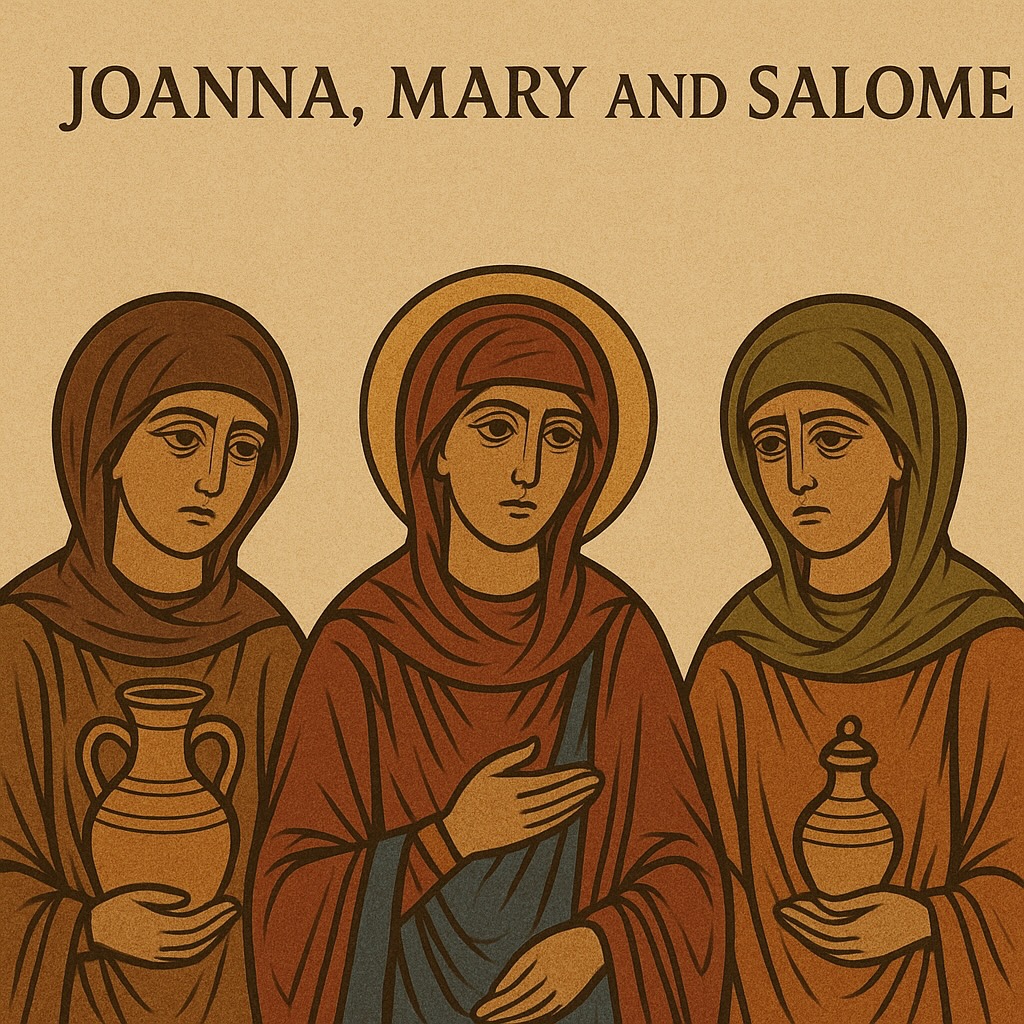
  • Martha and Mary (and Abigail)

    Martha and Mary (and Abigail)

    Feast of Martha and Mary 
    St Paul’s Church Ipswich
    27 July 2025

    [ video ]

    Most of the time in our calendar of holy days and holy people, we look to celebrate extraordinary events: people who stand out from the crowd, events that amaze us, achievements that defy the odds,  and so on.

    Today is different.

    Today we celebrate two sisters sharing a house and entertaining a guest.

    Even so, we celebrate one sister above the other as we often refer to them as Mary and Martha, although Martha seems to be the senior sister.

    It was “her house” to which Jesus came for a meal, yet I still described today’s festival as “Mary and Martha of Bethany.”

    So here we are on the second Sunday in the Season of Holy Women.

    Last week we celebrated Mary the Magdalene. The Magdalene was far from ordinary, and seems to have been a passionate and perhaps feisty follower of Jesus. She was—it seems—unforgettable, although the early Christian Church did its best to forget her and erase her memory from among us.

    This week we have two very different women, although each of them may have been feisty in their own way.

    Martha and Mary were from the village of Bethany, now known—as I mentioned in my reflection in today’s bulletin—as the village of al’izariyya, the “Village of Lazarus.” 

    Even in their hometown their memory has been lost in favour of their brother.

    Luke—we note in passing—seems to have misunderstood their location as he has their entertainment of Jesus happening in the north, while Jesus is still en route to Jerusalem.

    As John tells the story, their home is at Bethany on the Mt Olives outside Jerusalem. It was safe house for Jesus and his followers, and the place where Jesus stays of an evening during his final week or so in Jerusalem. In John’s version of the story, it is Mary of Bethany who anoints Jesus’ feet as a prophetic action prior to his arrest and execution.

    But wait, there is more!

    As a bonus we also get the amazing story of Abigail, who also excels in hospitality although under rather more adverse circumstances. To fully appreciate her story, we need to read the paragraphs before and after the lengthy excerpt in today’s reading.

    At the heart of today’s celebration lies the theme of hospitality.

    Hospitality is a major cultural theme in the ancient world as it remains today in Arab society.

    Hospitality was also at the very heart of Jesus’ own mission and ministry. There were three strands to his program: 

    • announcing good news
    • healing the sick, and 
    • sharing meals together.

    It is reflected as well in our reading from Romans this morning:

    Let love be genuine; hate what is evil, hold fast to what is good; love one another with mutual affection; outdo one another in showing honour. Do not lag in zeal, be ardent in spirit, serve the Lord. Rejoice in hope, be patient in suffering, persevere in prayer. Contribute to the needs of the saints; extend hospitality to strangers.

    In our gospel today we have that classic story of Martha busy in the kitchen, while Mary is sitting at Jesus’ feet.

    Martha is doing what a woman was expected to do: prepare the meal for her family and any guests.

    Mary was doing what no respectable woman was allowed to: spending time with the men and engaging in their conversation.

    Martha is not impressed.

    Mary does not speak for herself.

    Jesus does not offer to assist.

    Worse than that, he implies that Mary is the one making the right choices, while Martha—who is doing everything correctly—has made the wrong choice.

    Jesus could have invited Martha to come and join them. After all, he could easily fix a meal for them to share. He had fed 5,000+ people, so a small group in a cottage at Bethany was no challenge at all!

    Ultimately, this is not a story about catering, but about agency and our response to God’s disturbing presence in our lives.

    Do we stick to our safe zones, or do we “launch out into the deep,” as Jesus would later say to the fishermen on the Sea of Galilee?

    Abigail took a risk and claimed her own agency in a patriarchal social system.

    Mary took a risk (not for the last time), in her desire to learn from Jesus.

    I like to imagine that Martha put down the pots and also came and sat with Jesus and Mary.

    What would we do?

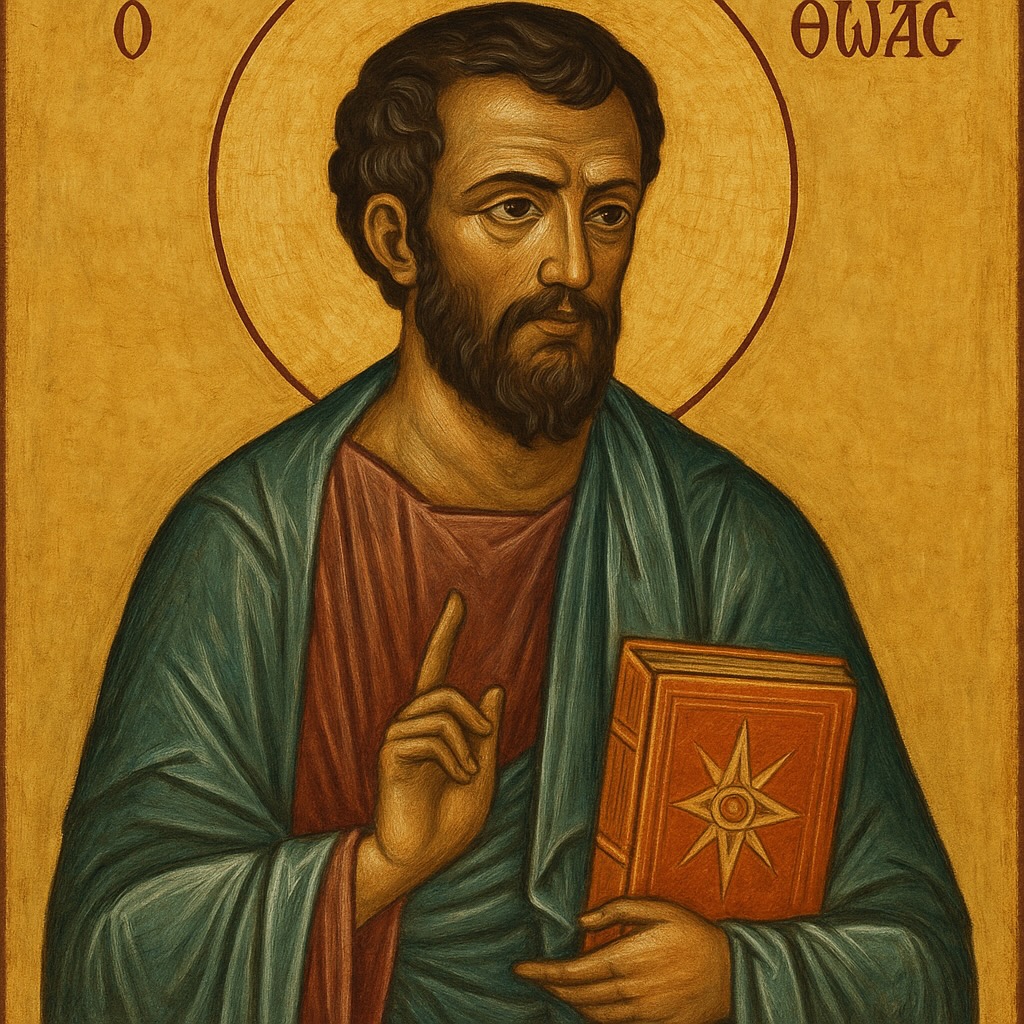
  • The legacy of Saint Thomas

    The legacy of Saint Thomas

    Feast of St Thomas
    St Thomas’ Church, North Ipswich
    6 July 2025

    Last weekend and this weekend we have had two special Sundays:

    Last Sunday we celebrated one of the major feasts for Saint Paul

    This week we celebrate the feast of St Thomas.

    These two festivals offer liturgical book ends as we wrap up our first six months together as the Ipswich Anglican Community—the new Parish of Ipswich—with our twin churches of St Paul and St Thomas.

    This double celebration is an opportunity to reflect, affirm, celebrate and re-imagine.

    Last week I invited people to focus on what the legacy of Paul might mean for Ipswich Anglicans.

    This week we focus on the legacy of Thomas.

    Today we are thinking about the legacy of Thomas, and what spiritual wisdom we might draw from his legacy.

    Unlike Paul, Thomas is not a major character in the New Testament.

    Where Paul looms large across the NT, Thomas features in just a handful of verses in the Gospel of John. In the other Gospels and in the Acts of the Apostles, Thomas is just a name in a list of 12 men; most of whom we know nothing about.

    But in the Gospel of John we find more interest in this otherwise mysterious character.

    Let’s think about Thomas under three categories: the historical Thomas, the canonical Thomas, and the legendary Thomas.

    The Historical Thomas

    There is not much to see here. We know almost nothing about this character, and even his name is uncertain.

    “Thomas” seems to be a Greek rendering of the Aramaic word tĕʾomâ, meaning “twin.” In the NT, he is often identified as “Thomas called the twin.” However, that final label is simply the Greek word for “twin,” didymos.

    In the first-century Gospel of Thomas, our saint is identified as “Didymos Judas Thomas” [GThom 1:1], and some scholars suggest his actual name may have been Jude or even Judas.

    In any case, we are never told whose twin this person was as his brother or sister is never identified in the New Testament.

    We know nothing about his life before meeting Jesus, of his role within the community of disciples, nor what he did after Easter. Nothing beyond the simple fact that he was part of the Galilean set of followers with Jesus from the beginning.

    The canonical Thomas

    Within the NT, and especially in the Gospel of John, the character of Thomas is rather more developed, but we have no reason to take these developments as historical. They may simply reflect the prominence of Thomas in some circles of the early Jesus movement, and perhaps even represent an attempt to reduce the influence of Thomas in favour of John.


    Jesus and Lazarus (John 11:11-16)

    After saying this, he told them, “Our friend Lazarus has fallen asleep, but I am going there to awaken him.” The disciples said to him, “Lord, if he has fallen asleep, he will be all right.” Jesus, however, had been speaking about his death, but they thought that he was referring merely to sleep. Then Jesus told them plainly, “Lazarus is dead. For your sake I am glad I was not there, so that you may believe. But let us go to him.” Thomas, who was called the Twin, said to his fellow disciples, “Let us also go, that we may die with him.”


    Thomas Questions Jesus (John 14:1-7)

    “Do not let your hearts be troubled. Believe in God, believe also in me. In my Father’s house there are many dwelling places. If it were not so, would I have told you that I go to prepare a place for you? And if I go and prepare a place for you, I will come again and will take you to myself, so that where I am, there you may be also. And you know the way to the place where I am going.” Thomas said to him, “Lord, we do not know where you are going. How can we know the way?” Jesus said to him, “I am the way, and the truth, and the life. No one comes to the Father except through me. If you know me, you will know my Father also. From now on you do know him and have seen him.”


    Thomas and the Resurrection (John 20:24-29)

    But Thomas (who was called the Twin), one of the twelve, was not with them when Jesus came. So the other disciples told him, “We have seen the Lord.” But he said to them, “Unless I see the mark of the nails in his hands, and put my finger in the mark of the nails and my hand in his side, I will not believe.” 
    A week later his disciples were again in the house, and Thomas was with them. Although the doors were shut, Jesus came and stood among them and said, “Peace be with you.” Then he said to Thomas, “Put your finger here and see my hands. Reach out your hand and put it in my side. Do not doubt but believe.” Thomas answered him, “My Lord and my God!” Jesus said to him, “Have you believed because you have seen me? Blessed are those who have not seen and yet have come to believe.”


    Thomas as fisher (John 21:1-3)

    After these things Jesus showed himself again to the disciples by the Sea of Tiberias; and he showed himself in this way. Gathered there together were Simon Peter, Thomas called the Twin, Nathanael of Cana in Galilee, the sons of Zebedee, and two others of his disciples. Simon Peter said to them, “I am going fishing.” They said to him, “We will go with you.” They went out and got into the boat, but that night they caught nothing.

    The best known of those 4 Thomas texts in the Gospel of John is the “doubting Thomas” episode, but the text we actually hear more often is the paragraph from John 14 as it is often read at funerals.

    The legendary Thomas

    Outside the New Testament, the character of Thomas is very important in the Gospel of Thomas and the Acts of Thomas.

    The Gospel of Thomas is a collection of 114 sayings attributed to Jesus, some of which seem to go back to the time of Jesus himself while others may date some 100 years after the time of Jesus.

    This document was lost for almost 2,000 years but recovered accidentally among the Egyptian Nag Hammadi document trove in 1945.

    This text was valued back then—and is valued now—by people more interested in the spiritual wisdom of Jesus than in the events of his life. There are no miracles in the GThomas and no mention of Jesus’ death and resurrection.

    This esoteric tradition was attached to the name of Thomas.

    The Acts of Thomas is a collection of adventures, supposedly by Thomas, as he travels to India to proclaim the Gospel there. It most likely dates from around 250 CE, although all the surviving copies are somewhat later. This document reflects the spirituality of the Syrian Christianity, which highly valued the ascetic tradition of the monastic orders.

    The legacy of St Thomas for Ipswich Anglicans

    Thomas invites us to think outside of the box.

    We see this even in that most familiar of Thomas stories, the doubting Thomas episode.

    All of the disciples were hiding in a locked room for fear of the Jewish authorities. But not Thomas. He is not in the secret hiding place. He is outside. Mixing with people. Going about his everyday tasks. We might think of him as doubting Thomas, but he was certainly not a fearful follower.

    Was he even doubting? I prefer to think of Thomas as having his eyes wide open. No fairy tales for him. Just as the other male disciples had not believed the women with their fantastic tales about seeing Jesus alive when they went to the tomb, so Thomas not going to believe the other guys when they shared their equally fantastic tale about having seen the Lord. No second-hand religion for him. He wants to know directly. For himself. And he is not afraid to ask questions which could make him unpopular.

    Yet Thomas is still part of the community—even with his questions. He was not ostracised. Equally, he did not cut himself off from the others. He was still with them a week later when Jesus again appears to the more fearful disciples hiding in the secret room.

    Thomas part of a community that tolerated difference, and even held within its life people who did not just go along with the flow. They had created a community where everyone did not need to think the same, and a community where it was safe to ask questions and express doubts.

    Do any of us want to be in a church where it is not safe to ask questions?

    Perhaps, most of all, Thomas calls us to authenticity.

    Be our true selves.

    But keep the community intact.

    May God give us the grace to be authentic, courageous, honest and with a faith that is truly grounded in our own experience of God in Christ.

  • The legacy of Saint Paul

    The legacy of Saint Paul


    Feast of St Peter & St Paul
    St Paul’s Church
    29 June 2025

    [ video ]

    This weekend and next weekend we have two special Sundays:

    Today we are celebrating one of the major feasts for Saint Paul

    Next week we shall celebrate the feast of St Thomas.

    These two festivals offer liturgical book ends as we wrap up our first six months together as the Ipswich Anglican Community, the new Parish of Ipswich, with our twin churches of St Paul and St Thomas.

    This double celebration is an opportunity to reflect, affirm, celebrate and re-imagine.

    This week I invite you to focus on what the legacy of Paul might mean for Ipswich Anglicans.

    Next week we shall focus on the legacy of Thomas.

    And next week I shall begin the sermon in the same way, except that I will be standing in St Thomas’ Church and all the time signals will be reversed.

    Of course, next week we shall be thinking about the legacy of Thomas, and what spiritual wisdom we might draw from his legacy.

    But this week we focus on Paul.

    Paul is a larger-than-life figure in the New Testament.

    At least in the eyes of the people creating the NT, Paul is the person who tells us most clearly and most decisively what it means to be a disciple of Jesus.

    A huge proportion of the NT is comprised of material linked with Paul. If we include Luke-Acts, then around half of the NT comes from the Pauline faction within the early Jesus movement.

    For someone who most likely never met Jesus, that is an impressive statistic.

    Whether we like Paul or not—and clearly many other leaders in the church did not like him—Paul is the most important interpreter of Jesus. Ever.

    Unlike the other leaders in the Jesus movement, Paul was not from Galilee. He was a diaspora Jew with a good education and considerable social status. He was connected with powerful people in the upper layers of Jewish society and an eager “hitman” seeking to eradicate the Jesus heresy from getting a grip on their Jewish world.

    His public activity probably extended over a period of 30 years: from the mid-30s to the mid-60s.

    He first enters the story as an accessory to the murder of Stephen (Acts 7) and in the Epistle set for this morning, Paul is portrayed as sensing his own death as a martyr is close.

    Paul could change his mind.

    He enjoyed excellent personal and family privileges. He was passionate about the old ways, but he became equally passionate in his promotion of the gospel.

    Paul had a life-changing encounter with the risen Jesus.

    He came to see everything differently because of his absolute certainty that God had been active in Jesus and was offering the blessings once reserved for the biological descendants of Abraham to anyone and everyone who chose to trust in the faithfulness of Jesus.

    Paul was a pastor and a team leader.

    He never seems to have stayed long in once place, but during even a very short stay he could establish the nucleus of a Christ community and then provide pastoral oversight remotely via letters and messengers. He prayed for his people, and carried them always in his heart.

    Paul as an early adopter of new technology.

    Imagine what he could have done with our new livestreaming tools! In Paul’s case the new technology was the codex (book) that was replacing the scroll, and the recent development of the personal letter as a way for people to send messages back and forth across long distances. 

    Paul was a mentor for ministry associates.

    Paul attracted, cultivated and developed the leadership of emerging leaders in the early Jesus movement. The mentoring that he himself had received from Barnabas at Antioch was replicated and paid forward in his care for Andronicus, Chloe, Clement, Crescens, Demas, Epaphroditus, Euodia, Junia, Luke, Lydia, Mark, Mary, Onesimus, Philemon & Apphia, Phoebe, Priscilla & Aquila, Sosthenes, Syntyche, Tertius, Titus, Timothy, and Urbanus.

    About half of those names are women!

    Paul was an effective communicator

    He was a teacher, and at times an argumentative sod. So I do have some characteristics in common with Paul! By spoken word and by written messages he explained, proclaimed, corrected and guided his congregations and his team of ministry leaders.

    Paul was even endorsed by the author of 2 Peter, perhaps the final book of the NT by date:

    So also our beloved brother Paul wrote to you according to the wisdom given him, speaking of this as he does in all his letters. There are some things in them hard to understand, which the ignorant and unstable twist to their own destruction, as they do the other scriptures. [2Peter 3:15–16 NRSVue]

    Paul was not the easiest guy to understand at times, but he was someone whose writings were already been accepted as belonging to the emerging set of Christian Scriptures.

    As the Church of St Paul within the Ipswich Anglican Community we have a rich and powerful legacy.

    Had we been following the normal readings from the lectionary today, we would have had the OT story of Elijah ascending into heaven in a fiery chariot while his mantle falls to earth and is eagerly collected by his successor, Elisha:

    Elisha picked up the mantle of Elijah that had fallen from him and went back and stood on the bank of the Jordan. He took the mantle of Elijah that had fallen from him and struck the water. He said, “Where is the LORD, the God of Elijah? Where is he?” He struck the water again, and the water was parted to the one side and to the other, and Elisha crossed over. [2Kings 2:13–14 NRSVue]

    May we gather the mantle of Paul and claim the spiritual blessings poured out on the church through the Apostle Paul.

    Not for our sake, but for the sake of the city of Ipswich and all whose lives we touch with the good news of Jesus.

  • Looking back looking around looking ahead

    Looking back looking around looking ahead

    Trinity Sunday
    St Paul’s Church, Ipswich
    15 June 2025

    [ video ]

    A year ago—at least a year ago in church calendar terms—on this special festival day, I was taking my first service at St Thomas’ Church, having only begun as your locum priest a few Sundays earlier.

    It was my fourth Sunday in the parish.

    As I reflected with the folk at St Thomas’ Church on the significance of the Trinity, I explored the idea that this uniquely Christian understanding of God also offers us a model for a unified ministry that encompassed both our churches, while celebrating difference and maintaining diversity.

    At one point I said:

    I think our understanding of God as Trinity offers a model for ways we can work together.

    We believe that Father, Son and Spirit exist inwith and for each other.

    It seems to me that this is the understanding that has to be at the basis of our shared future together, for surely our future is a shared one.

    Well, a lot of water has passed under the bridge since that Sunday last year.

    Look at us now.

    Within a few weeks of that sermon, the Parish Council at St Thomas’ Church took a bold decision to request they join with St Paul’s Church and form a new ministry unit together here in the heart of Ipswich.

    I take no credit for that decision and do not think my Trinity Sunday sermon last year was a game-changer, but looking back I am struck with how everything came together so well in those middle months of last year.

    Twelve months later we are eagerly awaiting the arrival of our new parish priest, and we look forward to his leadership as we explore what being one parish with two churches means for us.

    We look back, we look around and we look forward.

    Our lives as people of faith seem to have many trinitarian dimensions.

    That triple perspective is also seen as we bring a young child for Baptism this morning.

    Looking back

    We look back with fresh insight to understand how the past has shaped who we are and where we are now.

    The legacy of the past may be a mixed bag. Some stuff we delight to recall. Other moments we would love to forget. Old wounds may not yet have healed. Challenges and opportunities. 

    Each time we gather for worship we look back and name our need for forgiveness, healing and transformation.

    We are not obsessed by guilt. We simply have our eyes wide-open about the need to grow, heal and transform.

    We turn to Christ, as we shall say in the Baptism service shortly.

    Looking around

    We also celebrate the grace and the fresh beginnings represented by the present moment. This is never more so than when we hold a new child in our arms.

    We cannot go back to the past and we cannot stay in the present, but while we are here we can treasure this moment; a moment of grace.

    As we baptise Oliver this morning, we share a moment of grace.

    Like all of us, Oliver is loved by God. We may not be able to see that in our lives, but we can see it in the innocence of a child.

    Oliver is loved by God simply because he is Oliver.

    Not for what he does, what he thinks or what he believes.

    Simply for who he is.

    And that is also true for each of us.

    Just as we are, we are loved unconditionally by God.

    In this moment, as we baptise Oliver, we catch a glimpse of that unconditional love that surrounds each of us and all of us every moment.

    Looking ahead

    Even here in this moment we are looking ahead.

    We are making promises to be there for Oliver and for each other in the years ahead.

    No matter what the past may have been like for any of us, and no matter how we understand this present moment of grace, we all want Oliver to grow up knowing that he is loved by family, friends and God.

    Today here in this church we promise to do whatever it takes to ensure that Oliver knows that he is loved.

    It is sometimes said that it takes a village to raise a child.

    Villages are hard to find in our sprawling suburbs and fast-moving world, but St Paul’s Church is Oliver’s village.

    We are here for him, for his parents and his godparents, and for his wider family.

    As we all live into the mystery of God who defies our best attempts to find the right words, we shall find that we are in, with and for each other.

    We are one.

    We are diverse.

    We are loved.

  • Another Paraclete

    Another Paraclete

    Pentecost Sunday
    St Paul’s Church Ipswich
    8 June 2025

    [ video ]

    Today we conclude the Great Fifty Days of Easter.

    This is a day of celebration.

    A week of weeks has passed since Easter morning and now we move into a new phase of our life and mission together in the heart of Ipswich.

    In another 50 days—another week of weeks—we shall be welcoming Mpole and his family among us as he commences his ministry as our new Parish Priest.

    Today we look 50 days back to Easter and 50 days forward to a whole new beginning.

    We are at the midpoint of a very special 100 days.

    In the Gospel today we are introduced to an unusual word: paraclete.

    That term is used four times in John’s material relating to the Last Supper and just one other time in the New Testament: 1 John 2:1 where Jesus is called our Paraclete.

    It is never used in the other Gospels. Paul never uses it. Nor do any of the other NT books. It is a word only found within the Johannine communities around the end of the first century.

    I would not normally base a sermon around one word in a Bible passage, but I think this word is worth us spending some time to mull it over, as it were.

    We discussed this word during our Thursday night online Bible study when we looked at the readings for the next Sunday, so I want to share some of our insights from that discussion with you all here this morning.

    The basic meaning of the Greek word is plain enough: called—or maybe, sent—alongside.

    We have quite a variety of ways in which this Greek term is translated into English, and even more variety when translators try to express its central idea in other world languages and cultures:

    • KJV (1611) – Comforter
    • Douay-Rheims (1750) – Paraclete
    • New American Standard Bible (1977) – Helper
    • New Jerusalem Bible (1990) – Paraclete
    • New International Version – Counsellor (1984), Advocate (2011)
    • ESV (2016) – Helper
    • NRSV (2021) – Advocate
    • Holman Christian Standard Bible (2003) – Counsellor

    When Jesus speaks of this other Paraclete who he or the Father will send once Jesus is no longer with us, it is quite clear that Jesus is describing the Holy Spirit, or the Spirit of Truth as the ongoing presence of God with us, among us and between us.

    But I am intrigued—and we were all intrigued last Thursday night—by the phase “another Paraclete.”

    This invites us to think of Jesus as also being our Paraclete, and indeed as the original Paraclete.

    This invites us to reflect on how we understand the role Jesus had in the lives of the people of his time, as we seek to grasp what may be the role of the Spirit of Truth in our lives now.

    Without going too deeply down the rabbit hole here, let’s just pick up the idea that Jesus was Emmanuel, God with us.

    Emmanuel may be one way to get to the heart of what paraclete means.

    It is a familiar way of describing Jesus, although we tend only to use that word in Advent and at Christmas time.

    • As God-with-us, Jesus comes among us and calls us to turn to God  
    • As God-with-us, Jesus forgives our sins and offers us new life.
    • As God-with-us, Jesus heals us and calms our troubled souls.
    • As God-with-us, Jesus teaches the wisdom we need for everyday life as the people of God.
    • As God-with-us, Jesus sends us out to share the good news.

    This other Paraclete, the Spirit of Truth, is also God-with-us, also Emmanuel:

    • As God-with-us, the Spirit of Truth comes among us and calls us to turn to God.
    • As God-with-us, the Spirit of Truth forgives our sins as we are baptised.
    • As God-with-us, the Spirit of Truth renews the life of God within us in the Eucharist.
    • As God-with-us, the Spirit of Truth speaks to us as the Scriptures are read.
    • As God-with-us, the Spirit of Truth empowers us to share the good news with others.

    The God who has been known to us as Jesus the Christ, the Anointed One, is the same God now known among us as the Spirit of Truth, the Holy Spirit, the Spirit of Jesus.

    The same God.

    The same dynamic power seen wherever God is active.

    The same enlivening, healing and transformative presence.

    Emmanuel once more, as always.

    With us during the next 50 days, and all the days after that as well.

    Alleluia. Christ is risen.
    He is risen indeed. Alleluia.