Category: Sermons

  • In the eye of the beholder

    In the eye of the beholder

    Christ Church Cathedral, Grafton
    Third Sunday after Pentecost
    13 June 2021

    [ video ]

    https://commons.wikimedia.org/wiki/File:Emberiza_calandra_southeast_Turkey.jpg

    We are told that beauty is in the eye of the beholder.

    Actually many different forms of value very much depend on the observer: what seems useful, pleasing and attractive will vary between different people, across time and in different cultures.

    All three of our readings today have at least one common thread which concerns how we see things.

    Last week the religion experts from Jerusalem were warned about the risk that they would not be able to see God at work in their midst because they mistook the Spirit of God doing something new as the work of the Devil.

    This week we build on that theme, and reflect on how we assign (or withhold) value when we are observing what is happening around.

    Samuel goes to Bethlehem

    The prophet Samuel (who was himself overlooked by an elderly priest when he was just a child) sets out for Bethlehem on an undercover mission that puts his own life at risk.

    He is going to look for someone else to replace Saul as king over the tribes of Israel, and if King Saul discovers what sneaky tricks Samuel is up to then his own life will certainly be in peril.

    This is no Christmas story, even though it is in Bethlehem.

    It seems that Samuel has done some research before his trip, because he goes looking for one particular man (Jesse) from among whose children Samuel expects to find the next king.

    As this kind of story often requires, Jesse has lots of children, including eight sons.

    The proud father presents his seven older sons, and Samuel is very impressed. But a little voice in his head keeps saying saying NO to each of these seven impressive young men. When Samuel eventually asks whether Jesse has any other sons, the old farmer admits that there is one not present despite all of the sons having been invited to attend the event.

    He’s just a kid and he is busy looking after the sheep.

    Young Shepherd

    We know how this story is going to end. The youngest boy is called into the party, and to everyone’s amazement he is identified as the person chosen by God to replace Saul as king.

    This is a great example of a story which is true on so many levels even if it did not actually happen.

    Seeing Jesus differently

    Towards the end of our second reading, Saint Paul mentions—almost in passing—that while he might once have looked at Jesus from a human point of view, he does not do that any longer.

    It is certainly possible to look at Jesus from a human point of view.

    Lots of people do that, and people who will never be Christians can still find great meaning for them in paying attention to Jesus.

    But Paul had learned to look at Jesus from another perspective; to appreciate Jesus as the risen Lord, the One who is always present with us through his Spirit, and the One through whom God was choosing to make everything new. He goes on to say:

    So if anyone is in Christ, there is a new creation: everything old has passed away; see, everything has become new! All this is from God, who reconciled us to himself through Christ, and has given us the ministry of reconciliation; that is, in Christ God was reconciling the world to himself, not counting their trespasses against them, and entrusting the message of reconciliation to us. So we are ambassadors for Christ, since God is making his appeal through us; we entreat you on behalf of Christ, be reconciled to God.

    2 Cor 5:17–20

    How we look at Jesus is our choice, but if we look at him in that way then everything changes.

    As parents and godparents, how do we want Sawyer to see Jesus?

    The mustard seed

    Our gospel passage offered another example where how we look determines what we see.

    The parable of the mustard seed is one of the things we can be pretty certain Jesus actually said, although in the several versions of this little parable we can already see people developing the story in different ways.

    For most people this is a story about something that starts out really small (a mustard seed) and grows into a huge tree. “From little things big things grow,” comes to mind!

    If you look at the parable that way you will find yourself among a large crowd of people, but Jesus may not be there as that was almost certainly not what he was seeking to express.

    More likely Jesus had one of the following in mind and perhaps all three of them:

    smallness – the mustard seed is indeed small, but so is the shrub that grows from the seeds and it is never such a large plant that it competes with the ancient trees

    inclusive – the mustard bushes become a haven for birds and other small creatures, who the farmer would much prefer to be somewhere else

    pervasive – these plants are pervasive and will take over the whole field if left unchecked because once they got a established in a small corner of there field they keep on spreading …

    How do you see God’s active presence among us? asks Jesus.

    Do we imagine God as big and powerful, or as small but pervasive, gathering up the marginal people to form communities of hope in a world that runs on fear?

    And how do we see Jesus, and how might we imagine a church that starts again from just a few small seeds? Are we hoping to become once more a large and powerful institution, or shall we be content to be small, inclusive and pervasive?

    And how shall we teach Sawyer to look at things?

  • Keeping Jesus quiet

    Keeping Jesus quiet

    Christ Church Cathedral, Grafton
    Second Sunday after Pentecost
    6 June 2021

    [ video ]

    https://www.biblicalarchaeology.org/daily/biblical-sites-places/biblical-archaeology-sites/the-house-of-peter-the-home-of-jesus-in-capernaum/

    This is the Year of Mark in our three-year cycle of readings, but it has been a while since we had a Gospel reading from Mark. More than 3 months have passed, in fact.

    Today we drop back into the Markan narrative, and it is all a bit confusing. It is as if we have arrived late at a party which has been underway for quite some time. And indeed that is the case.

    We have just listened to the last couple of paragraphs of Mark chapter 3. They offer a scene of confusion and controversy, as experts from Jerusalem as well as his family from Nazareth try to shut Jesus up.

    The story so far

    Through the opening section of his account, Mark has depicted Jesus as someone who is having an impact everywhere that he goes and with everyone that he meets:

    • Baptized by John (Advent 2 on December 6, Baptism of the Lord on January 10)
    • Testing in wilderness (First Sunday in Lent, February 21)
    • Fishermen by lake called as disciples (January 24)
    • Man with a demon healed (January 31)
    • Crowds gather seeking healing (February 7)
    • A leper is healed (February 14)

    Then a series of episodes we did not hear this year due to the dates for Lent and Easter:

    • Paralyzed man healed (Sunday #7)
    • Call of Levi the tax-collector (Sunday #8)
    • Healing of man with withered hand (Sunday #9)

    The scene today

    Jesus has been making an impression on people!

    At the end of all that activity, the sentence just before today’s excerpt says simply, “then he went home.”

    Interestingly, “home” for Jesus was not Nazareth now, but a house in Capernaum. It was probably the home of Simon Peter, where Jesus had established himself during the early weeks of his work down by the lake.

    As it happens, we think we know exactly which house that was. If we are right, that would be one of the very few times when we can take a text from the Bible and say, “This is the spot where it happened. Here is the house where Jesus stayed.”

    So Jesus had gone home.

    But he is not going to get any time alone.

    There were so many people crowded around that little house that Jesus called home. They could not even eat for the crowd of people. It filled every corner of their small courtyard and there was nowhere to prepare any food.

    Then two sets of special visitors arrive.

    This is clearly a story that is spread over several days as people coming from out of town need time to get there.

    The family of Jesus hear what has been happening, and they are concerned for his well-being. As Mark expressed it:

    When his family heard it, they went out to restrain him, for people were saying, “He has gone out of his mind.”[Mark 3:21]

    People were saying that Jesus had become deranged, and his family wanted to take him home for care and treatment: “your mother and your brothers and your sisters …” (v. 32)

    The religious experts from Jerusalem (“scribes”) also arrive. They agree with the rumour spreading among the people, but they have not come with the same desire to protect Jesus and get him away for his own well-being. They have come with a diagnosis ready to declare, as they announce that Jesus is possessed by a demon, and not just any demon but the prince of demons: 

    And the scribes who came down from Jerusalem said, “He has Beelzebul, and by the ruler of the demons he casts out demons.” [Mark 3:22]

    This not going to end well. 

    Mark has set up the scene is such a way that Jesus has no option but to reject both the religion experts from Jerusalem as well as his own family. If he agrees with either of them then his mission is over.

    Since this is only the last part of chapter 3, we can guess how this is going to develop.

    First of all, Jesus challenges the convenient diagnosis of the religion experts. Since he has been casting out demons from other people himself, how can he be possessed by the prince of demons? “A house divided against itself will not survive.” More than that, choosing to describe himself as a home invader, Jesus points out that he could only plunder the house of the strong man if has first overpowered the homeowner.

    That may not have been the best self-defense Jesus could have used, but he follows it up with a powerful warning: 

    “Truly I tell you, people will be forgiven for their sins and whatever blasphemies they utter; but whoever blasphemes against the Holy Spirit can never have forgiveness, but is guilty of an eternal sin” [Mark 3:28–29]

    There is no helping anyone who mistakes the Spirit of God for the power of darkness.

    We are not told how the religion experts evaluated Jesus’ response to their hasty judgments, because the story moves across to the other set of visitors who have just arrived from Nazareth:

    Then his mother and his brothers came; and standing outside, they sent to him and called him. A crowd was sitting around him; and they said to him, “Your mother and your brothers and sisters are outside, asking for you.” [Mark 3:31–32]

    Notice, by the way, two people who are missing from that family group: there is no mention of a father, and no mention of a wife. Those who come to rescue Jesus from himself are his mother, his brothers and his sisters. We find the same cast of characters in Mark 6 when Jesus does finally make a visit to his hometown of Nazareth:

    They said, “Where did this man get all this? What is this wisdom that has been given to him? What deeds of power are being done by his hands! Is not this the carpenter, the son of Mary and brother of James and Joses and Judas and Simon, and are not his sisters here with us?” And they took offense at him. [Mark 6:2–3]

    As Mark tells the story, these are the people who come to bring Jesus home. And in neither place are we told the names of his sisters.

    We know that Jesus is not going to accept their kind offer to take him home for a rest! In fact, he will not even speak with them!

    And he replied, “Who are my mother and my brothers?” And looking at those who sat around him, he said, “Here are my mother and my brothers! Whoever does the will of God is my brother and sister and mother.” [Mark 3:33–35]

    Impasse

    Insights

    Jesus has come home to Capernaum, to Peter’s place, for a rest.

    He gets no rest. The crowd thinks he is going mad. The religion experts from Jerusalem think he has sold out to the Devil. His own family want him to come home and abandon this kingdom of God nonsense.

    Where are we in that scene?

    Are we the religion experts, who think we know how God’s work is supposed to be done? Have we put God into a little box? Is our God only allowed to act in the ways we remember him doing in the past? Worse still, might we mistake a new thing that God’s Spirit is doing  among us as the work of the Devil? If so, what hope is there for us?

    Are we the family from Nazareth? We care about Jesus, but we think he has gone a bit extreme ever since he went to that revival meeting with John the Baptizer down south! Let’s bring Jesus home, give him some of mum’s cooking, and let him rest up until he settles down …

    Are we the perhaps the strange young man from Nazareth, who has no religious training, but whose soul resonates with the call of God on his life? In saying yes to God, Jesus calls others to prepare for the coming of the reign of God, the kingdom of heaven. 

    Are we perhaps in the crowd that has been gathering around Jesus? We found healing. Our demons disappeared. The ailments which crippled us, vanished. We want more. We crowd around the house that Jesus calls home …

    I hope you are with me in the crowd.

    Like me, I hope you are glad that Jesus chose to stay with us rather than go home with his family.

  • True vine, authentic holiness

    True vine, authentic holiness

    Fifth Sunday of Easter
    Christ Church Cathedral, Grafton
    2 May 2021

    Ripe grapes close-up in fall. autumn harvest.

    [ video ]

    We are now very much in the second half of the Great Fifty Days of Easter; that “week of weeks” which stretches from Easter to Pentecost.

    Over the first few weeks of Easter we listen to the appearance stories:

    • Easter 1 – Empty Tomb & Mary in the Garden
    • Easter 2 – John 20:19-31 (Doubting Thomas)
    • Easter 3 – Luke 24:36-48 (Emmaus) & John 21:1-19 (Lakeside)

    Then the focus shifts to how the risen Lord is experienced today:

    • Easter 4 – John 10 (Good Shepherd)
    • Easter 5 – John 14 (Home with many rooms), John 15 (True Vine), John 13 (New Commandment to love on another)
    • Easter 6 – John 14:15-21 (Advocate), John 15:9-17 (Love one another), John 14:23-29 (Advocate)
    • Easter 7 – John 17:1-11, John 16:16–24, John 17:20-26 (unity with the Father)

    The True Vine

    Today we encounter a new metaphor in Gospel of John: Jesus as the true or authentic vine. This idea is not found anywhere else in John, and actually is never used by anyone else in the NT. It was not one of Jesus’ regular talking points, but it has been used with great effect about the midpoint of the extended Farewell Discourse in John chapters 13 to 16.

    While this is not a common theme in the NT, it draws on ancient biblical tradition. Sometimes the vine is a symbol for the people of God, but most of the time it is a symbol for life going well. A healthy vine with lots of fruit suggests peace and prosperity, while a sick vine that is struggling to survive suggests hard times.

    All this reminds us how the ancient symbols of our faith are derived from nature and agriculture, and perhaps also how hard it is to find new ways to speak of faith in our world of silicon chips and urban populations.

    This is quite an intimate metaphor. At its heart is the idea of connection with God: of an essential harmony between our spirits and the sacred love at heart of all reality. As such it fits well with the theme of these final weeks of Easter.

    The metaphor of the vine takes us beyond belief and action, to focus on simply being who we are as we allow the life of God to be passing through us for the benefit of others.

    A misunderstood metaphor

    As a teenager this metaphor freaked me out. In my conservative Evangelical church being fruitful meant converting others to believe like us. The pressure was on: to avoid being pruned and burned we needed to go get converts (“bear fruit”)!

    BTW, we were not speaking about bringing people to faith for the first time. This was mostly about persuading Anglicans and Catholics to switch across to our little Evangelical sect, renounce their infant Baptism and their sacraments, and start all over again in the Christian life with us.

    All that made me very uncomfortable. It seemed my spiritual status in that group was on the line, and that God was always looming with pruning shears and matches. 

    Fruit of the Spirit

    Yet when a grapevine is fruitful, we are not expecting it to be multiplying vines. Rather, we expect it to bring reflect the inner vitality of the vine in the form of leaves, buds and grapes. We want lovely sweet grapes from a grapevine, not dreams of expansion.

    Eventually, I came to see that the result of God’s Spirit in us is our own transformation. Healthy holiness is not persuading others to think like me, not poaching people from one church to another, not converting people from other faiths or no faith. It is simply about being the best version of me that I can be with God’s help.

    Paul’s words in Galatians 5 are very helpful, and I deliberately cite them in a longer form than we usually hear them:

    By contrast, the fruit of the Spirit is love, joy, peace, patience, kindness, generosity, faithfulness, gentleness, and self-control. There is no law against such things. And those who belong to Christ Jesus have crucified the flesh with its passions and desires. If we live by the Spirit, let us also be guided by the Spirit. Let us not become conceited, competing against one another, envying one another. [Galatians 5:22–26]

    As these Great Fifty Days draw to us a close may we experience a deepening of our own connection with God, a fresh sense of God’s life flowing through us, a transformation of our character and profound inner renewal.

    May we remain connected to the Vine and may the Father’s gentle touch help us to be even more responsive to the work of God’s spirit within us.

    May we never forget that our task is not convert others, but ourselves.

    Postscript: There is a beautiful poem by Malcolm Guite on the Vine, which a friend shared with me after reading this sermon after it was posted online. I encourage you to read that poem and reflect on its significance during the coming week.

  • Living in two worlds

    Living in two worlds

    The Feast of St Mark
    Christ Church Cathedral, Grafton
    25 April 2021

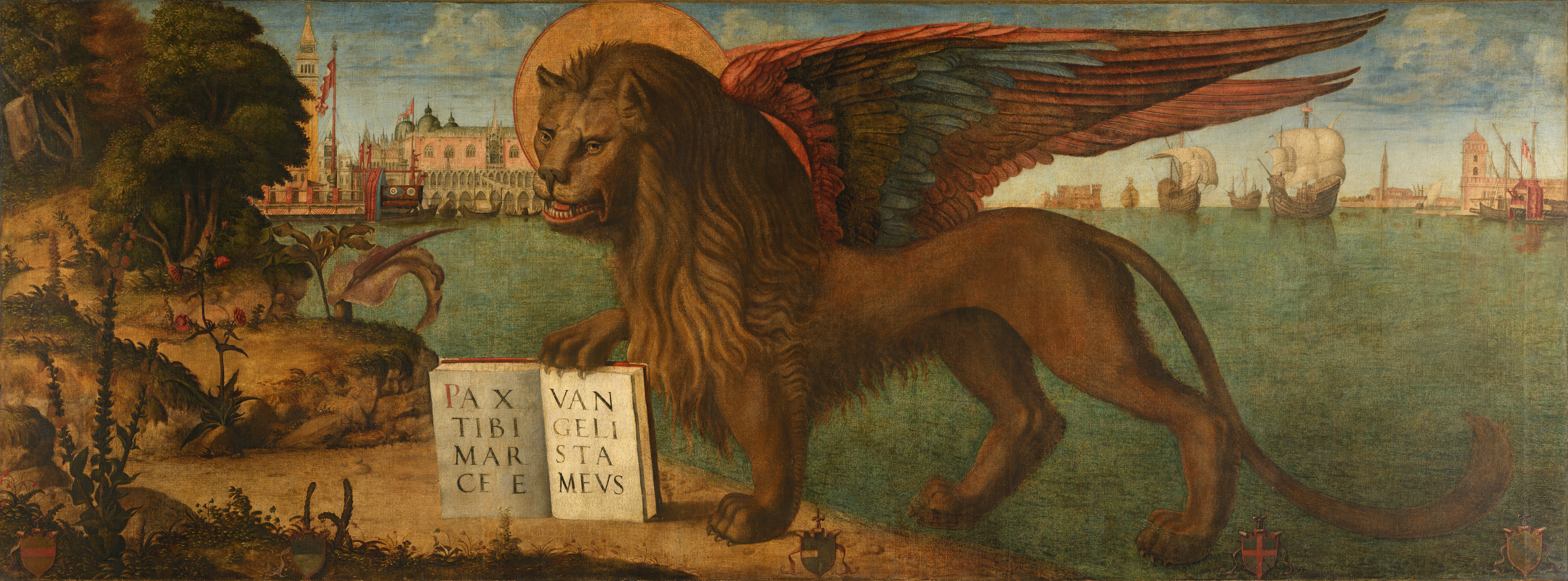
    By Vittore Carpaccio – Google Art Project, Public Domain, https://commons.wikimedia.org/w/index.php?curid=38019354

    [ video ]

    While almost everyone in Australia today is thinking about ANZAC Day, many Christians will also be observing the festival of Saint Mark. And those not doing so today will probably be remembering Mark tomorrow.

    At first glance Mark has nothing to with the ANZACs.

    Yet there are some interesting connections when we pause and think further about these two special commemorations which intersect for us every year.

    For the most part, our religious calendar in Australia comes from the northern hemisphere, and Europe in particular. Our church year is out of sync with the place where we live and the patterns of this ancient land.

    Instead of learning from the First Nations of this great south land, we cling to rituals and “seasons” which come from the “Old Country” and simply do not work here.

    The festival for St Mark started out that way as well, but as it happened the holy day for St Mark was the day when the British forces—including the ANZAC troops from Australia and New Zealand—landed at Gallipoli.

    As you may know from many ANZAC Day talks, that was not the day when the landing was supposed to happen.

    It had been planned for 23 April (which happens to be St George’s Day), but bad weather slowed things down and the landing took place on 25 April instead (St Mark’s Day).

    That was a Sunday in 1915 just as it is in 2021.

    I do not imagine many of the soldiers were thinking about St George or St Mark on that terrible morning.

    Yet ever since, for Australians and Kiwis, the feast of St Mark coincides with ANZAC Day.

    We finally have a holy day that belongs to us!

    Saint Mark has been conscripted into the ANZACs.

    So, as we prepare to baptize Hamilton and Eddison, let’s think a little more about Mark.

    We know very little about him, but here a few things we can list:

    • He was from Jerusalem
    • His mother had a house there
    • They had at least one servant (Rhoda) and perhaps others as well
    • The small group of Jesus people in Jerusalem met at Mark’s home
    • Mark’s mother ran a “safe house” for Jesus people
    • Peter goes to that house when he escaped from prison in Jerusalem
    • Mark knew people like Barnabas, Peter and Paul; and maybe also Mary the mother of Jesus, and James the brother of Jesus. Unless he was a very little boy at the time, he would also have known Jesus!

    There is something else about Mark: he had two names.

    We call him Mark which was a name he used when mixing with people from the wider community: merchants, soldiers, government officials, people who were not Jewish.

    But inside his own culture and his own family he was known as John (Yohanan in Hebrew).

    He had two names because he lived in two very different worlds: a Jewish world and a Roman world.

    Mark was a young man, and maybe just a teenager, at a moment in time when everything was in the process of changing. As it happens, so were those young ANZACs who were landing at Gallipoli under hostile fire on this day in 1915. 

    They did not know it at the time, but the world order was collapsing and everything was going to be different. We still have not put all the pieces back together in the Middle East since that war.

    Mark did not realize at the time, but everything in the ancient world was about to change. A few weeks earlier, the Roman empire had executed Jesus. In less than 300 years’ time the Emperor of Rome would be a follower of Jesus, and instead of meeting in secret like the people who came to his mother’s house on a Saturday night, the Jesus people would be meeting in the town halls because so many people wanted to join their religion.

    Hamilton and Eddison, you are alive in a time of huge change. Everything is changing around us. We do not know what the future will look like, but it will not be like the recent past.

    In that sense, you guys and John Mark have quite a lot in common.

    Mark did not have all the answers and he did not always get things right. But Mark had the courage to live as a person of faith in a world that was changing. He did not need all the answers, he just needed to know that Jesus’ message about the kingdom of God was the best way for him to live his life.

    When you are baptized here in a few minutes time that is what you are doing as well.

    You do not pretend to have all the answers, and I do not have them either. But you are saying YES to the opportunity to stand on the side of Jesus as everything in the world changes.

    The rest of us here are standing beside you and Jesus as well.

    We do not have all the answers either, but we have a hunch that by standing alongside Jesus we shall all be the right place and on the right side of history. We have a special word for that hunch: faith.

    So let’s go to the font and say YES to Jesus, YES to God.

  • The heart of the good news

    The heart of the good news

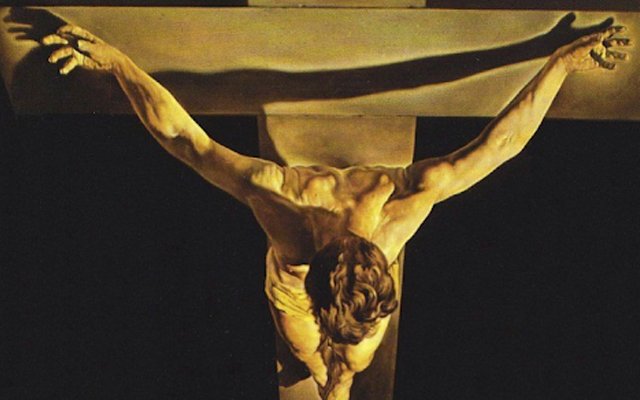
    Detail from Christ of St John of the Cross, Salvador Dali, 1951

    Good Friday
    Christ Church Cathedral, Grafton
    2 April 2021

    [ video ]

    A week or two back, a colleague and friend from the USA shared with me some reflections on Good Friday and Easter through the lens of the killing of George Floyd, the African American man who was strangled to death by a white police officer on 25 May 2020. The officer knelt on George Floyd’s neck for 9 minutes and 29 seconds — yes, 9 minutes and 29 seconds — until he ceased to breath. He was dead. 

    That essay offered some powerful reflections on lethal imperial violence against innocent oppressed persons and resurrection/resistance, but what struck me most was a simple observation Brandon Scott made concerning the emphasis which the Apostle Paul placed on the death of Jesus:

    It is important to notice that Paul preaches the Anointed crucified (1 Cor 1:23). He does not say he preaches the Anointed raised.

    Those words are quite matter of fact, since they simply quote Paul’s own words from our second reading this morning: “we preach Christ crucified …”

    Yet they invite us to go deeper into the mystery of Easter, and indeed the meaning of the Gospel.

    The Paul who says that he preaches Christ crucified doubles down on that point in the next chapter of his letter to the Corinthians:

    When I came to you, brothers and sisters, I did not come proclaiming the mystery of God to you in lofty words or wisdom. For I decided to know nothing among you except Jesus Christ, and him crucified. [1 Cor 2:1–2]

    And a few lines later he writes:

    But we speak God’s wisdom, secret and hidden, which God decreed before the ages for our glory. None of the rulers of this age understood this; for if they had, they would not have crucified the Lord of glory. [1 Cor 2:7–8]

    This is the same Paul who, in this very same letter (1 Corinthians) will devote a whole 58 verses to asserting the centrality of the resurrection in chapter 15! He even says that our religion is meaningless if Christ was not raised:

    If Christ has not been raised, your faith is futile and you are still in your sins. Then those also who have died in Christ have perished. If for this life only we have hoped in Christ, we are of all people most to be pitied. [1 Cor 15:17–19]

    Yes, Paul is deeply invested in the resurrection, but the core of his gospel is to be found in the death of Jesus. Like George Floyd, it is not enough to say, “Jesus died”. We need to say, “Jesus was killed. Jesus was murdered. Jesus was eliminated by the empire.”

    The student protestors in Myanmar these past few weeks, are not just people who died; but people who are being killed by their government, by the ruling elite.

    When we say with Paul that Christ was crucified, we are not simply saying that he died. We are saying—boldly, plainly and as an act of resistance against those who control our world—that he was publicly killed and made an example of in order to keep people like us in our place.

    George Floyd was murdered by a man wearing the uniform of the Minneapolis city government.

    Jesus was killed by solders wearing the insignia of the Roman emperor.

    The Indigenous people of this Valley—who were poisoned, shot, incarcerated, and raped—were victims of European settlers acting with the protection of the colonial government and often with the tacit blessing of our churches.

    Paul never knew about George Floyd or the First Nations of Australia, but he realised that in the way the Jesus was killed we catch a glimpse of the ways things are and of the ways things are going to be from now on.

    This Paul was himself a Roman citizen, someone who enjoyed privileges not available to many people in his society. 

    As a Roman citizen, Paul had a “get-out-of-jail” card. Jesus did not have such a privilege. 

    Paul could appeal to the emperor. Jesus was at the mercy (sic) of the mean-spirited provincial bureaucrat, Pontius Pilate. 

    As a Roman citizen, Paul could never be crucified.

    Yet he proclaims Christ crucified.

    In this person and in this event, we can discern (if we have eyes to see) the ways the empire of God (basileia tou theou) is organised, and it is very different from the way the privileged elites of our world—then and now—see things.

    Paul says as much in his fascinating comment in 1 Cor 2:8: “None of the rulers of this age understood this; for if they had, they would not have crucified the Lord of glory …”

    When “the rulers of this age” see Jesus hanging on a cross beside the main road to Jaffa, they think they have reinforced their power and their privilege. They have eliminated a threat. They have warned everyone else to toe the lines drawn by the people with power, or else …

    But when God looks at the abused and battered body of Jesus strung up beside the highway, God sees someone who has said yes to the reign of God. 

    God sees someone who has total faith that even in his death God will be shown to be in charge of the ways things work around here.

    Don’t think for a moment that God wanted Jesus to die.

    In saying that, I am reflecting the work of the Roman Catholic theologian, Elizabeth A. Johnson, in her essay, “The Word was Made Flesh and Dwelt Among Us. Jesus Research and Christian Faith.” in Doris Donnelly (ed), Jesus. A Colloquium in the Holy Land. New York: Continuum, 2001. Pages 146–66:

    To put it simply, Jesus, far from being a masochist, came not to die but to live and to help others live in the joy of the divine love. To put it boldly, God the Creator and Lover of the human race did not need Jesus’ death as an act of atonement but wanted him to flourish in his ministry of the coming reign of God. Human sin thwarted this divine desire yet did not defeat it. (page 158)

    Rather than being an act willed by a loving God, [the cross] is a strikingly clear index of sin in the world, a wrongful act committed by human beings. What may be considered salvific in such a situation is not the suffering endured but only the love poured out. The saving kernel in the midst of such negativity is not the pain and death as such but the mutually faithful love of Jesus and his God, not immediately evident. (page 159)

    So, while we need not think that God wanted Jesus to die, we should never doubt for a moment that God’s response to the murder of Jesus was not only to enfold the dead victim of human evil into God’s own life, but also to embrace each of us and all of us in the same way.

    For people of faith, the murder of Jesus was a tipping point in the cosmic story, a moment when we see what really matters and how the universe is actually structured.

    The “curtain was torn,” and we see that those with privilege are not the ones with real power.

    The knee of that police officer who killed George Floyd on 25 May last year not only killed George. He also showed us what is wrong with our world. He extinguished the life from one black man. But he shone a light on all the violence directed against black people by a system from which some of us here prosper and under which some of us here still suffer.

    Good Friday is not just about happened to Jesus on 2 April (note the date) in year 30 of the Common Era. 

    Good Friday is about the event in which we glimpse the brokenness of human power systems and the vindication of the crucified one (all of them, millions and millions of us, down the millennia).

    This is the day when love checkmates hate.


  • The god who rides a donkey

    The god who rides a donkey

    Christ Church Cathedral, Grafton
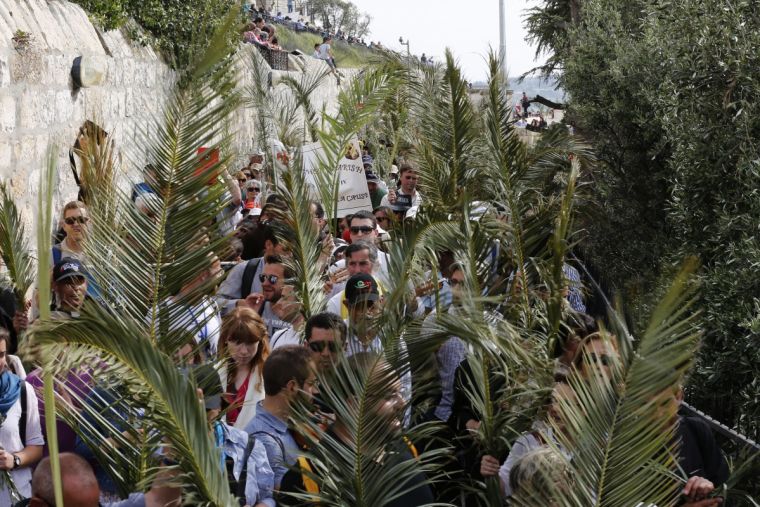
    Palm Sunday
    28 March 2021

    [ video ]

    As we celebrate Palm Sunday today, our Jewish friends are observing Passover.

    To our Jewish neighbours here in Grafton, to our Jewish citizens around the nation, and to all Jews everywhere—whether in Palestine or in the Diaspora—we say Chag Pesach sameach (happy Passover festival) and we wish them ziessen Pesach, a sweet Passover.

    Passover and Holy Week are for ever entwined, even if some years our different calendars mean that we observe them a few weeks apart.

    For many centuries, Jews have ended the Passover seder with these words: 

    L’Shana Haba’ah B’Yerushalayim 
    לשנה הבאה בירושלים‎
    Next year in Jerusalem

    Jerusalem draws people of faith—not just Jews, but also Christians and Muslims.

    We want to be there.

    For sure I do, just as soon we are allowed to fly once more!

    That was also true in ancient times.

    At Passover time the population of the city would swell from 20,000 (some say up to 100,000) to 2,000,000 people.

    Any Jew who could be there would be there.

    And so would the Roman army!

    The stage was also set for conflict.

    The Roman procurator, Pontius Pilate, came to Jerusalem for the Passover, but not for religious reasons. He was there to keep an eye on the crowd and ensure direct control of his bolstered garrison during the week-long festival of liberation from enslavement.

    This week, together with our Jewish friends, we celebrate the crazy idea that the compassionate power at the very heart of the universe is on the side of the powerless, and opposed to every form of empire.

    This week drips with intense religious meaning, but also with powerful politics.

    Every empire, no matter its religion, is held to account by the sacred truths we affirm this week.

    We have a choice in the way we understand our religion, whatever our faith happens to be. 

    We can choose to see God as endorsing the emperor, or the ways our society arranges power, wealth and opportunity. That has always worked well for religion as we get a cut of the action: tax-free lands, freedom from military service, governments funds for church buildings and programs. Sometimes even a seat in the House of Lords.

    That kind of god rides into Jerusalem on a white horse surrounded by the banners of imperial privilege and with the power to arrest, imprison and kill their opponents.

    There is a different kind of god who rides into Jerusalem on a donkey.

    Such a god enjoys no imperial privileges and commands no army. His kingdom is not of this world. Or more correctly, his kingdom in this world reflects the way that the divine will is enacted in heaven. Far from getting access to government funds or a place at the table when big decisions are being made, this donkey-riding-god is murdered by the people who enjoy imperial privileges.

    The god who rides a white horse thinks he has defeated the god who rides a donkey.

    But it is not so.

    The slaves are set free, the crucified one is raised to life and exalted to glory.

    That disruptive truth is central to the Passover story as well as to Holy Week.

    Today I invite you to pause and think about which kind of god you imagine yourself to be serving.

    Does your god ride a horse or a donkey?