Pentecost 5 (Year A)
28 June 2026
St Paul’s Church, Ipswich

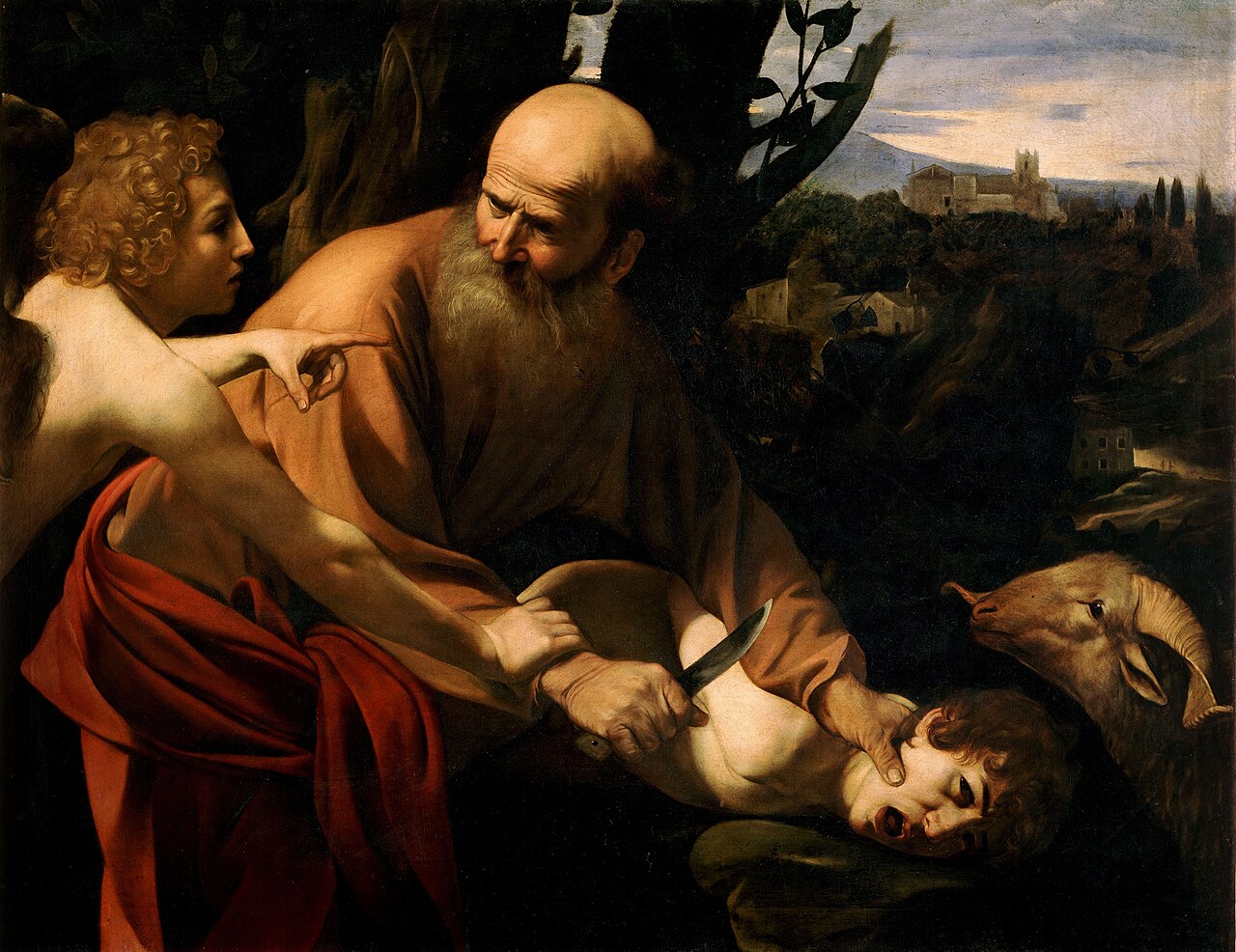
IMAGE: Sacrifice of Isaac (Caravaggio, ca. 1603 CE) Wikimedia Commons
As you may have noticed from the many sermons you have heard me deliver, I typically focus on the Gospel of the day.
However, sometimes one of the other readings needs to be addressed. Today’s reading from Genesis 22 is one of those texts.
As we prepare to engage with that passage, I invite you to think about what we’re doing as we listen to the Bible being read in church. We are not here for a Bible study session, nor are we here for an academic class with time to tease out various issues and perspectives relating to the text. Rather, we are here seeking spiritual wisdom and strength for everyday life. We can summarise spiritual wisdom and strength for everyday life in the single word, grace.
The grace we are seeking is to hear what God wants us to hear, to hear what God is seeking to say to us. That’s why, at the end of the reading, we say, “Hear the word of the Lord.” In other words, listen for the message from God. Don’t simply focus on the words that have been read out.
As the New Zealand Anglican Prayer Book puts it ever so beautifully, “Hear what the Spirit is saying to the Church.”
When we read a passage from the scriptures in Church, we give it authority and we say that it is powerful.
The contents of our scripture readings have an impact on us all. They may give us hope. They may confront us with something in our life that needs to change. They may trigger some memory that is either painful or joyful.
It is rarely the case that a passage from the Bible can simply be read and then left hanging without some comment or reflection as part of the process.
As the preacher this morning, it is my responsibility to offer that comment and provide a reflection.
In the Old Testament reading last week and again this morning, the lectionary offers us problematic texts, two vivid examples of what some biblical scholars call texts of terror.
Last week, you may recall that it was Abraham expelling his concubine Hagar and their son Ishmael into the desert, expecting that they would die (Genesis 21:8:–21). That was also a problematic text, with the dynamic between Sarah and Hagar driving an abusive family dynamic that saw Abraham expel the enslaved woman with whom he had his first son (his first child) and the child himself into the desert.
In today’s reading, Abraham has form. This time, unknown to Sarah, Abraham has become convinced that God wants him to murder their child Isaac and offer him as a human sacrifice.
Clearly, Abraham needs therapy.
This is a clear and horrific example of domestic violence. Were it to occur in any family connected with the life of this church, we would be horrified. We would call in the authorities, put the perpetrator into mental health care, and seek to provide a safe environment for the family.
So, what do we do when we have Genesis 22 as the first reading in church on Sunday morning?
I will offer some reflections on how I deal with this reading. You may find them helpful, you may not.
Do keep in mind that you don’t have to agree with me. However, whether you agree with me or not, you still must do your own thinking. It is essential that you develop some way of engaging with this story that reflects the character of Christ.
One way of dealing with this passage is to note that it comes from a series of episodes about a legendary ancestor of the Israelite people. We could make the point that this is not a story about something that ever happened. That might be helpful. It at least gets God off the hook, since it is then clear that, if this story never happened, God did not in fact ask Abraham to sacrifice Isaac to prove how much he loved God.
As a historian and as somebody who has devoted my entire life to academic biblical studies, this is a “get out of jail” card that I find quite attractive. However, it doesn’t solve all our problems, and it may even generate other problems.
In any case, even if this terrible text has no basis in any historical moments from the life of an actual person called Abraham, it remains true that the people who created the Bible were happy to think that this is how God will treat people and how a person of immense faith would respond to such an horrific request from God.
If you think God decided what stories—and even which words—got into the Bible, then God is responsible for this horrific story being in Genesis.
Instead of rejecting this story as something unworthy of Scripture, for more than 2,500 years people of faith and goodwill have done their best to draw profound spiritual meaning from it. For Christian readers, this tale from Genesis 22 has often seemed like an echo of the crucifixion.
We do not have time—and likely not the interest—to review all those efforts.
Instead, let’s step back and think for a moment about what we are being asked to do when we read the Scriptures; whether that be privately, in a small group discussion, or in a gathering such as Sunday morning worship.
To listen to scripture is to engage in an exercise where we are seeking to discern what the Spirit of God—the Spirit of Jesus—might be saying to us. We are also looking to discern how we, as disciples of Jesus, might live faithfully from now on, informed by our response to that text.
Here are some examples, just a few, of how we might engage in that discernment exercise.
A text such as this may call me to think of those times when I have sacrificed my family for the sake of ministry. There were no silent walks to a faraway mountain, but there were many times when the demands of ministry took precedence over my responsibilities for those who were nearest and dearest, especially my children.
A text such as this may remind me of times when people around us have made bad choices, indeed violent and harmful choices, that impact their children. How often have we looked away? How often have we excused their behaviour with a phrase such as “Well, they’re doing what they think is right”?
Reflecting on a confronting passage like Genesis 22 might be an opportunity to reflect on how we can all do better in our response to God and in our care for each other.
Alongside the terrible narrative of Genesis 22, we might place the two great commandments from Jesus: “You shall love the Lord, your God, with all your heart and soul and mind and strength.” And, “You shall love your neighbour, your child, as yourself.”
The words of the Two Great Commandments challenge the narrative of Genesis 22
Loving God with all our heart and soul and mind and strength can never involve harming a child, or sacrificing our family.
This ancient story of a psychotic Abraham falsely thinking that God wants him to murder his child, having so recently expelled Ishmael and Hagar into the desert, calls us to a higher way.
The text can serve as a mirror, allowing us to see those moments in our own lives when we might be tempted to misunderstand God’s call on our life.
The text can also serve as a call to action. As communities of disciples of Jesus, the little ones must always be protected and nurtured. As Jesus taught his disciples, the Kingdom of God belongs to children. Caring for children is not a distraction from our core responsibilities as a church. These are our core responsibilities. Even if Abraham in the story could not see that, surely we can.
Although this story is most likely something which never happened, let’s allow our imagination to take the story a little further.
Imagine Abraham and Isaac returning to their home, their Bedouin tents, after this adventure, which ended so well when it could have ended so badly. Who tells Sarah where they’ve been? Is it Isaac or Abraham who will describe to Sarah what almost happened? Can we imagine Sarah’s reaction? What does she have to say to Abraham? What does she have to say to Isaac as she enfolds him in her arms?
There are too many mothers crying over dead and injured children.
In Gaza. In the West Bank. In Israel. In Lebanon. In Iran. In Syria. In Sudan and South Sudan.
In Ipswich.
As disciples of Jesus, we must do better. And we can.
Do leave a reply. I always appreciate hearing from my readers/