Author: Gregory C. Jenks

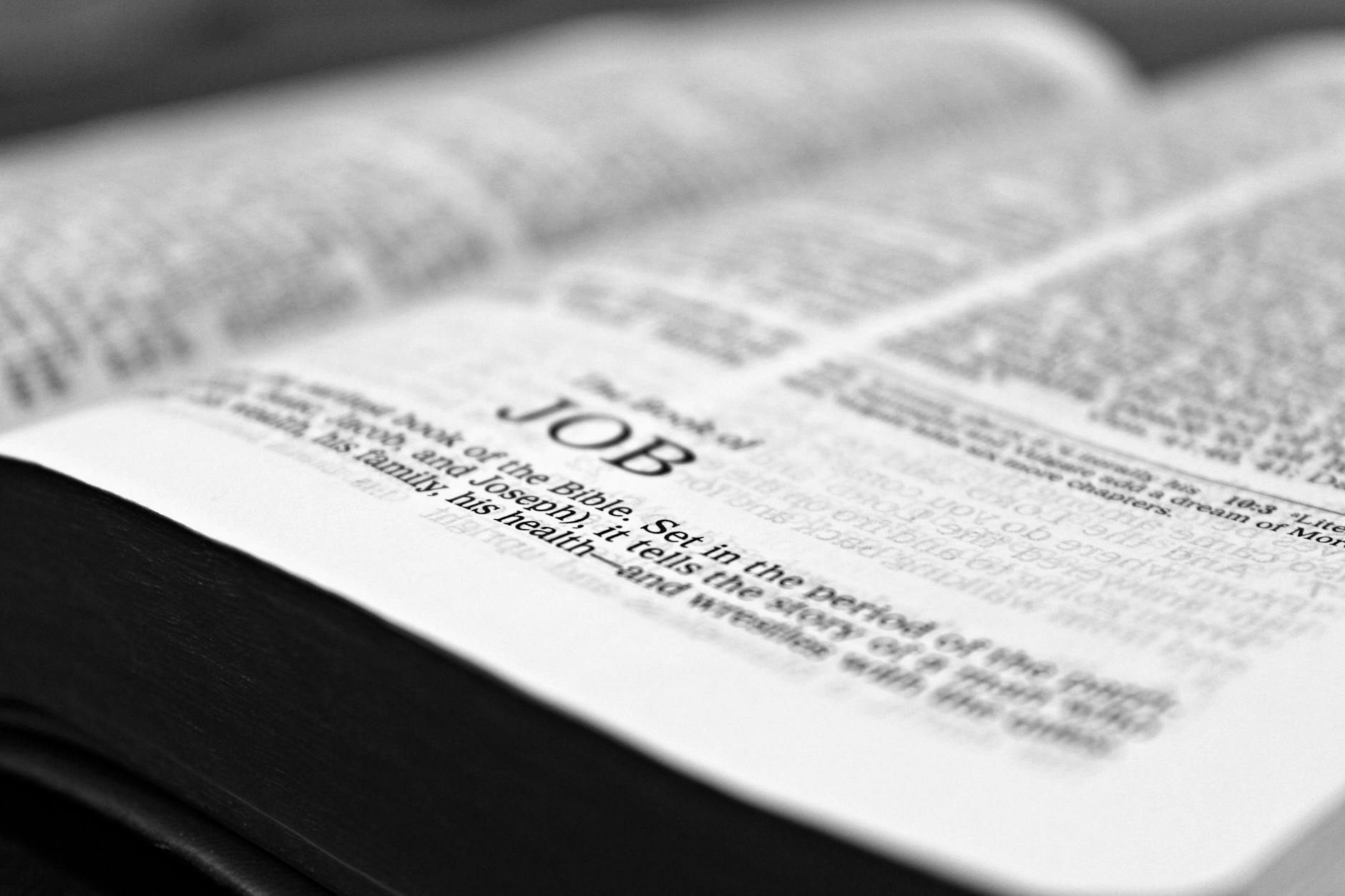
  • The myth of an infallible Bible

    The myth of an infallible Bible

    A brief note for the newsletter of A Progressive Christan Voice Australia

    It is literally an article of faith for some Christians that the Bible is infallible. By that descriptor they are claiming at least two things: (1) The Bible is without any errors, and (2) the Bible is a guide for faith which will never mislead or fail to provide a reliable guide to the spiritual wisdom that a person needs at any time in their life.

    Christians have actually killed each other over these claims, and even in recent times people have lost their jobs as seminary professors and congregational pastors under suspicion of somehow not defending such a view of the Bible.

    All the same, and without wishing to offend colleagues and co-religionists who insist on believing the incredible and the ridiculous, this is a nonsensical claim for anyone to make about any historical text.

    Let’s start at the very beginning, as it is a very good place to begin according to another canonical text of western civilization, The Sound of Music.[1]

    Which Bible are we talking about and which set of books do we consider to constitute this collection of supposedly infallible texts? Already the heads of our fundamentalist friends will be hurting.

    There is no such thing as “the Bible.”

    To the contrary, there are many collections of books which various sets of Christians recognise as the Bible for them.[2] The Bible which is most likely in the mind of people who claim biblical infallibility is an expurgated edition the Bible which is much beloved among Evangelical and Pentecostal Christian communities.

    Category error?

    Yes, indeed. 

    This whole debate is an ecclesiastical mad hatters party. The rare individual who enters the rabbit hole with some basic religious literacy feels a remarkable affinity to Alice in Wonderland, where the powers that be insist that words can mean whatever they choose to make them mean. But that is not so.

    Leaving aside for now the rather important fact that Christians do not even agree on which books comprise the Bible, or in which order they should be arranged, the claim to possess an infallible sacred text fails on numerous other grounds.

    It is simply impossible to have an infallible book:

    • All texts are generated by people in particular contexts and under the influence of various personal assumptions, many of them entirely beyond their conscious knowledge.

    • The texts will be inscribed using technologies and linguistic conventions at the time, and some of those features will be incomprehensible to readers from later times.

    • The documents will need to be preserved, and copies will need to be made. Indeed, we have thousands of handwritten copies of the biblical texts and no two of them agree in every single details. Oops!

    • In many cases they will need to be translated, even if just to update the font or the syntax for current readers.

    • The readers will change over time. There will be different individuals at various points in time. The kind of readers will change from the original audience to the clerics of the religious institutions to the mass readership of an industrial society with general education for all its citizens. The social location and existential context of the readers will vary enormously. They will each be influenced by some obscure mix of their personal experiences and their prior religious beliefs, not to mention their psychological needs.

    • Some of them will need persuade us that their reading of their Bible is the reading of an infallible Bible given to us by God, with absolute truths which remain constant for all time and across all cultures.

    I would not buy a car from such a person and I will not embrace their concept of biblical infallibility either.

    Fortunately for me as an Anglican, the community of spiritual practice of which I am both a member and a cultic official has a more nuanced understanding of the Bible, as well as a wider definition of the Scriptures—a definition which reflects ancient Christian wisdom.

    I am encouraged to believe that all the spiritual wisdom which I need can be found in these sacred texts, but I am not required to subscribe to fairy tales about the divine origins of my Scriptures nor to ascribe ultimate truth status to everything my Bible says.

    Thanks be to God


    Notes

    [1] https://www.metrolyrics.com/doremi-maria-and-the-children-lyrics-the-sound-of-music.html

    [2] For a current example of a reasonably ecumenical edition of the Christian Scriptures see the New Oxford Annotated Bible, which carefully explains which of the apocryphal texts that are part of the Bible for the vast majority if Christians over most of the 2,000 years are recognized in one or another faith community. It may not be sold in your local “Christian” (sic) bookstore, but that is another essay for another day.

  • We are not alone

    We are not alone

    Fifth Sunday in Creation Time
    Christ Church Cathedral, Grafton
    4 October 2020

    … to be fully alive is to appreciate our place within the web of life in all its diversity …

    [ video ]

    For five weeks now we have been observing the special season of Creation Time, coinciding with Spring in our part of the world.

    Our overall theme has been: A jubilee for the Earth.

    In this context jubilee does not means simply a 50-year anniversary, but a time for forgiveness and a fresh start.

    In the biblical texts, every 50 years all debts were to be cancelled and all ancestral lands restored to the families which previously held them.

    Whether or not this covenant ideal was actually practiced in ancient Israel, it is a biblical model for our relationships with each other, with the Earth, and with the diverse web of life of which we a part.

    We might paraphrase it with phrases like “wipe the slate clean” or simply, “starting all over again.”

    Of course, it is not that simple since we cannot just hand back land which has been devastated, forests which have vanished, species which have become extinct, or water reserves which have been wasted or polluted.

    In addition to restoration we need to embrace the concept of restitution.

    Restitution imposes real costs on actual people and on businesses, as well as some obligation to go the extra mile and give back even more than we have taken and destroyed.

    Apart from the political controversy and the financial burdens, can it even be done?

    Are we already beyond the tipping point, have we passed the point of no return?

    Some people think so.

    This is not the place and I am not the person to resolve that dilemma, but we all have to live with the realities of environmental degradation, loss of biodiversity, land with depleted soils, insecure water supplies and creeping climate change.

    We are not alone in this, since the same applies to every other creature on planet earth. We are indeed in this together. We are not alone. No matter who is responsible for the situation, we are all in this together.

    That is surely one lesson we have learned during the current pandemic. A tiny virus which we cannot see, feel, hear or smell is turning our lives upside down. 

    There is indeed more to reality than what we can see, although in this case we have created the tools which allow us to track both the presence of this virus as well as its modus operandi.

    Maybe our best researchers will find a vaccine, but perhaps we shall just need to change the way we live in order to avoid losing many more lives and a vast number of livelihoods.

    We are not alone.

    We are part of an amazing web of life in all its diversity.

    St Francis of Assisi seemed to sense that life is about relationships; with each other, with other sentient life forms, with the physical world, with poverty, and even with death.

    Our texts and our music today invite us to see life in this way.

    Not as resources over which we have some agency, but as diverse expressions of God’s own essence.

    Not as threats to be avoided or defeated, but as opportunities to deepen our intentional engagement with God’s eternal work in creation.

    Even Sister Death is to be welcomed as a guest who ushers us into the next stage of God’s great plan for the universe.

    As Paul wrote in his letter to the Christians in Rome:

    For the creation waits with eager longing for the revealing of the children of God; … [when] … creation itself will be set free from its bondage to decay and will obtain the freedom of the glory of the children of God. We know that the whole creation has been groaning in labor pains until now; and not only the creation, but we ourselves, who have the first fruits of the Spirit, groan inwardly while we wait for adoption, the redemption of our bodies. [Romans 8:19. 21–23]

    Together with every other creature, we yearn for the day of redemption.

    More than that, we are a voice for the Earth as it looks for that day of jubilee. Our prayer is for the Spirit of God to move once more upon the seething waters of creation and renew the face of the earth.

  • The blessing of diversity

    First Sunday in Creation Time
    Christ Church Cathedral, Grafton
    6 September 2020

    St Francis of Assisi and the Canticle of the Sun

    [ video ]

    Spring has arrived, at least for those of us in the southern half of the world.

    We can feel and see and hear urge of creation to renew itself and bring forth new life in all its abundance.

    This is a good time to pause and reflect on creation—as we do in this annual season of Creation Time.

    A time of jubilee

    The theme for the Season of Creation in 2020 is: A jubilee for the earth.

    In the Bible, there is an ancient Jewish tradition that all debts were to be forgiven every fiftieth year; the year of jubilee. We have no texts which describe that actually happening, but it remains a key concept for people of faith as we think about the baggage and bad debts we acquire over a lifetime. 

    There comes a point where we need to let go of the past.

    In this case, the jubilee is because 2020 marks 50 years since the first Earth Day events in 1970.

    After drought, fires, floods, pandemic and climate change we might well be ready to settle the accounts with Mother Earth and set things back to how they should be.

    It is clear that humanity has been mortgaging our lifestyle against the reserves of the Earth. We are deeply in debt and this may be a good time to declare a year of jubilee for the Earth, a time for a fresh beginning.

    Biodiversity

    Each Sunday during Creation Time has its own theme:

    Biodiversity (today)
    Land (next Sunday)
    Water (the week after)
    Climate Change (last Sunday in September)

    Like me, I am sure you were appalled to learn of the massive death rates among animals and insects during the apocalyptic fires that raged across our ancient land last summer.

    The numbers are staggering.

    More than one billion animals, and that does not count large populations of insects and other species, or the ongoing impact due to loss of vegetation in burnt out areas.

    This is not the time and place for a science lesson, but we have all noticed that our cars are not plastered by as many insects as used to be the case after a night-time drive in country areas.

    Biodiversity is essential for the planet, for the well-being of the web of life, and indeed for our own survival as well.

    Since one of the five marks of mission for Anglicans is to “safeguard the integrity of creation, and sustain and renew the life of the earth,” this is part of our work as people of faith.

    We recall that the opening chapters of the Bible give humans the role of stewards of God’s creation, called to care for and tend the planet.

    Our task is not simply to share the good news with other people, but to work towards the redemption of all creation. Hear what Paul says in Romans 8:

    For the creation waits with eager longing for the revealing of the children of God; for the creation was subjected to futility, not of its own will but by the will of the one who subjected it, in hope that the creation itself will be set free from its bondage to decay and will obtain the freedom of the glory of the children of God. [Romans 8:19–21]

    Paul is saying that all of creation is to be caught up into the great redemption and to share the glorious freedom of the children of God. The whole of creation. In all its glorious diversity.

    Now that will be the jubilee to end all jubilees!

    Social diversity as well

    As we celebrate biodiversity, let’s also consider other forms of diversity even within our own social circles.

    There are various ways in which we need to celebrate and protect diversity:

    Churches—we seem increasingly afraid of diversity, and we split off into sects of like-minded people who pray in certain ways, like particular styles of music, prefer one theological orientation over another. Congregations are becoming less representative of the theological diversity that exists within the kingdom of God. Worse still, the people found inside the churches rarely represent the diversity of the community around them. We need to recover the inclusive DNA of broad-minded Anglicanism and halt the slide into sectarian irrelevance.

    Community—we see the struggle over diversity and social inclusion in the wider society as well. This is a challenge across the nation, but it is especially evident in regional areas. On the rare occasion when I see someone from another culture walking towards me at Grafton Shoppingworld, I feel a surge of delight welling up within me. My life is blessed by the diversity they bring into our community. But I wonder how easy they find it to claim a place in our community, and whether they feel ‘at home’ amongst us.

    Family and friends—if all my friends look like me, speak like me, enjoy the same food as me, vote like me and enjoy the same recreational activities as me, then something is awry. There is a deep lack of diversity in such gatherings of clones. We become culturally inbred and our humanity is diminished.

    So let’s be passionate about the need to protect and increase biodiversity, but let’s also use these next few weeks to reflect on the diversity of our church, our community and our personal circle of family and friends.

    Reach out someone who seems different from yourself, and see what blessings may come from building relationships beyond our comfort zones.

    The world will be a better place.

  • A G*d beyond any words

    Christ Church Cathedral Grafton 
    13th Sunday after Pentecost 
    30 August 2020 

    Mosaic of Moses at the burning bush, St Catherine's Monastery, Mt Sinai

    [ video ]

    This is one of those Sundays when the lectionary offers more than one really attractive pathway for a preacher.

    In the Old Testament reading we have the classic tradition of Moses encountering God at the burning bush while in the gospel we have Jesus calling on those who would be his followers to take up their own cross and come after him.

    Each of those readings offers us some really good material to work with this morning, but I am going to go with the first reading: Moses and the burning bush.

    If the custodians of Saint Catherine’s monastery at the foot of Mt Sinai are to be believed, then I have seen that very bush with my own eyes. During one of several visits to Mt Sinai about 30 years ago, I went into the Chapel of the Burning Bush which is inside the walled compound of the monastery. There inside the Chapel we were shown a small bush growing up against the interior wall and we were told this was indeed the bush through which God had spoken to Moses. When we asked our hosts how the bush came to be growing inside the church building rather than beside a wadi where a shepherd might take his father-in-law’s goats, we were assured that the bush had once been outside but had been trained to grow inside the building by the monks over many hundreds of years. 

    I am really not all that interested in the historicity of the exodus traditions including the stories about Moses in the desert prior to his return to Egypt to liberate the Hebrew slaves, and I am even less interested in the pedigree of the little green bush inside the chapel at Saint Catherine’s monastery. 

    What does interest me is, first of all, the way that God is spoken about in this story and secondly, the kind of religious experience or perspective which this brief passage in the Old Testament has promoted over the past millennia.

    The history of both Judaism and Christianity has been largely a story of people seeking to capture, define, and control how God is best understood and also how God is best experienced. 

    We have taken this very seriously. It really mattered to us.

    We have written millions of words in theological documents and church liturgies to ensure that there can be no ambiguity about what is expected—whether in belief or action—and no deviation from the approved interpretations of religion. 

    Indeed we took this all so seriously that we broke into factions, we persecuted each other, and we even killed each other over differences in theology and prayer.

    All this is to our shame and must never be forgotten when we criticise other people for the religious violence to which they are sometimes drawn in our own time. 

    Let’s go back to Moses and his amazing combustible shrub, a bush which was ablaze with fire but apparently was not being consumed by the flames.

    Even that description, of course, uses symbolic language. We are not dealing with history in this passage, but with one of the most important texts in the western religious tradition. 

    The importance of this text is not what it says about Moses but rather what it says about God and about us.

    As the story goes, God has a pretty amazing project for Moses to undertake. Moses is to leave his wilderness sanctuary—where he fled to escape the consequences of his own violent rage which caused the death of another person—and he is to go back to Egypt and indeed into the courts of pharaoh no less, to demand the release of the Hebrew slaves.

    Again, it’s important to remember but this is a story and not an historical narrative. Leaving aside the fact that Moses is said already to be 80 years of age before beginning his life’s project, it is equally true that he would neither have secured the release of the Hebrew slaves nor evaded incarceration himself had he returned to Egypt. 

    So let’s put aside the larger story in the book of Exodus and just focus on this amazing episode in which the character of Moses in the exodus tradition has a life-changing encounter with God. 

    First of all, we notice at the outset, that Moses does not even know God’s name.

    Actually, none of us know God’s name. This is not to say that we do not have names for God or for “the Sacred,” but is to remind ourselves that we can never know God and in ancient terms, that means none of us know the name or the identity of G*d. 

    G*d is always beyond any name.

    We can never capture G*d by pronouncing a magic phrase which will bind G*d to wait upon us and serve our desires. That kind of God would be a house elf from Harry Potter on steroids.

    Secondly, we notice when asked for a name, G*d evades the question. G*d is not be defined by the past nor constrained by some label in the future.

    I AM who I AM
    Ehyeh asher ehyeh
    I shall be what I shall be

    Finally, God gives Moses a name—Yahweh—derived from the same verb “to be” (EHYEH) that was pronounced twice over in the theophany at the burning bush. The meaning of this mysterious new name is to be inferred from the words of revelation which are simultaneously words of evasion, open-ended terms, possibilities beyond our comprehension.

    The name which eventually given is not an answer to the question, but an invitation to enter the mystery of who God is, and what God shall become.

    This divine freedom is the third thing I want us to reflect upon from this classic story.

    When the haunting Hebrew words EHYEH ASHER EHYEH were first translated into koine Greek not long after the time of Alexander the Great—as with every translation of every phrase anywhere at any time—something was “lost in the translation.” 

    As these words passed through the filter of Greek language and culture, divine disclosure itself changed as well. Instead of “I AM who I AM” or “I shall be what I shall be.” in the Greek version (the so-called Septuagint), we find: “I am THE ONE who IS”

    The focus moved from action to being, from relationship to ontology.

    And even that ancient attempt to define God fell short.

    In this ancient tale of the Great Encounter—the encounter between a human and the divine—we don’t find a lot of words. Moses is mostly silent as he takes off his sandals to acknowledge that he is in the presence of the G*d beyond all words.

    It is good for us to be silent in the presence of the mysterious divine Other.

    But we have filled our liturgies with words, words, words.

    In many forms of contemporary Western Christianity, it seems that everyone needs to be talking at once and in some places all the time. So much noise. So many words. So little attention to the Sacred Other who will not be defined by any of our words or any of our rituals.

    In this pandemic period as our songs are silenced and our actions are more limited, there may be a fresh opportunity to recapture the inner essence of worship.

    We are not here to chatter about G*d or assail the heavenly court with lists of requests.

    At its best, worship is a time when we discover ourselves to be in the presence of G*d, and practise doing so in order to recognise that same sacred presence outside of worship in everyday life. It may not require many words, and the words used need not be passing our own lips.

    Silence is golden.

    Use the silences that occur in our Cathedral liturgy to draw close to the G*d beyond all words.

    As the cantors sing, rest in your own silence and float on their cadences. The choral pieces are an invitation for us to be still and discern beyond all the noise of our lives that there is a Sacred Other who we can never capture, but who comes to us in Jesus, Emmanuel. Not in words, but in a courageous and compassionate human life.

    We can never capture G*d with our words, but in the silence we may allow ourselves to be captured by G*d, the One who will be whatever They wish to be, and chooses to take us into the future blessing as well.

  • The prophet and the Lebanese mother

    Christ Church Cathedral, Grafton
    Eleventh Sunday after Pentecost
    16 August 2020

    [ video ]

    It was the rostered day off for Jesus and his team.

    They had headed to the coast for a break, near the famous cities of Tyre and Sidon. 

    These days they could not get there due to the Israeli border fences, but in those days it seems people could move around more freely. Indeed, I have friends in Palestine who speak of catching the train from Jaffa to Beirut or Damascus to see a show and have a dinner. That was pre-1948, of course.

    The geography is just one of the unusual things about this story.

    It first appears in the Gospel of Mark (7:24–30), where the woman is correctly described as Syro-Phoenician. Today we would say Lebanese.

    Matthew changes her ethnicity and calls her a Canaanite, evoking the hostile attitudes to the indigenous people of Palestine that we find in the Old Testament. That little twist sharpens the dilemma posed by this woman’s request for help.

    The visit to Tyre and Sidon also evokes the old traditions (1 Kings 17) about Elijah having been sent to the same region when there was a famine in Israel. He found hospitality, after a hesitant initial reaction, from a widow who—along with her son—was close to death herself.

    There is yet another twist to this fascinating tale.

    In Jewish traditions from around the time of Jesus (Lives of the Prophets), the widow’s son is none other than Jonah, who had settled in Sidon with his mother, after returning broken-hearted from his all-too-successful preaching campaign against Nineveh. Having ‘failed’ in his wish to see the enemy destroyed—because his preaching was so successful that everyone in town repented (even the cattle put on sack cloth according to the book of Jonah)—he could not bear the shame of seeing the Assyrian capture his land. So he packed up his widowed mother and relocated to the region of Tyre and Sidon, only to have the prophet Elijah come and stay with them for an extended visit. First the sea-monster and now Elijah.

    Jonah’s hometown, according to the tradition, was a small village between Cana and Nazareth, modern-day Mashhed. That connection may be why Jesus spoke about needing to pay attention to the ‘sign of the prophet Jonah’ if people were really going to understand him and his mission.

    This is starting to sound like Alice in Wonderland …

    Whether or not Jesus ever went to southern Lebanon, people of faith like to tease out what God is asking of us by telling stories, connecting stories, reshaping the stories.

    We have a meme here.

    Prophets from the Galilee understood their mission to be to their own people, but they sometimes found themselves needing R&R in Gentile territories outside the kingdom of Israel.

    Elijah finds lodging with a widow from Zarephath near Sidon

    The widow is later understood to be the mother of Jonah

    In Luke 4 Jesus reminds his hometown crowd that Elijah was sent to the widow at Zarephath and not to any of them; just before they try to throw him off the cliff!

    Jesus himself seeks some ‘time out’ in Tyre and Sidon, as Mark says in the original version of this tale:

    From there he set out and went away to the region of Tyre. He entered a house and did not want anyone to know he was there. Yet he could not escape notice … (Mark 7:24)

    So the runaway prophet meets with a local lady from the region of Tyre and Sidon.

    We can almost sense the first-century audience thinking, “Ah, just like Elijah …”

    Like the widow that Elijah encountered, this Lebanese mother has a needy child. 

    This Lebanese mother has heard that Jesus is a prophet who can heal people.

    She finds out where he is staying and disrupts his vacation time!

    The prophet … the mother … the sick/dying child …

    Yes, we have a meme.

    And the disciples are irritated. Send her away, they ask Jesus. But this woman is not for sending away. She has a sick daughter and she believes that Jesus could fix that situation. She will not be shooed away.

    Finally, the woman is right there in Jesus’ face … “Help me, Lord!”

    Jesus responds with cruel words, harsh words, that offend our ears but invite us to appreciate him as a person of his own time, culture and religion: “It is not fair to take the children’s food and throw it to the dogs.”

    This Lebanese mother has chutzpah, a Hebrew term for extreme self-confidence or audacity. “Yes, Lord, yet even the dogs eat the crumbs that fall from their masters’ table.”

    In the original version of the story, found in Mark, Jesus replies: “For saying that, you may go—the demon has left your daughter.” (Mark 7:29)

    Matthew seems to feel the need to find some religious basis for Jesus’ agreement to assist her distant daughter, so he reworks the moment this way: “Woman, great is your faith! Let it be done for you as you wish.” (Matthew 15:28)

    The temptation for preachers and theologians is to ‘over think’ this scene.

    Let’s just stay with the Jewish meme of prophet-goes-to-Lebanon-meets-woman.

    Like the car chase scene in a movie, we know how such a meme has to end. In this meme, always people are healed, rescued, kept alive, blessed and transformed.

    As we hear this story and as we engage with the ancient meme it reflects, we give thanks for the God who meets us in the guise of other people. Sometimes we are the prophet to them, other times they are the prophet to us. Always God is at work. Always good things are happening. 

    Love drives out fear.

    Light overcomes darkness.

    Compassion trumps religion and tribalism.

    And for that we say, Thanks be to God.

  • Dreamy Joe

    Christ Church Cathedral, Grafton
    Tenth Sunday after Pentecost (A)
    9 August 2020

    [ video ]

    For our first reading today we have the OT passage about young Joseph. You know, the precocious little guy with the fancy jacket and a fawning father. And the dreams! What an attitude this kid had.

    In the Bible the Joseph story stretches across 14 chapters of Genesis: 37 to 50. It comprises about one-third of Genesis and is clearly a major topic of interest for the storyteller.

    Our lectionary gives us two small bites of that very large cherry. Today we have the murderous scene where his older brothers conspire to get rid of the dreamer. Next Sunday we have the scene from Genesis 45 when Joseph, now the de facto ruler of Egypt (as if), reveals his identity to the starving men who once plotted to murder him.

    We can perhaps understand why the lectionary committee chose those two scenes, but where is spiritual wisdom to be found in such texts?

    The lectionary snippets do not do justice to the biblical text.

    The selections are usually short and convent, and they do not slow us down too much, but our hearts need more than ‘drive-through’ spirituality .

    Worse still, as read in church, they affirm and validate violence and exploitation. By the time we get to the happy ending in Genesis 45, Joseph has already been messing with his brothers’ heads by a series of tricks worthy of both his father and his younger self. It seems he never did gain wisdom.

    Sometimes the Scriptures need to be read in lengthy extracts and not consumed as the spiritual fast food that is served up in the lectionary. 

    Do yourself a favour and read all 14 chapters of the Joseph story this week. Better still, find someone to read the whole story out aloud so you can hear it being performed and not simply consume the letters on the page.

    As you do that, ask what the Spirit is saying to the church—and to me—through a text such as this?

    The answers will differ, but let me suggest some that you might come up with.

    You may notice—and I think this what the biblical narrator probably wants us to sense—that there is a bigger divine plan beyond our own personal agenda for life, and wisdom consists of ensuring that our lives fit with that plan. I am certain that is what the editor of Genesis had in mind, and it was certainly what the writer of today’s Psalm (Psalm 105:12–22) had in mind.

    We might look at that story with all its bad bits, and sad bits and loving bits and notice that God is all to weave all the bits of our lives together so that everything is OK in the end. That’s a Romans 8 kind of interpretation: “We know that all things work together for good for those who love God, who are called according to his purpose.” (Romans 8:28)

    As some people read this story and reflect on it, they will notice how things that could have been disastrous actually end up turning out for good. Indeed, at the end of the story, Joseph says to his brothers: “Do not be afraid! Am I in the place of God? Even though you intended to do harm to me, God intended it for good, in order to preserve a numerous people, as he is doing today. So have no fear; I myself will provide for you and your little ones.” (Genesis 50:19–21)

    Depending on what sort of family you come from, you might take some encouragement from the knowledge that dysfunctional families are actually quite common, quite normal, and even happen in he Bible. This is certainly one dysfunctional family.

    You might notice that is also a story about reconciliation of broken relationships. In the end, finally, Joseph and his brothers are indeed reconciled. Maybe that gives us hope when we are living and working with broken relationships.

    As you read the whole narrative, you might realise that this is a story not dissimilar to the blowing up of the port in Beirut on Tuesday. This is a story in which the people who live in Palestine, Canaan, have lost their food supply and gone down to Egypt because they have heard there is food in Egypt.These are refugees. These are people who have been hit by a natural disaster and they are going to their neighbours for help. We might wonder whether Australians have an obligation to help our neighbours as they go through tough times; whether that is CVID-19 or wider issues of violence and poverty.

    And certainly we would notice, as we read the whole 14 chapters, and perhaps reflected on the experience with a friend, that Scripture is an amazing gift to us and an incredible spiritual asset.

    We don’t get that from the fast food drive-through lectionary experience that we typically get in a Sunday morning service.

    The meanings that we see in the Scriptures will, of course, be contextual. It always is and it always must be. The meaning depends on who is reading the story, what is happening in their lives at the time and with whom they are reading the story; either actually with them or who they are taking with them in their heart as they read the sacred text.

    So I invite you to get into the story of Joseph this week. Not because it is the best story ever told, and not because it actually happened historically, but because it makes up a third of the book of Genesis. It is a really important part of what the Bible has to tell us about wisdom for life, and it is an invitation from God—and from those before us—to think deeply about where we might see God at work in our everyday relationships.