Author: Gregory C. Jenks

  • True vine, authentic holiness

    True vine, authentic holiness

    Fifth Sunday of Easter
    Christ Church Cathedral, Grafton
    2 May 2021

    Ripe grapes close-up in fall. autumn harvest.

    [ video ]

    We are now very much in the second half of the Great Fifty Days of Easter; that “week of weeks” which stretches from Easter to Pentecost.

    Over the first few weeks of Easter we listen to the appearance stories:

    • Easter 1 – Empty Tomb & Mary in the Garden
    • Easter 2 – John 20:19-31 (Doubting Thomas)
    • Easter 3 – Luke 24:36-48 (Emmaus) & John 21:1-19 (Lakeside)

    Then the focus shifts to how the risen Lord is experienced today:

    • Easter 4 – John 10 (Good Shepherd)
    • Easter 5 – John 14 (Home with many rooms), John 15 (True Vine), John 13 (New Commandment to love on another)
    • Easter 6 – John 14:15-21 (Advocate), John 15:9-17 (Love one another), John 14:23-29 (Advocate)
    • Easter 7 – John 17:1-11, John 16:16–24, John 17:20-26 (unity with the Father)

    The True Vine

    Today we encounter a new metaphor in Gospel of John: Jesus as the true or authentic vine. This idea is not found anywhere else in John, and actually is never used by anyone else in the NT. It was not one of Jesus’ regular talking points, but it has been used with great effect about the midpoint of the extended Farewell Discourse in John chapters 13 to 16.

    While this is not a common theme in the NT, it draws on ancient biblical tradition. Sometimes the vine is a symbol for the people of God, but most of the time it is a symbol for life going well. A healthy vine with lots of fruit suggests peace and prosperity, while a sick vine that is struggling to survive suggests hard times.

    All this reminds us how the ancient symbols of our faith are derived from nature and agriculture, and perhaps also how hard it is to find new ways to speak of faith in our world of silicon chips and urban populations.

    This is quite an intimate metaphor. At its heart is the idea of connection with God: of an essential harmony between our spirits and the sacred love at heart of all reality. As such it fits well with the theme of these final weeks of Easter.

    The metaphor of the vine takes us beyond belief and action, to focus on simply being who we are as we allow the life of God to be passing through us for the benefit of others.

    A misunderstood metaphor

    As a teenager this metaphor freaked me out. In my conservative Evangelical church being fruitful meant converting others to believe like us. The pressure was on: to avoid being pruned and burned we needed to go get converts (“bear fruit”)!

    BTW, we were not speaking about bringing people to faith for the first time. This was mostly about persuading Anglicans and Catholics to switch across to our little Evangelical sect, renounce their infant Baptism and their sacraments, and start all over again in the Christian life with us.

    All that made me very uncomfortable. It seemed my spiritual status in that group was on the line, and that God was always looming with pruning shears and matches. 

    Fruit of the Spirit

    Yet when a grapevine is fruitful, we are not expecting it to be multiplying vines. Rather, we expect it to bring reflect the inner vitality of the vine in the form of leaves, buds and grapes. We want lovely sweet grapes from a grapevine, not dreams of expansion.

    Eventually, I came to see that the result of God’s Spirit in us is our own transformation. Healthy holiness is not persuading others to think like me, not poaching people from one church to another, not converting people from other faiths or no faith. It is simply about being the best version of me that I can be with God’s help.

    Paul’s words in Galatians 5 are very helpful, and I deliberately cite them in a longer form than we usually hear them:

    By contrast, the fruit of the Spirit is love, joy, peace, patience, kindness, generosity, faithfulness, gentleness, and self-control. There is no law against such things. And those who belong to Christ Jesus have crucified the flesh with its passions and desires. If we live by the Spirit, let us also be guided by the Spirit. Let us not become conceited, competing against one another, envying one another. [Galatians 5:22–26]

    As these Great Fifty Days draw to us a close may we experience a deepening of our own connection with God, a fresh sense of God’s life flowing through us, a transformation of our character and profound inner renewal.

    May we remain connected to the Vine and may the Father’s gentle touch help us to be even more responsive to the work of God’s spirit within us.

    May we never forget that our task is not convert others, but ourselves.

    Postscript: There is a beautiful poem by Malcolm Guite on the Vine, which a friend shared with me after reading this sermon after it was posted online. I encourage you to read that poem and reflect on its significance during the coming week.
  • Living in two worlds

    Living in two worlds

    The Feast of St Mark
    Christ Church Cathedral, Grafton
    25 April 2021

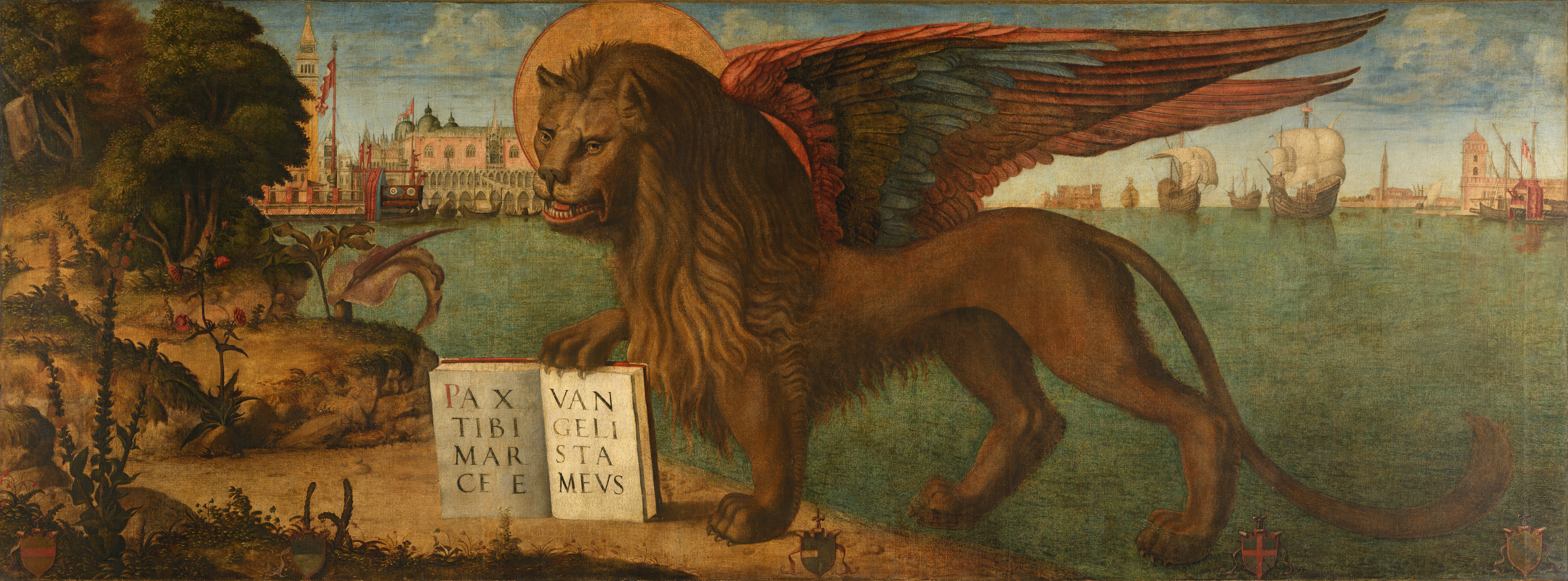
    By Vittore Carpaccio – Google Art Project, Public Domain, https://commons.wikimedia.org/w/index.php?curid=38019354

    [ video ]

    While almost everyone in Australia today is thinking about ANZAC Day, many Christians will also be observing the festival of Saint Mark. And those not doing so today will probably be remembering Mark tomorrow.

    At first glance Mark has nothing to with the ANZACs.

    Yet there are some interesting connections when we pause and think further about these two special commemorations which intersect for us every year.

    For the most part, our religious calendar in Australia comes from the northern hemisphere, and Europe in particular. Our church year is out of sync with the place where we live and the patterns of this ancient land.

    Instead of learning from the First Nations of this great south land, we cling to rituals and “seasons” which come from the “Old Country” and simply do not work here.

    The festival for St Mark started out that way as well, but as it happened the holy day for St Mark was the day when the British forces—including the ANZAC troops from Australia and New Zealand—landed at Gallipoli.

    As you may know from many ANZAC Day talks, that was not the day when the landing was supposed to happen.

    It had been planned for 23 April (which happens to be St George’s Day), but bad weather slowed things down and the landing took place on 25 April instead (St Mark’s Day).

    That was a Sunday in 1915 just as it is in 2021.

    I do not imagine many of the soldiers were thinking about St George or St Mark on that terrible morning.

    Yet ever since, for Australians and Kiwis, the feast of St Mark coincides with ANZAC Day.

    We finally have a holy day that belongs to us!

    Saint Mark has been conscripted into the ANZACs.

    So, as we prepare to baptize Hamilton and Eddison, let’s think a little more about Mark.

    We know very little about him, but here a few things we can list:

    • He was from Jerusalem
    • His mother had a house there
    • They had at least one servant (Rhoda) and perhaps others as well
    • The small group of Jesus people in Jerusalem met at Mark’s home
    • Mark’s mother ran a “safe house” for Jesus people
    • Peter goes to that house when he escaped from prison in Jerusalem
    • Mark knew people like Barnabas, Peter and Paul; and maybe also Mary the mother of Jesus, and James the brother of Jesus. Unless he was a very little boy at the time, he would also have known Jesus!

    There is something else about Mark: he had two names.

    We call him Mark which was a name he used when mixing with people from the wider community: merchants, soldiers, government officials, people who were not Jewish.

    But inside his own culture and his own family he was known as John (Yohanan in Hebrew).

    He had two names because he lived in two very different worlds: a Jewish world and a Roman world.

    Mark was a young man, and maybe just a teenager, at a moment in time when everything was in the process of changing. As it happens, so were those young ANZACs who were landing at Gallipoli under hostile fire on this day in 1915. 

    They did not know it at the time, but the world order was collapsing and everything was going to be different. We still have not put all the pieces back together in the Middle East since that war.

    Mark did not realize at the time, but everything in the ancient world was about to change. A few weeks earlier, the Roman empire had executed Jesus. In less than 300 years’ time the Emperor of Rome would be a follower of Jesus, and instead of meeting in secret like the people who came to his mother’s house on a Saturday night, the Jesus people would be meeting in the town halls because so many people wanted to join their religion.

    Hamilton and Eddison, you are alive in a time of huge change. Everything is changing around us. We do not know what the future will look like, but it will not be like the recent past.

    In that sense, you guys and John Mark have quite a lot in common.

    Mark did not have all the answers and he did not always get things right. But Mark had the courage to live as a person of faith in a world that was changing. He did not need all the answers, he just needed to know that Jesus’ message about the kingdom of God was the best way for him to live his life.

    When you are baptized here in a few minutes time that is what you are doing as well.

    You do not pretend to have all the answers, and I do not have them either. But you are saying YES to the opportunity to stand on the side of Jesus as everything in the world changes.

    The rest of us here are standing beside you and Jesus as well.

    We do not have all the answers either, but we have a hunch that by standing alongside Jesus we shall all be the right place and on the right side of history. We have a special word for that hunch: faith.

    So let’s go to the font and say YES to Jesus, YES to God.

  • The heart of the good news

    The heart of the good news

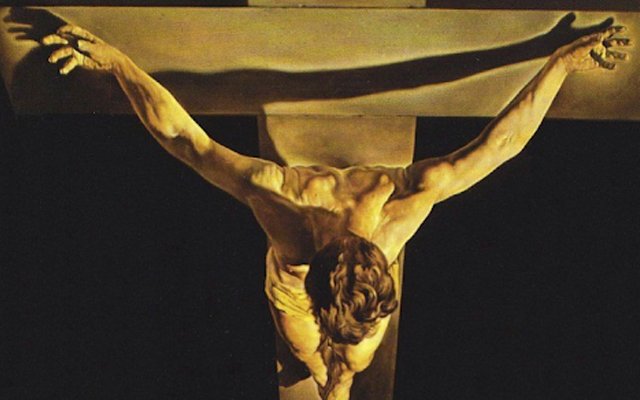
    Detail from Christ of St John of the Cross, Salvador Dali, 1951

    Good Friday
    Christ Church Cathedral, Grafton
    2 April 2021

    [ video ]

    A week or two back, a colleague and friend from the USA shared with me some reflections on Good Friday and Easter through the lens of the killing of George Floyd, the African American man who was strangled to death by a white police officer on 25 May 2020. The officer knelt on George Floyd’s neck for 9 minutes and 29 seconds — yes, 9 minutes and 29 seconds — until he ceased to breath. He was dead. 

    That essay offered some powerful reflections on lethal imperial violence against innocent oppressed persons and resurrection/resistance, but what struck me most was a simple observation Brandon Scott made concerning the emphasis which the Apostle Paul placed on the death of Jesus:

    It is important to notice that Paul preaches the Anointed crucified (1 Cor 1:23). He does not say he preaches the Anointed raised.

    Those words are quite matter of fact, since they simply quote Paul’s own words from our second reading this morning: “we preach Christ crucified …”

    Yet they invite us to go deeper into the mystery of Easter, and indeed the meaning of the Gospel.

    The Paul who says that he preaches Christ crucified doubles down on that point in the next chapter of his letter to the Corinthians:

    When I came to you, brothers and sisters, I did not come proclaiming the mystery of God to you in lofty words or wisdom. For I decided to know nothing among you except Jesus Christ, and him crucified. [1 Cor 2:1–2]

    And a few lines later he writes:

    But we speak God’s wisdom, secret and hidden, which God decreed before the ages for our glory. None of the rulers of this age understood this; for if they had, they would not have crucified the Lord of glory. [1 Cor 2:7–8]

    This is the same Paul who, in this very same letter (1 Corinthians) will devote a whole 58 verses to asserting the centrality of the resurrection in chapter 15! He even says that our religion is meaningless if Christ was not raised:

    If Christ has not been raised, your faith is futile and you are still in your sins. Then those also who have died in Christ have perished. If for this life only we have hoped in Christ, we are of all people most to be pitied. [1 Cor 15:17–19]

    Yes, Paul is deeply invested in the resurrection, but the core of his gospel is to be found in the death of Jesus. Like George Floyd, it is not enough to say, “Jesus died”. We need to say, “Jesus was killed. Jesus was murdered. Jesus was eliminated by the empire.”

    The student protestors in Myanmar these past few weeks, are not just people who died; but people who are being killed by their government, by the ruling elite.

    When we say with Paul that Christ was crucified, we are not simply saying that he died. We are saying—boldly, plainly and as an act of resistance against those who control our world—that he was publicly killed and made an example of in order to keep people like us in our place.

    George Floyd was murdered by a man wearing the uniform of the Minneapolis city government.

    Jesus was killed by solders wearing the insignia of the Roman emperor.

    The Indigenous people of this Valley—who were poisoned, shot, incarcerated, and raped—were victims of European settlers acting with the protection of the colonial government and often with the tacit blessing of our churches.

    Paul never knew about George Floyd or the First Nations of Australia, but he realised that in the way the Jesus was killed we catch a glimpse of the ways things are and of the ways things are going to be from now on.

    This Paul was himself a Roman citizen, someone who enjoyed privileges not available to many people in his society. 

    As a Roman citizen, Paul had a “get-out-of-jail” card. Jesus did not have such a privilege. 

    Paul could appeal to the emperor. Jesus was at the mercy (sic) of the mean-spirited provincial bureaucrat, Pontius Pilate. 

    As a Roman citizen, Paul could never be crucified.

    Yet he proclaims Christ crucified.

    In this person and in this event, we can discern (if we have eyes to see) the ways the empire of God (basileia tou theou) is organised, and it is very different from the way the privileged elites of our world—then and now—see things.

    Paul says as much in his fascinating comment in 1 Cor 2:8: “None of the rulers of this age understood this; for if they had, they would not have crucified the Lord of glory …”

    When “the rulers of this age” see Jesus hanging on a cross beside the main road to Jaffa, they think they have reinforced their power and their privilege. They have eliminated a threat. They have warned everyone else to toe the lines drawn by the people with power, or else …

    But when God looks at the abused and battered body of Jesus strung up beside the highway, God sees someone who has said yes to the reign of God. 

    God sees someone who has total faith that even in his death God will be shown to be in charge of the ways things work around here.

    Don’t think for a moment that God wanted Jesus to die.

    In saying that, I am reflecting the work of the Roman Catholic theologian, Elizabeth A. Johnson, in her essay, “The Word was Made Flesh and Dwelt Among Us. Jesus Research and Christian Faith.” in Doris Donnelly (ed), Jesus. A Colloquium in the Holy Land. New York: Continuum, 2001. Pages 146–66:

    To put it simply, Jesus, far from being a masochist, came not to die but to live and to help others live in the joy of the divine love. To put it boldly, God the Creator and Lover of the human race did not need Jesus’ death as an act of atonement but wanted him to flourish in his ministry of the coming reign of God. Human sin thwarted this divine desire yet did not defeat it. (page 158)

    Rather than being an act willed by a loving God, [the cross] is a strikingly clear index of sin in the world, a wrongful act committed by human beings. What may be considered salvific in such a situation is not the suffering endured but only the love poured out. The saving kernel in the midst of such negativity is not the pain and death as such but the mutually faithful love of Jesus and his God, not immediately evident. (page 159)

    So, while we need not think that God wanted Jesus to die, we should never doubt for a moment that God’s response to the murder of Jesus was not only to enfold the dead victim of human evil into God’s own life, but also to embrace each of us and all of us in the same way.

    For people of faith, the murder of Jesus was a tipping point in the cosmic story, a moment when we see what really matters and how the universe is actually structured.

    The “curtain was torn,” and we see that those with privilege are not the ones with real power.

    The knee of that police officer who killed George Floyd on 25 May last year not only killed George. He also showed us what is wrong with our world. He extinguished the life from one black man. But he shone a light on all the violence directed against black people by a system from which some of us here prosper and under which some of us here still suffer.

    Good Friday is not just about happened to Jesus on 2 April (note the date) in year 30 of the Common Era. 

    Good Friday is about the event in which we glimpse the brokenness of human power systems and the vindication of the crucified one (all of them, millions and millions of us, down the millennia).

    This is the day when love checkmates hate.


  • The god who rides a donkey

    The god who rides a donkey

    Christ Church Cathedral, Grafton
    Palm Sunday
    28 March 2021

    [ video ]

    As we celebrate Palm Sunday today, our Jewish friends are observing Passover.

    To our Jewish neighbours here in Grafton, to our Jewish citizens around the nation, and to all Jews everywhere—whether in Palestine or in the Diaspora—we say Chag Pesach sameach (happy Passover festival) and we wish them ziessen Pesach, a sweet Passover.

    Passover and Holy Week are for ever entwined, even if some years our different calendars mean that we observe them a few weeks apart.

    For many centuries, Jews have ended the Passover seder with these words: 

    L’Shana Haba’ah B’Yerushalayim 
    לשנה הבאה בירושלים‎
    Next year in Jerusalem

    Jerusalem draws people of faith—not just Jews, but also Christians and Muslims.

    We want to be there.

    For sure I do, just as soon we are allowed to fly once more!

    That was also true in ancient times.

    At Passover time the population of the city would swell from 20,000 (some say up to 100,000) to 2,000,000 people.

    Any Jew who could be there would be there.

    And so would the Roman army!

    The stage was also set for conflict.

    The Roman procurator, Pontius Pilate, came to Jerusalem for the Passover, but not for religious reasons. He was there to keep an eye on the crowd and ensure direct control of his bolstered garrison during the week-long festival of liberation from enslavement.

    This week, together with our Jewish friends, we celebrate the crazy idea that the compassionate power at the very heart of the universe is on the side of the powerless, and opposed to every form of empire.

    This week drips with intense religious meaning, but also with powerful politics.

    Every empire, no matter its religion, is held to account by the sacred truths we affirm this week.

    We have a choice in the way we understand our religion, whatever our faith happens to be. 

    We can choose to see God as endorsing the emperor, or the ways our society arranges power, wealth and opportunity. That has always worked well for religion as we get a cut of the action: tax-free lands, freedom from military service, governments funds for church buildings and programs. Sometimes even a seat in the House of Lords.

    That kind of god rides into Jerusalem on a white horse surrounded by the banners of imperial privilege and with the power to arrest, imprison and kill their opponents.

    There is a different kind of god who rides into Jerusalem on a donkey.

    Such a god enjoys no imperial privileges and commands no army. His kingdom is not of this world. Or more correctly, his kingdom in this world reflects the way that the divine will is enacted in heaven. Far from getting access to government funds or a place at the table when big decisions are being made, this donkey-riding-god is murdered by the people who enjoy imperial privileges.

    The god who rides a white horse thinks he has defeated the god who rides a donkey.

    But it is not so.

    The slaves are set free, the crucified one is raised to life and exalted to glory.

    That disruptive truth is central to the Passover story as well as to Holy Week.

    Today I invite you to pause and think about which kind of god you imagine yourself to be serving.

    Does your god ride a horse or a donkey?

  • Imagining our better selves

    Christ Church Cathedral, Grafton
    Lent 1B
    21 February 2021

    Art by Julie Lonneman: https://www.julielonneman.com

    [ video ]

    Here we are early in the 40 days of Lent for 2021.

    As usual we begin with the Gospel passage about the testing of Jesus.

    Immediately after his baptism, Jesus goes out into the wilderness areas to spend 40 days in solitude and prayer. As Mark tells the story, the Spirit drove (expelled) Jesus from the Jordan Valley into the wilderness.

    As we would expect, the Gospel of John has a totally different version of events and there is not a hint of Jesus withdrawing from public view. He just meets up with his first disciples and they get on with the work! (see John 1:29–51)

    The story told by Mark was followed by Matthew and Luke. It casts Jesus in the role of a great hero who must first overcome various tests or trials before going on to achieve his mission. We know that hero story well from our fairy tales and legends.

    It was also a common meme in the Old Testament:

    Abraham’s 10 Tests | 10 Plagues for Egypt | 10 Tests in Wilderness | Ten Commandments

    John tells a different kind of story about Jesus. He is not a hero sent on a mission, but the divine Son of the Father who descends from heaven to earth to reveal the truth, after which he will return to heaven. We know this story, as well, from our Superman comics and movies.

    The earliest Christians used different kinds of stories about Jesus in order to communicate what he meant to them and how he might “make sense” to other people.

    Mark, Matthew and Luke are writing for people familiar with the biblical ways of telling the story, while John is describing Jesus in ways that made sense to people embedded in Greek mystery religions.

    We do not need to worry about these differences in storytelling. There is no need to try and explain them away or harmonise them into a mishmash with no contradictions.

    Rather, we can these different ways of talking about Jesus as biblical permission to keep fashioning new stories about Jesus which make sense to us in the world we actually live in and to other people who share that world with us.

    Whether or not Jesus actually spend 40 days “where the wild things are,” the story about him doing so has inspired many other Christians to do similar things as well as creating the idea of Lent itself.

    So Lent is a time for imagination, rather than a set of rules to be observed.

    Let me offer three lenses through which you might let your imagination run loose in the quest for new and better ways to be a follower of Jesus:

    • Fasting
    • Praying
    • Giving

    Fasting (Embracing)

    We all know about Lent as a time to give up chocolate or red meat or wine or …

    But what if we imagine Lent as a time to slow down: a time to embrace and hold close, rather than to give things up?

    For sure we can give up busy-ness. 

    We have had some practice with that this past year thanks to COVID, so perhaps we can claim that as a spiritual gift snatched out of the wreckage of a year that has seen 110 million people infected and almost 2.5 million deaths. Probably more.

    Slowing down took us by surprise, but it had some positive benefits.

    What if we choose to go slow between now and Easter?

    We do not want to multiply expectations, but we can choose to cease particular activities or commence others.

    By surrendering some of the busy-ness and some of the speediness, we may find time to be more attentive: to God, to each other, and to ourselves.

    Praying (Mindfulness)

    As we are more attentive, we shall naturally be more prayerful.

    You might choose some spiritual exercises to help focus that prayerful outlook.

    Maybe join our online Morning Prayer or Evening Prayer at least a couple of times each week? (The link is on the back page of our bulletin each week and I will include it in this week’s email news from the Cathedral.)

    Maybe it is taking a walk outside to be away from our devices, out in nature and at home with God?

    Maybe it is joining in the weekly reflections from ABM during Lent?

    Maybe its learning to play a musical instrument?

    Perhaps it is starting a journal to record questions and insights during these 40 days?

    Giving (Engaging)

    Lent is a time to allocate some funds which we would otherwise spend on ourselves and choose instead to make a special gift to some worthwhile project.

    I encourage everyone to make a gift to ABM during these 40 days. 

    We have envelopes available today, or you can set up a gift from your phone or computer. You may feel drawn to make a gift to some other charity. That is fine. God is at work in so many places, and the key thing is our decision to engage by giving away some funds we would otherwise have spent on ourselves.

    You might decide to donate time and energy rather than cash. 

    Time which might otherwise have been spent for your own enjoyment can become a powerful gift to help someone else. Maybe you will decide to join the Rural Fire Service. Or volunteer at the OpShop. Or help with weed control on Susan Island. 

    There are a zillion ways to give and engage, but the trick is to be mindful and avoid getting so busy that we lose our sense of God’s presence.

    Think of Lent as an invitation to use our imagination to become more like the person we really want to be:

    • People who slow down and discard some of the pressures to be this or do that …

    • People who are attentive to the still small voice …

    • People who are engaged with God’s work in the world …

    Then having spent the next six weeks in that important spiritual work, we shall celebrate Easter with immense joy and hope.

  • The God who is yet to be known

    Fifth Sunday after Epiphany
    Christ Church Cathedral, Grafton
    7 February 2021

    [ video ]

    During these Sundays between Christmas and Lent—the Epiphany Season—we are invited to reflect on some of the many different ways that G*d is made known to us. We have been in a season of epiphanies, just as our lives are, in reality, a series of epiphanies, chains of revelation and cycles of sacred disclosure.

    That idea makes some religious people nervous.

    They like to think that they have G*d nicely defined in their creeds and their Articles of Religion. It is so neat. All set in black and white. No shades of grey. But no living colour either. Just monochrome religion. No room for imagination and no scope for G*d to do anything new.

    But G*d does not play by those rules. Never has. Never will.

    By the waters of Babylon

    The prophet whose words we hear in today’s first reading from the great Scroll of Isaiah the Prophet was seeking to explain to his community that G*d exceeded all of their preconceived ideas.

    They were in exile in Babylon; today’s Iraq.

    It seemed their god (Yahweh) had been defeated by Marduk and the other gods of Babylon.

    Not so, says the prophet we call “Second Isaiah.”

    Your G*d is too small, he says.

    Better still, you have a future in the hands of this G*d.

    Do not be afraid for the future. The future will be shaped by the G*d who is beyond all our religions and all our biggest concepts.

    When the future looks grim

    There are times when the future looks grim. Those tend to be the times when the good old days were always better than what we have now, and when we are uncertain of what the future may hold for us.

    This can be true for us as a nation. The way forward is uncertain and the options are all contested. In a post-fact world, what counts as truth and what really offers hope?

    This can also be true for us as a civic community here in Grafton. The empty shops and the small number of people younger than 50 can make us uncertain for the future and unsure how to act right now.

    This can also be true of the Cathedral. When they began to build this place Grafton had just 1,500 people. We now have ten times that number, but our congregations are smaller than at any time in the past. What does the future hold for us? Will the Cathedral survive as both the community and the churches go through major changes?

    And it can be true for us as individuals. For most of us here this morning, the years that remain are fewer than the years which have passed. This is true of me. In exactly 4 weeks and 4 days I turn 69. Most of my life is now behind me, and indeed it has been for several decades already. I just choose not to pay attention!

    Sometimes events in our lives force us to pay attention. I have had one of those weeks as I prepared for some medical tests in Brisbane on Wednesday morning. As I reflected on what lay ahead of me I found myself writing poetry, which I do from time to time. It is not something I shall be sharing here, but it canvassed three options:

    • All is fine, full speed ahead

    • Warning: the cancer is starting to recur, chemo may be needed. Will the cure be worse than the disease?

    • Emergency! The cancer is back and has spread to other parts of my body. Time to die well.

    As it happened, the outcome was fine but what I find much more interesting is that I was quite calm about any of the three outcomes.

    I have my preferences, of course. But ultimately any of these outcomes is fine since my life and my death, my past and my future, is already secure in G*d’s goodness. Not because I am special, but because G*d is the source of all that is, the energy which sustains everything, and to goal to which everything is moving.

    In its own small way, that realisation was an epiphany moment for me this past week.

    I pray that your week has also offered you personal epiphanies into the reality of G*d’s love and the possibilities of a future beyond anything we can yet imagine …

    Have you not known? Have you not heard? The LORD is the everlasting God, the Creator of the ends of the earth. He does not faint or grow weary; his understanding is unsearchable. He gives power to the faint, and strengthens the powerless. Even youths will faint and be weary, and the young will fall exhausted; but those who wait for the LORD shall renew their strength, they shall mount up with wings like eagles, they shall run and not be weary, they shall walk and not faint. [Isaiah 40:28–31]