
[ video ]
St Paul’s Church Ipswich
Lent 2C
16 March 2025
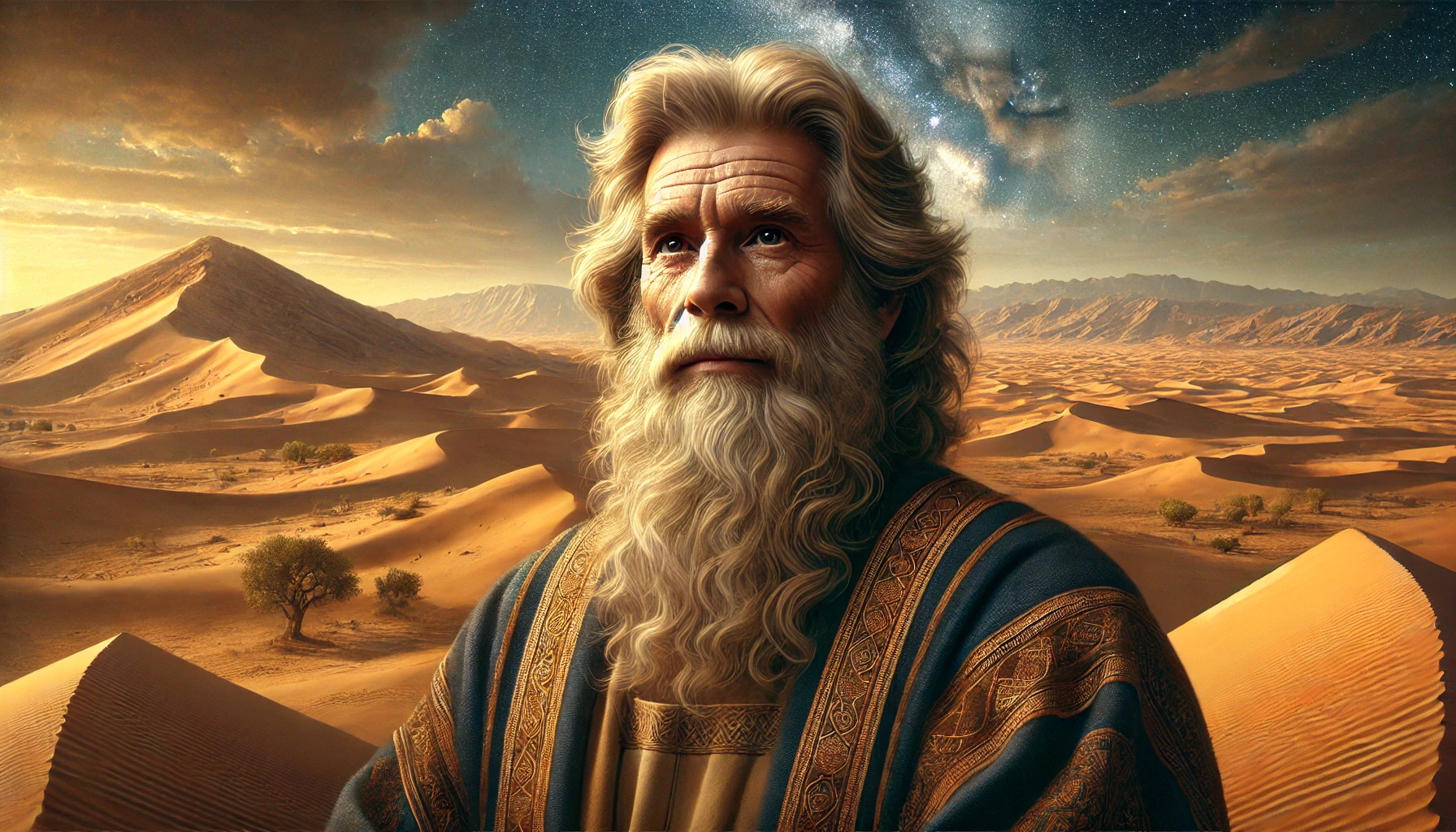
Our first reading today invites us to reflect on the figure of Abraham, or Abram as he is called in the earlier parts of his story.
Abraham: A character in the biblical narrative
Abraham looms large in the cast of characters we meet in the Bible, and especially in the Hebrew Scriptures (what Christians tend to call the “Old Testament”).


We have just a single episode from the Abraham cycle in the lectionary during Lent, so let me—very briefly—fill in the larger story for you.
You can find the Abraham cycle in Genesis chapters 12 through 25, so I really encourage you to read that material as one continuous story sometime this week.
The story begins as Abram accepts a call from God to go to the place where God wants Abram to be. The location is not revealed, but Abram is told that when he is where God wants him to be then he will know he has arrived.
The LORD said to Abram, “Go forth from your native land and from your father’s house to the land that I will show you.” [Genesis 12:1 JPS]
In the story, saying YES to God required Abram to move from modern-day Iraq to the region around Hebron in Palestine. It is in Hebron that Abram will purchase the only parcel of land that he ever owns; the cave where he will bury his wife, Sarah and later be buried himself.
The original invitation from God, as it happens, was not to steal the land from the Indigenous people but to live among the people of the land in such a positive way that they consider themselves blessed to have had Abraham and his family come among them.
“I will make of you a great nation,
And I will bless you;
I will make your name great,
And you shall be a blessing.
I will bless those who bless you
And curse him that curses you;
And all the families of the [land]*
Shall bless themselves by you.”
[Genesis 12:2-3 JPS modified]
* The Hebrew word אדמה is better translated as “land, soil, ground” rather than “earth, world” as it implies a local and immediate reality rather than the whole inhabited earth for which ארץ is the more typical Hebrew term (as in Genesis 1:1).
Between that opening scene and this week’s portion, Abram and Sarah have been engaged in a series of adventures, including an encounter with the Pharoah in Egypt and Abram defeating the massed armies of 5 kings from Mesopotamia.
At this pivotal point of the cycle, Abram is concerned that all he has achieved will count for nothing as he has no one to inherit his wealth. Again, note that there is no land involved; Abram is wealthy because of the herds and the slaves that he owns.
Yes, Abraham was a slave owner.
As we read, God assures Abram that he will have son to inherit his wealth and the next several chapters revolve around that theme as the story identifies not one son but two sons who might inherit everything that Abram (now called Abraham) will leave behind. Ishmael and later Isaac emerge as contenders for that role.
Finally Sarah dies. Abraham buys the burial plot for her and then sets about to arrange a suitable wife from “back home” for Isaac, his heir. Finally, Abraham himself dies and is buried alongside Sarah.
Abraham is far from a perfect character, and the story raises some ethical dilemmas for us as we read it these days. But his principal virtue was that he trusts God, even when it seems there is no good reason to do so.
This idea will later be picked by Paul in Romans 4, but we heard it in today’s passage:
And [Abram] believed the LORD, and the LORD reckoned it to him as righteousness. [Genesis 15:6 NRSVue]
Father Abraham
In the Bible as also in the Qur’an, Abraham is seen as the father of the faithful. He is the first and greatest believer.
His diverse community of “children” sadly reflect the complex dynamics of the first two sons mentioned in the biblical story itself.
Life Ishmael and Isaac, there has been a long-running competition between Jews, Christians and Muslims over the legacy of Abraham, or Ibrahim as he is called in Arabic.
Yet—like Ishmael and Isaac coming together for their father’s burial—we can all agree that Abraham is a biblical character that we have in common.
This is sometimes expressed in the term Abrahamic religions.
All three Abrahamic faith communities share some important elements of faith:
- belief in one God
- as “people of the book” we each value the role of sacred scriptures
- we each value the role of a founding prophet as part of a line of prophets
- we have many common ethical values
- we all look for the final consummation at the end of time
Of course there are also important differences between the three Abrahamic faiths, but Jews and Muslims are closer to one another in many ways, than we are to either of them.
The significance of Jesus for the Christian children of Abraham makes it very hard for Jews and Muslims to accept us as part of the family of Abraham.
A shared future
Here in Australia at this time—as in many other places around the world—there are rising tensions between the children of Abraham.
Anti-Semitism is in the air and seems to be rising at rates we have not seen for a very long time. We have all seen the arson attacks and the racist graffiti. We have also seen the impact of Jewish extremism on the Palestinians as their lands are stolen to establish exclusive Jewish control of all the lands “between the river and the sea.”
However, Islamophobia is also a nasty undercurrent in our nation. And in many other seemingly civil societies. Yesterday we marked the International Day to Combat Islamophobia. The date (15 March) was chosen as it marks the anniversary of the terror attack on two mosques in Christchurch, by a white Australian Christian from Grafton.
Meanwhile we see Christian Nationalist extremists corrupt the legacy of Jesus, by promoting a racist heresy that links white supremacy with a perverted form of Christian faith.
And today our Bible readings invite us to reflect on the significance of Abraham for us.
We can never tolerate Anti-Semitism nor Islamophobia.
And we can never accept the heresy of Christian Nationalism.
We turn our backs on fear and hatred, and we turn our faces towards each other as children of Abraham and servants of the God who calls us all to be merciful, just as God is merciful.
Do leave a reply. I always appreciate hearing from my readers/Cancel reply