Category: News

  • Books seeking new homes

    Having recently retired, I have a number of long time book friends who are seeking new homes. We are all very sad about this but also seeking to be mature as we contemplate new relationships, and especially as I focus on numismatic and archaeological research projects.

    A selection of academic books in the field of Biblical Studies, History, and Liturgy is available for acquisition by interested people who are willing to make a donation to the CCCRH Foundation, at a value which they determine as a reflection of the value of the books to them, plus covering any costs in transporting the books to their new home.

    Donations to CCCRH Foundation can be made by cheque or direct deposit. Bank details will be provided at the time that the re-homing arrangements are finalised.

    To assist people in doing this, the following links provide access to the total set of around 400 books which are originally available for distribution, as well some subsets of the books for people interested in books related to particular subject areas.

    As the number of books diminish, these links will be updated to reflect just those items still available for distribution. Categories which have already been depleted are not listed. Please note that some books will appear in more than one subset.

    All books | Biblical Languages | Biblical Studies | Church History | General Reading | Historical Jesus | Second Temple Judaism | Spirituality | John Shelby Spong

    Please use the form below to contact me about any books which you are interesting in re-homing …

    Go back

    Your message has been sent

    Warning
    Warning
    Warning
    Warning.

  • Clean hands and open hearts

    This opinion piece appeared in The Daily Examiner on Thursday, 12 March 2020

    “Facts not fear. Clean hands. Open hearts.”

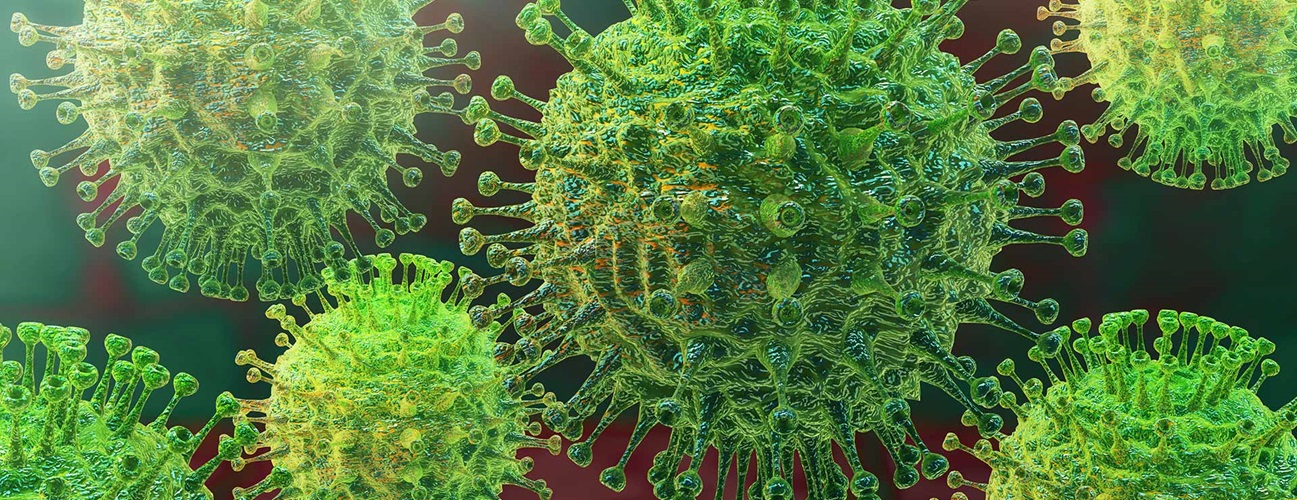
    With these seven simple words, Dr Abdu Sharkawy, concluded a recent Facebook post about the coronavirus. Dr Sarkawy is a Canadian medical doctor and an infectious diseases specialist. His post went viral, which is an interesting metaphor given our content.

    After all the scientific and medical details in his post, those three simple axioms stand out for me: Facts not fear. Clean hands. Open hearts.

    We certainly need to pay attention to the facts and resist the tendency for fear to override both common sense and scientific knowledge. The empty shelves in the supermarket aisles reveal how easily fear can trigger irrational responses.

    We are fortunate to have an excellent public health system. Let’s give the advice coming from the federal and state health officers at least as much credence as the advice we accepted so readily from our emergency services during the recent bushfire crisis.

    Facts not fear.

    The best practical advice is to leave the toilet paper on the supermarket shelves and to focus on personal hygiene, especially cleaning our hands. Often. And thoroughly. Yes, it really is that simple. Clean our hands. Cough into our elbows. Avoid shaking hands. Stay indoors if we feel unwell. Do not put others at risk even if that means some inconvenience for us.

    Clean hands.

    But perhaps the most important lesson of all is to keep our hearts open to one another.

    As a compassionate community we affirm our shared humanity, and we renew our commitment to be there for one another.

    A year ago we determined not to allow an act of violence in Christchurch to tear us apart. Since then we have stuck together as fires ripped the heart from our forests and threatened so many small communities. The same resilience is needed as we stare down this virus which threatens our compassion for one another.

    Open hearts.


    Dr Greg Jenks is the Dean of Grafton. Like many Anglican and Catholic churches across the North Coast, Grafton Cathedral has made changes to its worship arrangements to reduce the risk of the COVID-19 virus being spread.


  • For whom the bell tolls

    Almost 400 years ago, John Donne penned the words which became a modern proverb, and have proved with the passing of time to be prophetic as well:

    No man is an island, entire of itself; every man is a piece of the continent, a part of the main. If a clod be washed away by the sea, Europe is the less, as well as if a promontory were, as well as if a manor of thy friend’s or of thine own were: any man’s death diminishes me, because I am involved in mankind, and therefore never send to know for whom the bell tolls; it tolls for thee.
    [Devotions Upon Emergent Occasions, Meditation XVII]

    The language sits awkwardly on our modern ears, but the sentiments in this text from 1624 resonate with many of us alive today.

    None of us are islands, complete and self-sufficient. From our shared genetic material to our cultural and social identities, we are part of a larger reality; the web of life.

    When we lose one person from our community due to death, each of us has lost a part of ourselves. Even if we did not know the person. Even if we did not like the person.

    In times past the bells of the village church would sound when someone was being buried. We still do that at Grafton Cathedral. Each time we conclude a funeral the Cathedral bell tolls.

    “Never send to know for whom the bell tolls,” says Donne. “It tolls for you!”

    Just before midday today the Cathedral bell will ring continuously for twelve minutes. The same thing will be happening at other cathedrals and churches around the country.

    Today the tolling of the bell is not to mark the death of a local person, but to alert us to the imminent death of our Mother: Planet Earth.

    This date has been chosen because it is the point in the year when we exceed the capacity of the earth to provide or replenish the energy we are consuming by our lifestyle choices.

    If this trend continues, the “overshoot day” will occur earlier in the year. If we begin to make a positive difference then the overshoot day will move closer to 31 December.

    We are each diminished by the failing health of the planet, and we are each called to action in the brief window of opportunity that remains for us to reverse the sustained depletion of the Earth, whose children we are and without whom we have no future.

    The well-being of our fragile blue planet is a challenge for us all, but it evokes a passionate response from people of faith.

    Christians, Jews and Muslims all understand ourselves to have been placed in the world to serve and nurture creation. Many other religions also promote a deep respect for—and a profound sense of affinity with—nature. Some theologians have even urged us to see the world as the body of God, and many ordinary people with little time for organised religion describe profound experiences of the ‘holy Other’ as their hearts are touched by the beauty and the complexity of nature.

    Today the bell of your Cathedral will be tolling to call us to action. One minute of bell ringing for each of the 12 years left during which time we may yet turn things around.

    Without a healthy and sustainable planet, we are not just diminished; we are doomed. But it is not yet too late to turn things around. As we save the planet we rescue our future.

  • Ending spiritual and emotional violence towards LGBTQI+ persons

    A speech to the Synod of Grafton Diocese on Sunday, 23 June 2019, when moving the following motion (shown in its final amended form):

    That this Synod encourages the 2020 General Synod:
    (i) to authorise Anglican clergy to participate in civil weddings;
    (ii) to move towards providing optional provisions for the blessing of civil marriages; and
    (iii) to move towards providing an optional liturgy for the solemnization of Holy Matrimony where the parties to the marriage are of the same gender.


    Mr President, I am honoured to move the motion which stands in my name as item 24 on our business paper.

    Synod members may be surprised to hear that I have hesitated to present this motion, due to a desire to avoid pointless conflict. However, I have been persuaded by other members of Synod who assisted in the drafting of this motion that, first of all, this motion needed to be presented for debate and secondly, that I should be the person who moves it.

    I also share the hope expressed by David Hanger that we can engage in this debate with courtesy and respect. Perhaps at the end of the day we shall be even better friends than we are now, since each of is seeking to be true to Scripture and the call of God on our lives.

    Our lesbian, gay, bisexual, transsexual, queer and intersex sisters and brothers continue to experience emotional and spiritual violence within the church as well as in other spheres of life.

    While ever the letter of our church law excludes and discriminates that emotional and spiritual violence will persist.

    Until and unless we open every aspect of church life to LGBTQI+ people, including the right to marry and to have their intimate relationships celebrated and blessed within the life of the church, this emotional and spiritual violence will continue.

    In brief, that is why this motion is being brought to the Synod today.

    As everybody will agree, I am sure, this is a question of our core values as people of faith.

    To paraphrase — and respectfully misquote — our Lord, people were not made for marriage, but marriage was made for people.

    Do people come first, or does a strict reading of the tradition prevail?

    The New Testament provides ample evidence of the way both Jesus and Paul would answer such a question.

    This motion is not seeking a protracted debate on the doctrine of marriage or the issues around same-sex relationships. All that has been canvassed extensively in recent years and especially during the debates leading up to the postal plebiscite in 2016.

    Indeed, I note that the arrangements for General Synod next year have recently been modified to provide up to 3 days for an extensive discussion precisely on the theological and pastoral issues relating to human sexuality.

    We do not need to have that debate here today.

    It would interesting to glance back over the history of marriage within the life of the church, but the time available to me is too short for that.

    However, I note that while marriage occasionally serves as a metaphor—among other metaphors—for the relationship between Christ and the church in Ephesians, it attracts little comment in the New Testament and certainly no mention in the creeds of the Catholic Church, and even in The Articles of Religion.

    Further, until around 1200 CE there were no church laws relating to marriage.

    For more than 1,000 years after Easter, marriage tended to be a private matter and required simply an exchange of vows between the two persons, without even the presence of any witnesses.

    Around 1200 we see the Western church beginning to introduce canonical requirements to ban secret wedding vows, to require the presence of witnesses and in due course, to require a priest to be present and make a written record of the marriage.

    Indeed, it was not until the Council of Trent in 1546 that marriage was defined as a sacrament of the church.

    Our understanding of marriage has continued to change and evolve over time.

    • It is no longer seen as the transfer of one vulnerable woman from the control of her father to the control of her husband.
    • We no longer expect women to promise obedience to their husband.
    • Married women can own property and pursue careers.
    • We no longer understand marriage is primarily about procreation.
    • We have come to appreciate marriage as a blessed relationship in which two people find deep companionship and create a home in which children may be born and raised, but also as a small community of love through which a much larger circle of people find blessing.
    • We have come to terms with the reality of marriage breakdown and divorce. Despite the clear teaching of Scripture to the contrary, our church allows divorced persons to remarry and to do so with the blessing of the church.

    Much has changed. But some important work remains to be done.

    Around the Anglican world, many churches have begun to address the need to change our definition of marriage and provide for the blessing of same-sex relationships.

    At last count, the Anglican provinces which have moved in this direction include the Church of England, the Scottish Episcopal Church, the Church of Wales, the Anglican Church of Canada, the Church of Aotearoa New Zealand, the Episcopal Church USA, the Episcopal Church of Brazil, and the Anglican Church of Southern Africa. Other churches with which we have full or partial communion and who have moved in this direction include the Union of Utrecht (look it up) as well as a large number of Lutheran communities in Europe and North America.

    For most Anglicans this is not a core issue of faith and order.

    The motion before us is carefully drafted to focus on the advice which we might reasonably offer to the 2020 session of General Synod.

    This is especially pertinent given the changes to that Synod’s schedule to allow extended discussion—in conference mode—of precisely these matters.

    This motion does not commit our diocese to act unilaterally, nor does it ask the Bishop to approve the blessing of same-sex marriages or to issue a liturgy for the marriage of same-sex persons.

    However, this motion does offer a way for our Synod to express our mind and to contribute intentionally to the ongoing national discussion of these matters within our church.

    As I commend this motion to the Synod, I am conscious that not everybody here will agree with the proposal.

    Indeed, there are some people here who should vote against this proposal.

    Anyone who thinks that LGBTQI relationships are intrinsically sinful, disordered and evil should certainly vote against this motion. Their decision to do so will be respected.

    Similarly, anyone who thinks that the literal text of the Bible must always be followed may well find that they need to vote against this motion. Again, their decision to do so will be respected.

    On the other hand, all of us who voted to support motion 23 earlier in the session will be inclined to support this motion.

    Those who believe that compassion trumps doctrine will want to vote for this motion.

    Those who believe that it is essential that our church engages with issues of concern to our neighbours, to our friends, to our families including—our children and grandchildren—will want to support this motion.

    Those of us who want to see an end to the long tradition of emotional and spiritual abuse of LGBTQI+ persons will, of course, support this motion.

    This is the right thing to do, and now is the right time to do it.

    Thank you, Mr President. I commend the motion to Synod.

  • Cathedral Church of Christ the King, Grafton

    Bishop Sarah Macneil, Bishop of the Anglican Diocese of Grafton, has announced that the Reverend Canon Dr Gregory C. Jenks has been chosen as Rector of the Parish of Grafton and Dean of the Cathedral Church of Christ the King.

    The official announcement is being made this morning in the Cathedral Parish and in the Parish of Byron Bay, where Canon Jenks is currently serving after returning to Australia from Jerusalem earlier this year.

    Dean Jenks will take up his appointment as the eighth Dean of Grafton later this year, and will continue to serve as the locum priest for the Anglican Parish of Byron Bay until that time.

    The Cathedral of Christ the King has both local and diocesan mission responsibilities. The Cathedral is the parish church for the Anglican Parish of Grafton, which includes the northern half of the city as well as two nearby rural centres: Copmanhurst and Lawrence. At the same time, the Cathedral has a prophetic mission to the city of Grafton, and within the Northern Rivers more generally, as well as its ministry within the wider life of the Diocese.

    Greg Jenks is married to Eve James, who is manager of the Roscoe Library at St Francis Theological College in Brisbane. They have two adult daughters. Greg also has two other adult children, and two grandchildren.

    For Canon Jenks this is a return to his roots in the Northern Rivers, as he was born and raised in Lismore.

    Dr Jenks is a Canon Emeritus of the Cathedral Church of St George the Martyr in Jerusalem, and was previously the Dean of St George’s College in Jerusalem. Prior to his appointment in Jerusalem, Dr Jenks was Academic Dean of St Francis Theological College  and a Senior Lecturer in the School of Theology at Charles Sturt University.

    Canon Jenks values his close links with Palestinian Anglican communities in Jerusalem, Nazareth and Haifa. He looks forward to developing mission partnerships and pilgrimage opportunities between the Cathedral and these faith communities in the Holy Land.

    Dr Jenks is a co-director of the Bethsaida Archaeology Project in northern Israel, where he also serves as the coin curator for the dig, and is also the founding director of the Centre for Coins, Culture and Religious History. His research interests focus on the coins from the Bethsaida excavations, as well as other coins that illuminate the role religion has played in shaping human culture.

    Dr Jenks is the author of several books and numerous published essays. His most recent books include Jesus Then and Jesus Now (2014) and The Once and Future Bible (2011).

Exit mobile version