
Advent 3C
St Paul’s Church, Ipswich
15 December 2024
[ video ]
On this third Sunday in Advent, we are invited to reflect on JOY as an essential attribute of our lives.
So far this season we have done a little thinking about HOPE and PEACE, but today we shift our focus to JOY.
It was certainly central to the various passage of Scripture that we heard just a few minutes ago. As Saint Paul puts it:
Rejoice in the Lord always; again I will say, Rejoice.
It is a bit harder to find much joy in the Gospel reading this week, where Luke offers a thumbnail sketch of the message proclaimed by John the Baptist. As Luke tells the story, John was not calling people to celebrate, but to turn their lives inside out as they prepared for the coming of the Messiah, for the coming of God’s kingdom.
The time to celebrate would come, he assured then, but first there were some serious spiritual exercises needing to be completed.
———
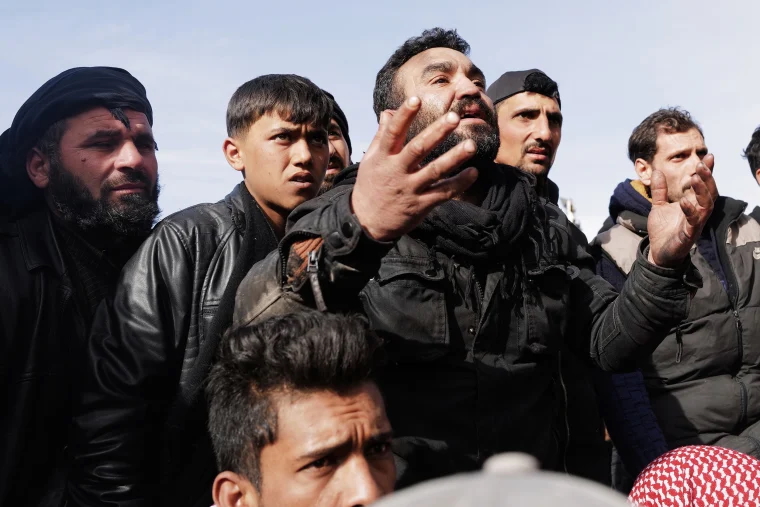
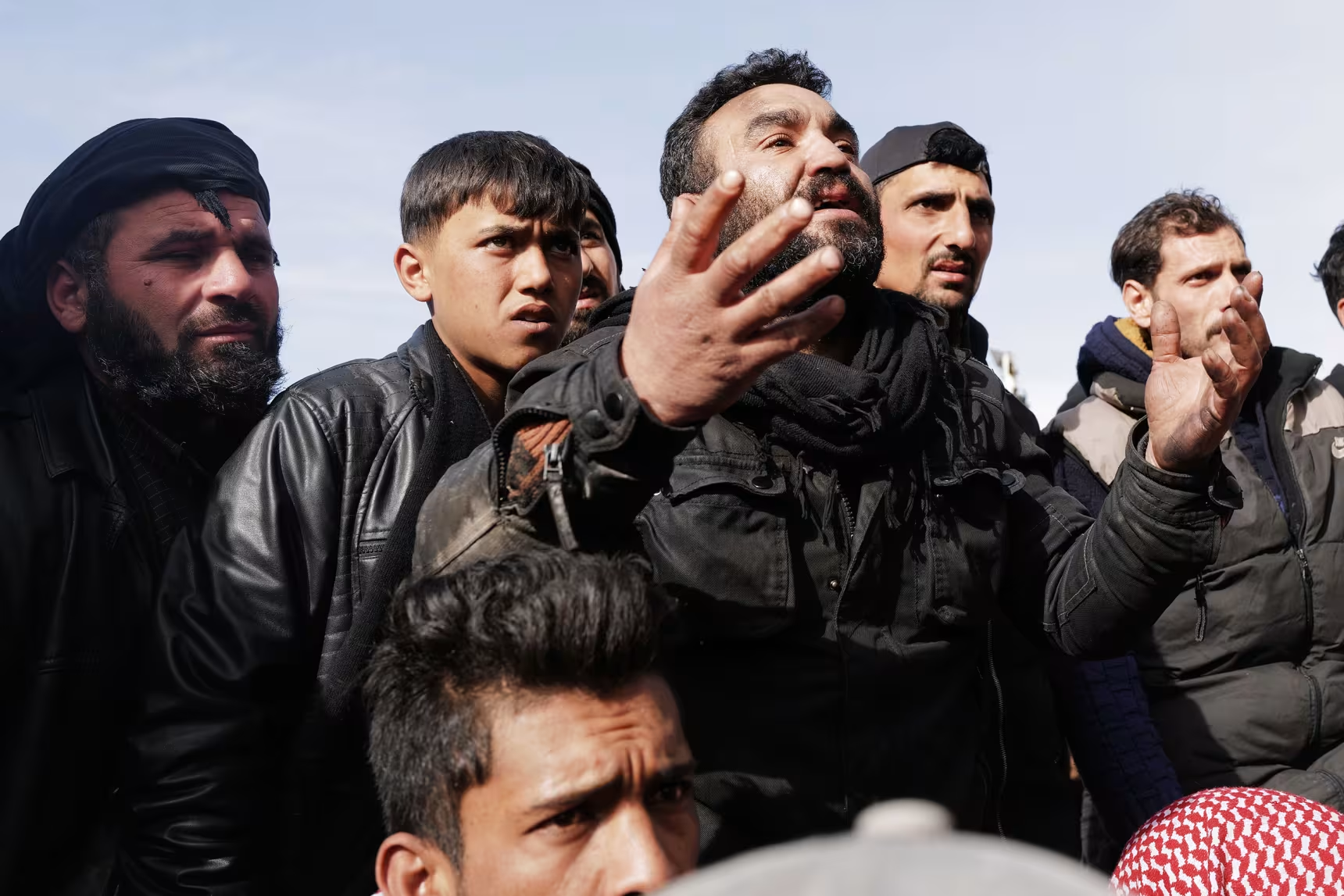
If you were following the news from Syria this week, there were multiple scenes of joy.
Despite the 2,000-year time difference, those events in Syria echo the message of both John and Jesus. They proclaimed the kingdom of God in a world dominated by the Roman empire and its local proxies: Herod and his sons.
John and then Jesus assured people that God’s kingdom was about to arrive. For John, that seems to have been imagined as the arrival of the Messiah, but when John—who was already in prison—sent messengers to check whether or not Jesus was the Messiah for whom they were waiting, Jesus replies as follows:
Go and tell John what you have seen and heard: the blind receive their sight, the lame walk, the lepers are cleansed, the deaf hear, the dead are raised, the poor have good news brought to them. And blessed is anyone who takes no offense at me. [Luke 7:22-23 NRSV]
In describing what the arrival of God’s kingdom looks like, Jesus was drawing on the words of prophet Isaiah who inspired both John and Jesus, and whose words have had their own echo again in Damascus this week:
The spirit of the Lord GOD is upon me, because the LORD has anointed me; he has sent me to bring good news to the oppressed, to bind up the broken hearted, to proclaim liberty to the captives, and release to the prisoners; to proclaim the year of the LORD’S favour, and the day of vengeance of our God; to comfort all who mourn; to provide for those who mourn in Zion— to give them a garland instead of ashes, the oil of gladness instead of mourning, the mantle of praise instead of a faint spirit. They will be called oaks of righteousness, the planting of the LORD, to display his glory. They shall build up the ancient ruins, they shall raise up the former devastations; they shall repair the ruined cities, the devastations of many generations. [Isaiah 61:1-4 NRSV]
In Damascus this past week and in Capernaum 2,000 years ago, these words capture what JOY looks like.
Those prophetic lines sketch what the world looks like when God is active among us.
This is the JOY that erupts when the impossible is achieved, when the unthinkable happens, when the mighty are indeed cast down from their thrones, and when the humble and meek are fed.
This JOY is exuberant, as we have seen on our TV screens these past few days.
Yes, it may all end in tears, but for now there is celebration and delight. JOY.
The people who stumbled out of Assad’s prisons blinking in the bright light of the sun, understood what JOY is.
Indeed, the people who walked in darkness have seen a great light; those who lived in a land of deep darkness— on them light has shined. [Isaiah 9:2 NRSV]
This week we hear words about JOY, but we have also witnessed scenes of great JOY as the ancient words of the prophets find an echo in the events of our own time.
———
While we celebrate with the Syrians who have been surprised by joy and rediscovered hope after decades of tyranny and almost 15 years of civil war, we must not forget that there are people still incarcerated unjustly much closer to home.
To our shame, Australia turns away people seeking safety.
Equally to our shame, we pick and choose who we assist, based on the colour of their skin or the way they worship God.
We were generous with assistance to Europeans fleeing Ukraine after the Russians invaded. That is a cause for celebration. But we turned our backs on the people of Gaza when they attempted to find safety while Israel destroyed every hospital, school, university and mosque; not to mention water systems, sewerage systems, electricity plants and almost every single home for 2.4 million people.
Were Mary and Joseph to be seeking refugee with the baby Jesus here today, I fear that our government would reject their application and send them to offshore detention.
As we enjoy the outpouring of joy and hope in Damascus, let’s also have the courage to be more generous as a people.
As we do that, may we give others cause for JOY and may we find deep JOY ourselves.


Leave a Reply to Gregory C. JenksCancel reply