Tag: Casino

  • Anyone but them

    Anyone but them

    A sermon for St Mark’s Anglican Church, Casino on Sunday, 10 July 2022


    This post is part of the ON THE WAY sermon series at St Mark’s Anglican Church, Casino July/October 2022


    Last week as we started our journey to Jerusalem with Jesus, we focused on the significance of peace-making. We did not mention it at the time, but since then I have been conscious of the commendation found in Matthew’s version of the Beatitudes:

    Blessed are the peacemakers, for they will be called children of God. [Matthew 5:9]

    Today we get to explore another aspect of peacemaking as people who cross the boundaries that keep us apart, and overcome the fear that stifles our capacity to love.

    The parable that Jesus composes in response to a question from a religion scholar (scribe) is both familiar and very much alive in our culture today.

    We call the hero of this parable the Good Samaritan, but that adjective is never applied to the anonymous third passerby in Luke’s Gospel. He is simply “a Samaritan …”

    As an aside, this timeless spiritual classic is found only in Luke.

    One of the benefits of having four gospels in the New Testament is that we hear from different circles within the earliest Jesus movement, and not just a single account approved (and censored) by later church authorities.

    However, as essential background information, let’s note that for Jewish people in the time of Jesus there was no such thing as a “Good Samaritan.”

    All Samaritans—and every Samaritan—were discounted as a failed religious community. That is part of the essential cultural context for this classic story. Suffice to note that for Jews at the time, Samaritans were seen as the despised enemy.

    As the opening dialogue before the parable makes clear, this whole scene in Luke is about drawing boundaries: who is inside the circle of affection and who is beyond the circle of care.


    A traveller goes from Jerusalem to Jericho …

    That was a dangerous journey to make, and immediately Jesus set the scene for what will follow.

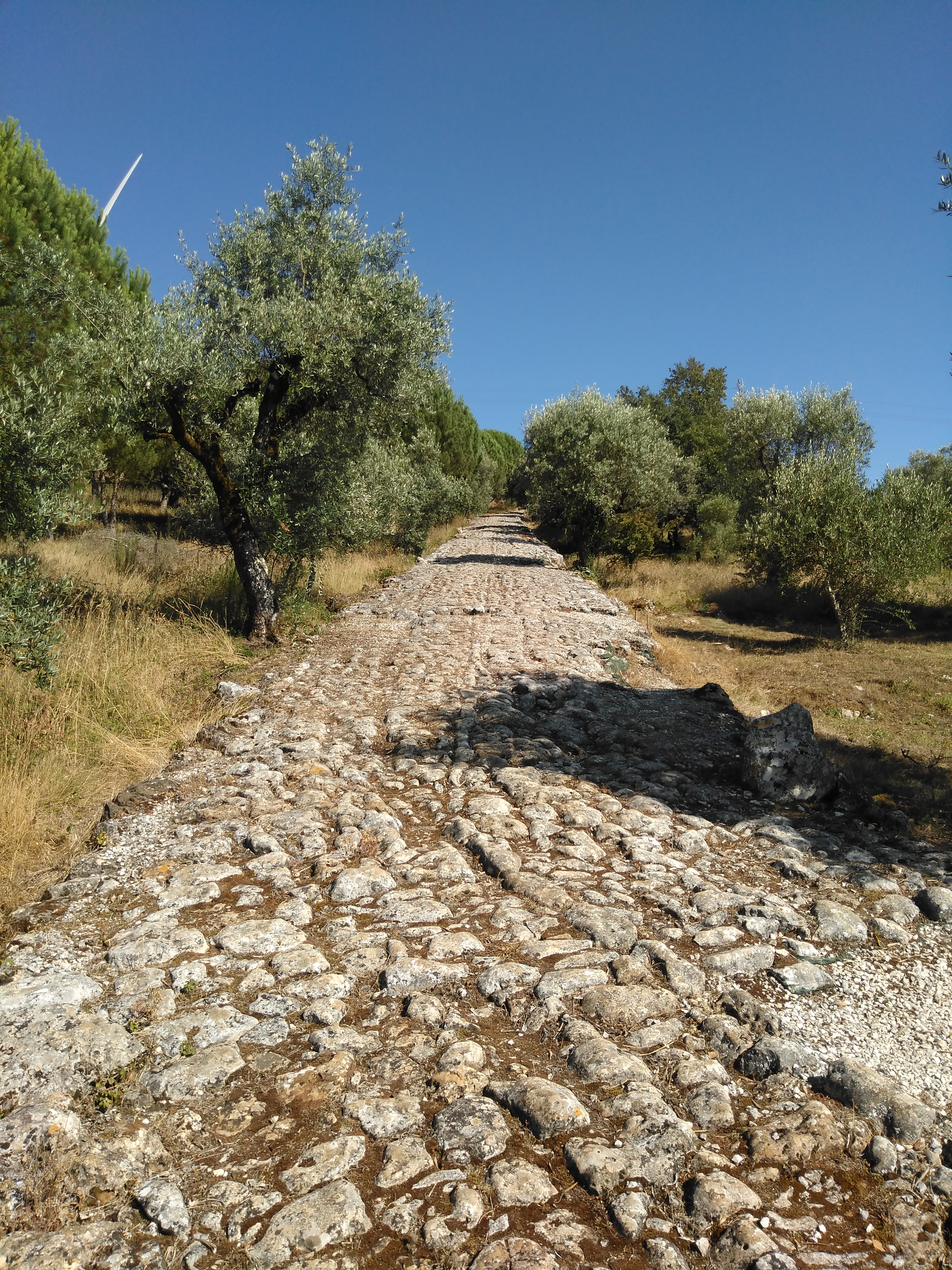
    The images on the screen this morning may give you some idea of what was involved for anyone making that journey in either direction. It was journey people made in groups, where possible. There was safety in numbers.

    [The following screenshots are from an excellent video from SatelliteBibleAtlas with aerial photography of the ancient route from Jericho to Jerusalem. In the parable, the victim is heading the opposite direction, while the three passersby are heading towards Jerusalem.]

    The route followed the top of the Judean hills
    The Roman roadworks closer to Jerusalem
    Detail of the Roman road

    This area continues to be a remote and secluded place, despite its proximity to Jerusalem. The ancient St George’s Monastery clings to the northern edge of the Wadi Qelt and is home to a small community of Greek Orthodox monks.

    St George’s Monastery, Wadi Qelt. Photograph © 2016 Gregory C. Jenks

    A friend in need …

    We usually think about this parable as an invitation for us to be kind to other people.

    That totally misses the radical point being made by Jesus.

    Sorry!

    This parable is not seeking to turn the world upside down by asking us to be nice to people when they are having a tough time.

    Rather, this is a parable that invites us to—which demands that we—rethink the circle of affection and care within which we choose to live.

    Let’s go back into the story.

    It is a classic tale where three characters have an opportunity to meet the needs of the man lying in the ditch.

    He has been attacked, robbed, and left for dead.

    As he lies in the ditch beside the road three people come along the track. Each of them is heading in the other direction, but any of them could help this person in their distress.

    So Jesus tells the story …

    Now by chance a priest was going down that road;
    and when he saw him, he passed by on the other side.
    [Luke 10:31]

    Can you imagine the reaction of Jesus’ audience?

    Well, of course! Just what we would expect!

    So likewise a Levite, when he came to the place and saw him,
    passed by on the other side.
    [Luke 10:32]

    And the crowd thinks … a Levite, a Deacon, an LLM, a seminarian, a PC member … typical!

    But wait. There is a third character. As there always is in a story like this.

    Who are the crowd expecting to be the third passerby. Who will be the hero of the story?

    Of course, it will be someone like them. Not a priest. Not a Levite. But a regular Jewish person. A farmer perhaps, or a merchant …

    Surprise …

    But a Samaritan while travelling came near him; and when he saw him, he was moved with pity. He went to him and bandaged his wounds, having poured oil and wine on them. Then he put him on his own animal, brought him to an inn, and took care of him. The next day he took out two denarii, gave them to the innkeeper, and said, ‘Take care of him; and when I come back, I will repay you whatever more you spend.’ [Luke 10:33–35]

    That is not supposed to happen.

    To express it in our terms …

    Imagine a Jewish driver whose car has crashed, and he is rescued by a Palestinian …

    Or a Ukrainian soldier who is rescued by a Russian …

    Or coal miner who is rescued by a Climate Change activist …


    Anyone but them …

    The challenge of this parable is to imagine ourselves as the victim and then see the last person on earth from whom we ever wish to receive help come around the bend in the track, look at us, smile and then … worse still … come across to assist us!

    We know that dynamic …

    Who are the people from whom we are most estranged?

    Can we be helpful to them? (This is the usual reading of this parable.)

    Can we accept help from them? (This is the real challenge of this parable.)

    In this town?

    In our families?

    Here in this church?

    Do we really want to be peacemakers? Agents of Jesus?

    Do we want to be Jesus people here in Casino?

  • Agents of an alternative reality

    Image: An ancient Roman road. Wikimedia Commons.


    This post is part of the ON THE WAY sermon series at St Mark’s Anglican Church, Casino July/October 2022


    This is the first of a series of sermons at St Mark’s Anglican Church, Casino as we step inside the story of Jesus as crafted by Luke and walk with Jesus “on the way” to Jerusalem.

    The journey will be incomplete as I am only serving as locum until Wednesday, 5 October.

    However, during the next 13 weeks we shall open our hearts and our imagination to reflect on one question: What does it mean to be Jesus people here in Casino now? Week after week we shall be engaging with that question, using the weekly Gospel reading as a prompt for spiritual wisdom.


    Good news by design

    Let’s begin by zooming out, as it were, so that can see the forest and not just a handful of trees.

    The “forest” in this case is a major literary project undertaken towards the end of the first 100 years after Easter. That project involved two volumes. Both volumes found their way into the New Testament, but in the process they were separated from each other and for a long time their original connection was overlooked.

    The first volume tells the story of Jesus. We now call it the Gospel according to Luke, and this year it is the chosen gospel for our reflections almost every Sunday. Last year we especially listened to Mark’s version and next year we shall focus on Matthew, but right now we are listening especially to the way that Luke described Jesus.

    The second volume tells the story of what happened with the project Jesus started. We call it the Acts of the Apostles, and it traces the spread of the Jesus message from Jerusalem to Rome; to the very heart of Empire.

    For convenience we refer to the complete two-part document as “Luke-Acts.”

    In Luke-Acts the “good news” (an official Roman political term for an official announcement) moves from Nazareth to Rome; from the edge of empire to the very centre of power.

    Very soon after it was published, the Gospel of Luke was put into a convenient collection of Gospels alongside Matthew, Mark and John. That is where we still find it in our Bibles today.

    Part two of the project, the Acts of the Apostles, became separated from the Gospel of Luke. Today we find it in between the Gospels and the Letters, where it forms a kind of a bridge between the story of Jesus and the letters of the Apostles: Paul, and then the “big three” of Peter, James and John.

    In this sermon series we shall focus on the Gospel part of that ancient Christian project, since this is the text we shall be working with over the next few months.

    Unlike the other gospels, the Gospel of Luke begins with a statement by the author/editor:

    Since many have undertaken to set down an orderly account of the events that have been fulfilled among us, just as they were handed on to us by those who from the beginning were eyewitnesses and servants of the word, I too decided, after investigating everything carefully from the very first, to write an orderly account for you, most excellent Theophilus, so that you may know the truth concerning the things about which you have been instructed. [Luke 1:1–4]

    Interestingly, this preface tells us the name of the person for whom the project has been prepared, but not the name of the person doing the work! It is traditional to call this anonymous author, “Luke.” We shall do that for convenience, although we do not know anything about this person even if that was their name.

    The author of this two-volume account is aware that others have prepared similar documents before him, and it seems that “Luke” was able to undertake investigations to assist him in his own project. While he does not expressly say he read and used the earlier documents, we can see that he certainly did so.

    More importantly Luke indicates that his goal was to provide Theophilus with an orderly account. I understand this to mean that Luke was choosing what information to record and how best to arrange the material for the benefit of his reader. In 1:4 Luke uses a Greek word, catechesis, to describe the instruction which Theophilus would acquire by paying attention to Luke-Acts. We know that same term from our word, Catechism.


    The Great Journey

    One of the ways that Luke arranges his instructional material for Theophilus was to use the simple fact that Jesus needed to relocate from Galilee to Jerusalem, but he develops that into a meme that forms the central section of the Gospel.

    From 9:51 through until 19:44, Luke describes Jesus as being on the way to Jerusalem.

    This relocation is given a special significance by the way that Luke notes its commencement:

    When the days drew near for him to be taken up, 
    he set his face to to go to Jerusalem.
    [Luke 9:51]

    This is no routine trip south. This is the journey Jesus had to make “when the time came.” As Luke tells the story, in choosing to start this journey at that time Jesus was embracing the call of God upon him. As Jesus takes the first steps south he is saying, “Yes” to God.

    The Gospel of Luke has 24 chapters and almost half of them are allocated to this journey that Jesus makes. In the previous chapters (3–9) Jesus has been active in Galilee, and in the following few chapters (20–24) Jesus will encounter the authorities in Jerusalem who seek to destroy him, but for now he is on the road, making his way to Jerusalem.

    The first Gospel writer—Mark—dealt with that transition with a very brief statement:

    He left that place and went to the region of Judea and beyond the Jordan. And crowds again gathered around him; and, as was his custom, he again taught them. [Mark 10:1]

    A little later Matthew developed that simple statement a little further as he prepared a revised edition of the brief document prepared by Mark:

    While Jesus was going up to Jerusalem, he took the twelve disciples aside by themselves, and said to them on the way, “See, we are going up to Jerusalem, and the Son of Man will be handed over to the chief priests and scribes, and they will condemn him to death; then they will hand him over to the Gentiles to be mocked and flogged and crucified; and on the third day he will be raised.” [Matthew 20:17–19]

    The Gospel of John famously has Jesus make several trips to Jerusalem, but Luke has developed the historical fact that Jesus made a final one-way trip to Jerusalem from Galilee into an extended reflection on what it means to be a disciple of Jesus.

    During the weeks between Trinity Sunday and Christ the King we join Jesus on that journey which Luke has developed in such detail.


    Seventy people on mission

    In the first part of today’s Gospel we have Jesus choosing 70 people from the crowd of people travelling with him, and sending them ahead in pairs to each of the places he planned to visit on his way south.

    Let’s pause and think about that.

    From Nazareth to Jerusalem is about 100 km as the crow flies.

    It needed about 4 days to walk there, unlike the 2 hours needed to do the trip by car today.

    Jesus could get to Jerusalem in less than a week, but he is making arrangements to visit 35 villages on along the way. Maybe more than that, since each pair of people will visit several towns before Jesus gets there. This is a major operation which Jesus potentially gathering support from 100+ villages along the way.

    As Luke tells the story, Jesus seems to be in no hurry to get to Jerusalem.

    As Luke tells the story, it was as much about the journey as the destination.

    As Luke tells the story, this trip will take quite a while. There will be time for reflection, questions and insights. No one gets to ask, “Are we there yet?”


    The instructions to the 35 sets of advance teams are not exactly encouraging:

    He said to them, “The harvest is plentiful, but the laborers are few; therefore ask the Lord of the harvest to send out laborers into his harvest. Go on your way. See, I am sending you out like lambs into the midst of wolves. Carry no purse, no bag, no sandals; and greet no one on the road. Whatever house you enter, first say, ‘Peace to this house!’ And if anyone is there who shares in peace, your peace will rest on that person; but if not, it will return to you. [Luke 10:2–6]

    Those instructions, by the way, are very similar to the words when Jesus sent out the Twelve at the start of chapter 9, but the Twelve had been given authority over all demons and to cure diseases. The 35 advance teams are being told to make do with what they have, and to pray that God will send more people to help.

    These 35 advance teams are not commissioned to heal the sick or cast out demons, but it seems that is what they did anyway. We note their conversation with Jesus when they returned after completing their tasks.

    What they are told to do is to offer the gift of God’s shalom to each of the homes they entered, and tell people (regardless of their response) that God’s reign has drawn close to them.

    And that was even before Jesus got there!

    As soon as these folk turned up with a message of peace the kingdom of God had arrived.

    Simply by sharing a message of peace the reign of God was becoming active in those villages.

    They were not asked to sign them up as supporters of the Jesus campaign. They were not asked to baptise people. They were not told to instruct them in the parables and sayings of Jesus. They were not asked to collect money from them. They were not asked to organise a church.

    They were simply to be messengers of God’s peace, the rule of God. Right now. Right here.


    Regular folks with an amazing mission

    And notice who these people were.

    At least 58 of them were not the Twelve and maybe none of them were!

    These were just regular people who had been hanging around Jesus for a bit, and were now on the road to Jerusalem with him. Not even regular folks. These were most likely the marginal folk who had embraced the message of Jesus after an encounter that changed their lives. As much as anything, they were on the road with him and heading to Jerusalem, because they had nowhere else to be and no other place to call home.

    These are the people Jesus sends ahead of him.

    Not the Twelve but the rest. The Seventy.

    And maybe that is the task Jesus gives us here in Casino as well.

    We are called to be people whose own lives have been touched in some way by God in Jesus, and we offer a taste of that to others. We wish them well (peace, shalom). We share the secret that God is here among us and that they can choose to welcome the kingdom of God. The choice is theirs. And ours.

  • Word gets out

    Third Sunday of Advent
    St Mark’s Church, Casino
    12 December 2021

    Detail from “Saint John the Baptist” by Alvise Vivarini

    You may recall from last Sunday that we have a special focus on John the Baptizer in these two middle Sundays of Advent.

    Last week we reflected on the role that John played in the Jesus story.

    Far from being a lesser figure sent ahead of Jesus to make the arrangements, John was the spiritual master and Jesus was his disciple.

    That describes their relationship around the time that John was arrested, but it does not properly describe how things developed from that point onwards.

    You may even recall that I finished with the invitation that we each reflect on three questions during the week between then and now:

    • Do we have a John the Baptizer in our lives?
    • Are we a John figure for other people?
    • Do we allow ourselves (and them) to move in new directions? 

    This week we shift our attention from the role that John played in Jesus’ life and give some thought to what he was saying, and more especially what people understood him to be saying.

    What John was saying

    We are on less certain grounds when it comes to what John was saying than when we considered the role he played in the spiritual development of Jesus.

    The reason for that is very simple.

    We only get to hear John’s words through the Gospels of Matthew and Luke, in other words as told by followers of Jesus. It is impossible to tell how accurately they represented the message of John and we simply do not know if John would have agreed with the way that followers of Jesus (some of whom may once have been his own followers) described his message from their vantage point on this side of Easter.

    From the later perspective, John was preparing people for the coming of Jesus.

    We would add that he was also preparing Jesus to step into the limelight once his own time had passed.

    Even so, in the excerpt from Luke 3 which we read just now (and we have a parallel account in Matthew 3, both drawn from the early Q Sayings Gospel) we find John mapping out a rather different program from the one that Jesus would later pursue.

    • John did not share meals with people. He was more of an ascetic and solitary figure.
    • John did not move from village to village. People came to him at the place he chose.
    • John was not a healer and did not cast out demons.
    • John did not tell parables.
    • John did not forgive sins.
    • John did not send his disciples out in pairs to extend his program farther afield.

    On the other hand, we do find John calling on people to get ready for the next big thing in the covenant history of the Jewish people:

    • John was more like an OT prophet
    • John condemned the temple hierarchy
    • John foretold a major upheaval which was about to occur
    • John denied that he is the Messiah when pressed into that role
    • John demanded that his listeners undergo a ritual bath used to convert Gentiles
    • John taught people to fast and pray
    • John demanded integrity in personal and public life
    • John condemned Herod Antipas for his divorce and remarriage

    People knew what John was on about, and his criticisms of Antipas led to his arrest and eventually to his execution by the Roman puppet ruler whose job was to keep things calm in that corner of the Empire.

    Word gets out

    While we cannot be sure just what John was hoping to achieve, it is clear that he made an impact. Word got out. People heard about this weird guy down by the river and they formed an opinion about him.

    A few years later, when the Temple hierarchy were conspiring to get rid of Jesus, the legacy of John and his reputation with the people (even though he was dead) remained strong:

    As he was walking in the temple, the chief priests, the scribes, and the elders came to him and said, “By what authority are you doing these things? Who gave you this authority to do them?” Jesus said to them, “I will ask you one question; answer me, and I will tell you by what authority I do these things. Did the baptism of John come from heaven, or was it of human origin? Answer me.” They argued with one another, “If we say, ‘From heaven,’ he will say, ‘Why then did you not believe him?’ But shall we say, ‘Of human origin’?”—they were afraid of the crowd, for all regarded John as truly a prophet. So they answered Jesus, “We do not know.” And Jesus said to them, “Neither will I tell you by what authority I am doing these things.” [Mark 11:27–33]

    Word gets out.

    That is equally true here in Casino, of course.

    Word gets out.

    What is the story about St Mark’s Church that is going around in the community here?

    For that matter, what is the story about Casino Parish going about in the Diocese?

    Is that a story about a group of people who take their faith seriously but treat each other gently?

    Do we have a reputation as regular folks who simply treat people as Jesus would do?

    What about the people who used to come here but now stay away? What story about St Marks do they carry in their hearts and tell each other?

    What is the story about this church which our kids and grandkids tell each other?

    What story about us do the parents of the babies baptised here tell one another?

    When people come to our OpShop what story (what experience of grace) do they take with them as they leave the store?

    And what about the kids who break windows in the Hall every few days? What is their story about us? And how would Jesus respond to kids smashing up the place as they do? Would he add more metal grills or would he spend time with the kids and find a way to bring healing and hope into their lives?

    It is easy enough to ask questions like this, but much harder to answer them; and even harder to answer them well.

    But maybe that is the Advent task for this church in this town as we prepare to celebrate Christmas, the festival of Emmanuel; the God who is with us.

    So once more I finish with three questions for your reflections this week:

    • What is the story we want people to tell about us?
    • What is the story they are telling about us?
    • And how do we replace the bad story with the good story?
  • On Jordan’s bank

    Second Sunday of Advent
    St Mark’s Church, Casino
    5 December 2021

    Byzantine Baptistry at Bethany-beyond-Jordan

    This week and next Sunday we focus on John the Baptizer. That means half of the Sundays during Advent are allocated to this character on the edges of our tradition.

    This week we focus on the person of John the Baptizer.

    Next week we focus on the message of John the Baptizer.

    So we have an opportunity to reflect on someone who plays a significant part in the story of Jesus, but only a minor role in our own faith.

    Let me offer some perspectives on John for you to reflect on during the week …

    Historicity

    When we pause to think about the historicity of the character of John and his relationship with Jesus, this gets a very high score.

    This does not mean that we know much about him or even anything that he said (more on that next week), but it does mean that the idea that Jesus started out as a follower of John ranks almost as certain as the idea that Jesus was killed by crucifixion.

    No one would invent either story as they detract from the status of Jesus for his own followers.

    In the case of John, no follower of Jesus would ever make up a story about Jesus himself starting out as a student of someone else. A careful reading of the Baptism stories in all 4 gospels shows us that people struggled with this idea and even go to some pains to clarify that John was preparing the way for someone greater than himself, rather than Jesus coming to learn from someone more advanced in the religious life than him.

    So we are on firm historical ground when we think about John as the original teacher and mentor for Jesus.

    Historical

    John is one of very few figures in the Bible who we know about from sources other than the Bible itself. Usually the characters who feature so large in the Bible story are actually marginal figures in the larger history of the region, but John gets more than a passing mention in the historical books written by Josephus about 55 years after Easter.

    In other words, John has a role in the history books beyond the NT story about Jesus. 

    He had his own brand, we might say.

    People were still talking about him decades after his death because he was a key player in some of the events in and around Jerusalem just before Jesus himself began his public career.

    In fact, Josephus talked about John more than he talked about Jesus.

    Qumran and the Dead Sea Scrolls

    About 75 years ago the famous Dead Sea Scrolls first came to light, and in the time since then we have learned quite a bit about the Yahad, or intentional community, living on the edge of the desert at a place we call Qumran.

    It turns out that John was not the only strange character living in the desert and eking out an existence without relying on the town markets in nearby Jericho or Jerusalem.

    We cannot tell whether John ever joined the Qumran Yahad, or—if he did—why he left it to become a solitary religious figure. But they had many similarities, including a fierce opposition to the priests who were running the Jerusalem temple in their time.

    Although they lived in the desert, the breakaway clergy who ran the Yahad at Qumran practised ritual washing, offering another parallel with John the Baptizer. Where they dug cisterns and constructed complex water channels to harvest every drop of precious water, John used the free-flowing waters of the Jordan.

    And actually, it seems John was not such a solitary character after all. We learn from both Josephus and the Bible that John was attracting crowds of people, including the despised priests and other public officials from Jerusalem, as well as forming a smaller group of followers; his own Yahad.

    Jesus was one of them and, according to the Gospel of John, so were people like Andrew, Peter and Phillip.

    Jordan River

    The Jordan River was probably not only chosen by John because it offered a good supply of fresh water. It certainly did that, but it was a significant holy place in the biblical imagination.

    This was where Joshua led the tribes of Israel across the river as they finally entered the promised land, according to the Old Testament.

    It was also where Elijah had ascended into heaven in a fiery chariot. Since people were expecting Elijah to return when God was ready to save his people from their enemies, John was evoking all these associations when he based himself at the southern end of the Jordan River.

    John had chosen a location that was intended to get people wondering. Was Elijah about to arrive? Was John perhaps Elijah? Is the Messiah at hand?

    A mentor for Jesus?

    Finally, let’s reflect on the idea that John was a mentor for Jesus, a spiritual Master from whom Jesus learned before he commenced his own mission only after the arrest of John.

    We have no idea what Jesus learned from John, or how long they spent together, but it is clear that Jesus felt free to pursue his own sense of calling in a different way from John.

    So I want to finish these reflections today with three questions:

    • Do we have a John the Baptizer in our lives?
    • Are we a John figure for other people?
    • Do we allow ourselves (and them) to move in new directions? 
Exit mobile version