Category: St Francis College

News and information about St Francis Theological College, Brisbane.

  • Scribes discipled for heaven’s domain

    Scribes discipled for heaven’s domain

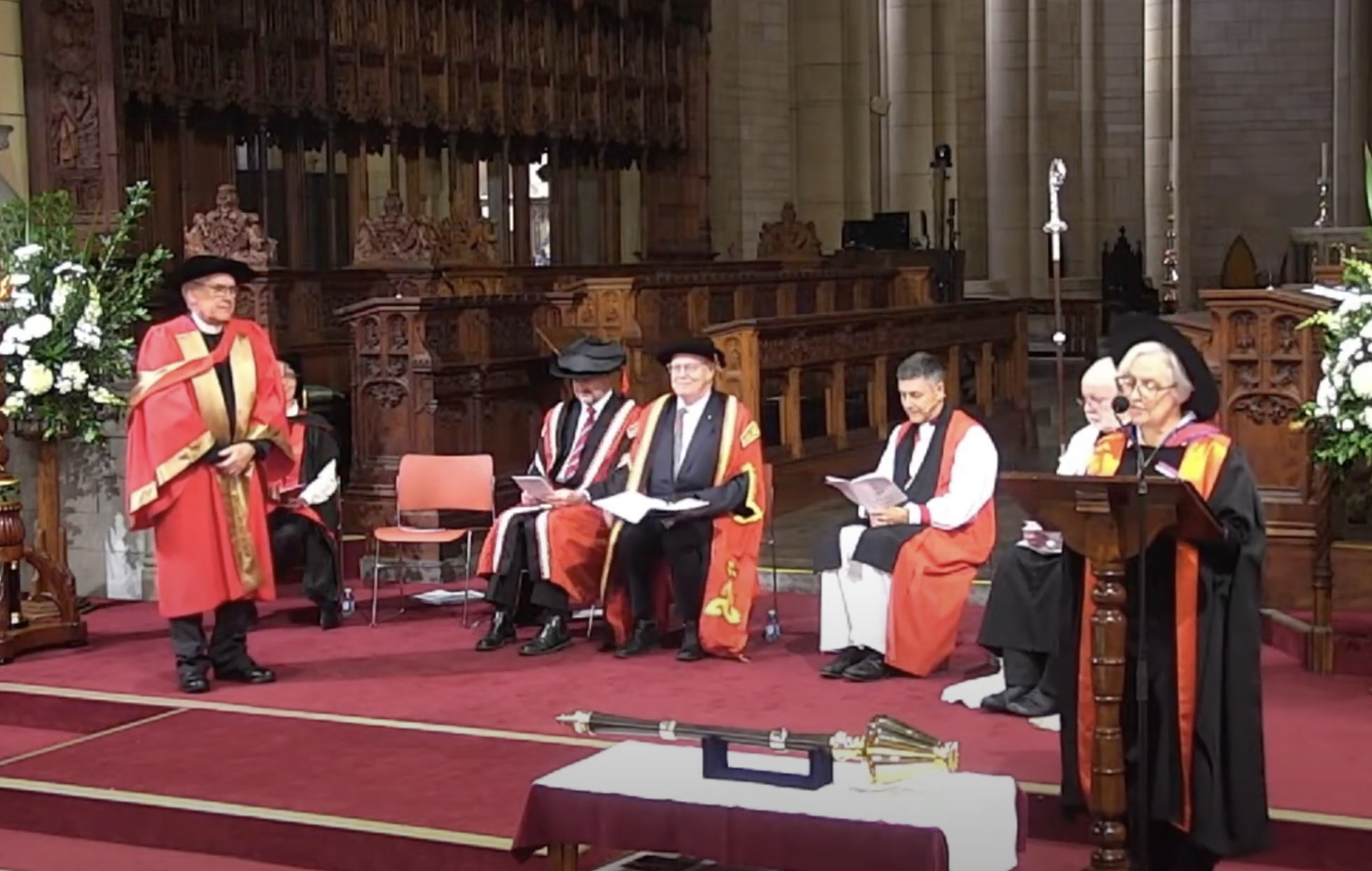
    Address for the University of Divinity Graduation Ceremony at St John’s Anglican Cathedral, Brisbane on Friday, 30 May 2025.

    The Revd Canon Gregory C. Jenks, MA, PhD, DD

    [ video ]

    I acknowledge with humility and gratitude the First Nations of this land and especially the Turrbal and Yaggera people on whose Country we gather this afternoon. I extend that respect to our Indigenous brothers and sisters who are with us this evening.

    Chancellor, Vice-Chancellor, Archbishop Jeremy, Dean Peter Catt, distinguished guests, colleagues, graduates, families and friends …

    Thank you, Vice-Chancellor, for the honour of delivering the address for this graduation ceremony. That seemed an appropriate way to conclude my 50 years of professional study and teaching, mostly at St Francis College here in Brisbane but also elsewhere Australia and overseas. It was enough. More than sufficient.

    The subsequent news that the University Council had agreed to confer the Doctor of Divinity on me was a total surprise, as you may recall from my reaction when you made that phone call. I am deeply honoured and genuinely humbled by this award.

    The readings that we heard earlier in the ceremony come from the Gospel according to Saint Matthew, which—as many of us here understand—is itself most likely an expanded edition of the Gospel according to Saint Mark.

    Behind that chain of tradition we may even discern the poetic wit and wisdom of Jesus himself. 

    If they are not his actual words, then perhaps they preserve his voice print. 

    We do not need more than that. 

    Truth is not mortgaged to historicity.

    Like all of us when we step into the pulpit or stand at the lectern, the gospel writers also exercised the privilege of speaking in the name of Jesus. 

    We are all prophets on those days when we speak in God’s name. 

    When he crafted the third of the three parables that we heard earlier, Matthew may have practising—and demonstrating—the skills of a scholar trained in the ways of Heaven’s imperial rule: bringing out what is old and what is new.

    Matthew has brought something new to place alongside the things that were already old.

    Be that as it may, I am grateful for Matthew’s generous and creative stewardship of that storehouse of faith that he mentions in verse 52. 

    This third and final parable has been my personal vision statement as a disciple and as a scholar.

    I have always wanted to be that person: a scribe trained for God’s domain; someone with the knack for bring out from the treasures of our great spiritual tradition just the right piece of wisdom for the occasion at hand. 

    Something old and something new.

    Our calling as Theology graduates is to bring out what is old and what is new.

    Both are needed.

    As students of Theology we are truly blessed people.

    We find hidden treasure.

    We hold in our hands the pearl of great value.

    We are scholars (scribes) who are discipled and schooled for Heaven’s imperial rule, or to use words more closely aligned with the voice of Jesus: people ready for the kingdom of God.

    Because of that formation which you have now completed we can draw from the great storehouse of faith to find just what is needed for the present moment.

    Sometimes that will be an ancient truth.

    Other times it will be something new, perhaps even disturbing.

    But it will be just what the Spirit is guiding us to say to the churches at this time and in this place.

    That happens week by week as we stand in our churches and proclaim the good news.

    That happens when we stand at the demonstration and protest genocide.

    That happens when we gather in councils, conclaves and synods to discern what the Spirit is saying to the church.

    That happens when the churches speak truth to power, refuse government funding with unworthy strings attached, and call out the lack of compassion in public policy.

    As we reflect on our vocation to bring out what is old and what is new, let me suggest that the scribe/scholar trained for heaven’s domain also moves beyond arguments, and beyond answers and beyond information.

    This is what John Caputo refers to as “weak theology” and which he contrasts with “strong theology.” Weak theology is a dialogue that imagines, suggests and wonders rather than a theology which defines, prescribes and excludes.

    We move beyond arguments since neither the hidden treasure nor the pearl of great value is the discovery that our god, our doctrine, or our church is bigger or better than theirs. This surely is one of the great values of our ecumenical university. It is not that truth no longer matters, but rather that we approach truth best when we seek understanding together rather than a rhetorical victory over the other person.

    As scribes/scholars trained and ready for God’s imperial rule we already have found the hidden treasure and we are familiar with the contours of the pearl of great value. We have discovered that we—already—have spiritual wisdom to live with the questions, and especially with those questions that really matter. Living with the questions is more faithful to the praxis of Jesus than collecting—and defending—answers to questions that few people are asking these days.

    As graduates and as faculty who are prepared (or at least preparing) for the reign of God, we have discovered that the call of God on us matters more than any of the information we acquire along the journey.  We sense the call. While I did not choose the music for this evening, I was intrigued how the first song fits with this truth.

    As my colleague Joseph Bessler (2025: 19) expresses it, “we have learned to lean into the possibility of perhaps.” As we lean into the call beyond certainty—and a wisdom beyond information—we discern a vocation which defines and fulfils us. Amen.

    References

    Joseph Bessler, Being Moved by Moving Words: Crediting Rhetoric in the Theopoetics of John D. Caputo.  Westar Studies. Eugene: Cascade Books, 2025.

    John D. Caputo, The Weakness of God: A Theology of the Event. Indiana Series in Philosophy of Religion. Bloomington: Indiana University Press, 2006.
  • Seeking Holy Wisdom

    A sermon preached in the Chapel of the Holy Spirit at St Francis Theological College, Brisbane on Friday, 4 September 2015.

    Introduction

    I especially appreciate the opportunity to preside and preach at this service today. My last regular service was Thursday, 6 August, when we celebrated the Feast of the Transfiguration—and reflected on the anniversary of the first nuclear bomb. Thankfully there have only been two such nuclear attacks, and we pray that number will never grow.

    It was a poignant day for me to preside, but most of the people present were not aware of its significance as my final rostered liturgy in this chapel.

    My first service in this chapel was 40 years ago. During the commencement service for the 1975 academic year, I was received into Anglican Church and confirmed by Archbishop Felix Arnott. It happened right here on the same step where I now stand to preach.

    Things were a tad more hierarchical then. Despite my lack of familiarity with Anglican liturgies, as a first year student I was assigned to the front row. Behind us first year students sat the second year students, and behind them the (very few) third year students. The Principal had assured me that I would be placed further back in the chapel, but the Sacristan (who ruled the chapel) had other ideas. So there I was in the front row, just here, but with no idea when to kneel, sit or cross myself.

    We said Compline every week night at around 9.30pm, even on Fridays. Indeed we had guest preachers at Friday Compline. On special days we sang the service. We used some very old service cards. Some months passed before I found they were folded, and that there were actually two inner pages which I had been missing. No wonder there seemed to be a gap in the service!

    I survived, even thrived. In fact, most of my adult life has been connected to this College and to this chapel. SFC has been for me a lifelong community of formation. A community of formation. Shaping holy lives.

    A community of formation

    A ‘community of formation’ is one way to think about the OT covenant community. Ancient Israel is often imagined as a tribal/national society commissioned by God to conquer and control, to expel the natives of the land, and to claim other people’s land as God’s gift to Israel. But I wonder whether it was perhaps intended as a community of formation? An experiment in holy living?

    That seems to have been what Micah had in mind with his classic prophetic speech:

    He has told you, O mortal, what is good;
    and what does the LORD require of you but
    to do justice, and to love kindness, and to walk humbly with your God?
    (Micah 6:8 NRSV)

    A community of formation also seems a good way to imagine the disciples gathered around Jesus, just as we see in today’s Gospel reading. They were not attending a church growth seminar. They were being drawn into a new way of seeing God, and themselves, and others. It even seems that they sensed a different formation agenda when gathered around Jesus than the formation program followed in the Baptist’s circle.

    Being a community of formation is certainly one of the hallmarks of SFC. Yes, we are an academic community. We strive for good scholarship and pursue research relevant to the needs of the church and the wider community. But first of all we are a community of formation.

    This is not limited to those who are candidates for Holy Orders. We are also a community of formation for disciples and ministers, for learners and teachers. All of us are people in formation.

    In its better moments—and sometimes in its worst moments—this place can be (and often is) a community of formation.

    The quest for holy wisdom

    The quest for holy wisdom lies at the heart of this community of formation. Wisdom is so far more important than information, and much more necessary than methodology. It is better even than correct citations!

    Holy Wisdom, Sacred Sophia, is both the destination and the journey. Wisdom is not a formula to be mastered and learned by rote. Wisdom is not something to be practised repeatedly until we acquire the skills. Wisdom is evasive and subtle and unpredictable. Whereas we are often all too predictable.

    Today’s Gospel makes that delightfully clear.

    Metaphor is piled upon metaphor:

    • the friends of the groom are in party mode (but it will not last)
    • new patches on old cloths do not last
    • new wine in old wineskins explode the containers
    • old wine is always better than new wine
    • and the old is always better than the new (really?)

    No neat package of answers is offered by Jesus. Rather, the disciples are given a set of puzzles. These seem designed to tease us into the quest, rather than fast-tracking us to the destination.

    To be a community of formation is:

    • to embrace the questions
    • to live faithfully with uncertainty, even with doubt
    • to care for one another
    • to be drawn into God’s mission in the world, and often outside the church

    Yes, the followers of John may have had a great program, but wisdom’s children will focus on Jesus, Sophia’s child. As followers of Jesus we can get by without the answers to life’s questions, and flourish in a world—and a church—where answers seem rare, and certainty even more so. But we cannot get far without holy Wisdom.

    Conclusion

    Wisdom has set a table, and she calls us to the feast.

    Here is one ancient description of that sacred wisdom to be found at heart of our tradition:

    There is in her a spirit that is intelligent, holy, unique, manifold, subtle, mobile, clear, unpolluted, distinct, invulnerable, loving the good, keen, irresistible, beneficent, humane, steadfast, sure, free from anxiety, all-powerful, overseeing all, and penetrating through all spirits that are intelligent, pure, and altogether subtle. For wisdom is more mobile than any motion; because of her pureness she pervades and penetrates all things. For she is a breath of the power of God, and a pure emanation of the glory of the Almighty; therefore nothing defiled gains entrance into her. For she is a reflection of eternal light, a spotless mirror of the working of God, and an image of his goodness. Although she is but one, she can do all things, and while remaining in herself, she renews all things; in every generation she passes into holy souls and makes them friends of God, and prophets; for God loves nothing so much as the person who lives with wisdom. She is more beautiful than the sun, and excels every constellation of the stars. Compared with the light she is found to be superior, for it is succeeded by the night, but against wisdom evil does not prevail. She reaches mightily from one end of the earth to the other, and she orders all things well.
    (Wisdom of Solomon 7:22-8:1 NRSV)

    That may all sound a bit like the first reading? I certainly hope it does!

    For us, Jesus is the child of Sophia, the Wisdom of God in human form.

    For us, the task of formation is to become more like Jesus, more like God in human form, so that others may recognise us as children of wisdom herself.

    For us, this college is a place where the quest for holy Wisdom is the main agenda, indeed the only assignment that matters in the End.

    ©2015 Gregory C. Jenks
  • Study Leave — Week Four

    It is hard to believe, but already I have been in Israel four weeks. That time has certainly gone by very quickly. I guess one of the indicators that this has indeed been the case is my growing familiarity with the roads. After three or four trips to Jerusalem without the aid of my trusty GPS, I am starting to feel like I know the place. Even the process of checking in at the gas station counter for my credit card to be approved before I begin to fill the tank now feels routine.

    The public calendar has been dominated by Shabbat and Pesach (Passover), creating an extended holiday week for many Israelis, whether religious or nor, Jewish or not. The schools are in Spring break, and the roads are busy with holiday traffic.

    I made two trips to Jerusalem this week, and happily missed the worst of the traffic. The absence of trucks on the main tollway has certainly helped in that respect.

    On Sunday I went back to the Israel Museum, but as a paying visitor so that I could see the Herod Exhibition and also spend some time in the archaeology hall. The exhibition is very good, but I was expecting it to be larger than it is. Still, it is well worth the 30–45 minutes needed to see everything, watch the videos, etc. On arrival at the Museum I was reminded how small our world is when I looked up to see Mary Cohloe from Melbourne (but formerly teaching in Brisbane) leading a group of students past the front of my car towards the Museum. We crossed paths later in the day and it was good to catch up with her.

    One of unexpected highlights from this visit was the opportunity to see the White Gold exhibition, featuring the earliest coins that were made from electrum. As it happens the curator of the exhibit was there at the time and asked if I had any questions. When we began to talk I realised that I had seen him in the coin department at IAA a few days earlier when he brought in a book I was needing to consult. It was good to have an opportunity to talk with him about the exhibition.

    On Monday evening I had the opportunity to join a local Jewish family for their Passover Seder. The family are close friends of Judith and Shai from Kibbutz Ginosar, and it was a delight to share the evening with them all. Although the two families are not religious, it was clear that the Seder is a significant occasion for renewing and sustaining their Jewish identity. I was especially impressed by the care taken by Miriam, our hostess, to choose a progressive Haggadah with a focus on social justice and compassion. Her own reflections on the meaning of Pesach and the search for God were beautiful, and would have graced any pulpit.

    Tuesday saw me heading back to Jerusalem for some meetings to set up an on-going arrangement for students from St Francis College to come to Jerusalem for short term placements as interns with the Anglican Church here. Julianne Stewart from Anglican Board of Mission Australia was in town for the week, so it was a good opportunity to meet with her and to discuss the proposal with local stakeholders. Good progress was made, so I am hoping we shall have the scheme up and running for next year.

    Wednesday night I attended an ecumenical prayer service for the Feast of the Annunciation at the chapel of the Clarisse Sisters in Nazareth. Although not dressed in clerical gear, I was placed in a seat in the very front row and given an order of service in Arabic. The singing was beautiful, and the young Italian priest who gave the homily spoke in very good Arabic (raising the bar for me in the eyes of my local friends). Abuna Suheil from the displaced Arab Christian community at Iqrit led some of the prayers. I had met him and the community there last July, and have mentioned them at the beginning of each of the BIBLE360 workshops that I presented over the past six months, so it was good to see him again. All five clergy present for the event joined in the blessing at the end of the service, although I was not required to speak!

    In among all these trips to Jerusalem and other events I have managed to get some further work done on the new book. Research is continuing on the archaeology of ancient Nazareth, but in the last 24 hours I have completed the first draft of a chapter that explores the social location of Jesus and his relationship with John the Baptist. I keep reminding myself that a book is just a series of 5,000 word essays, so a chapter a week should see me have the book ready by the end of my study leave.

  • The Once and Future Scriptures

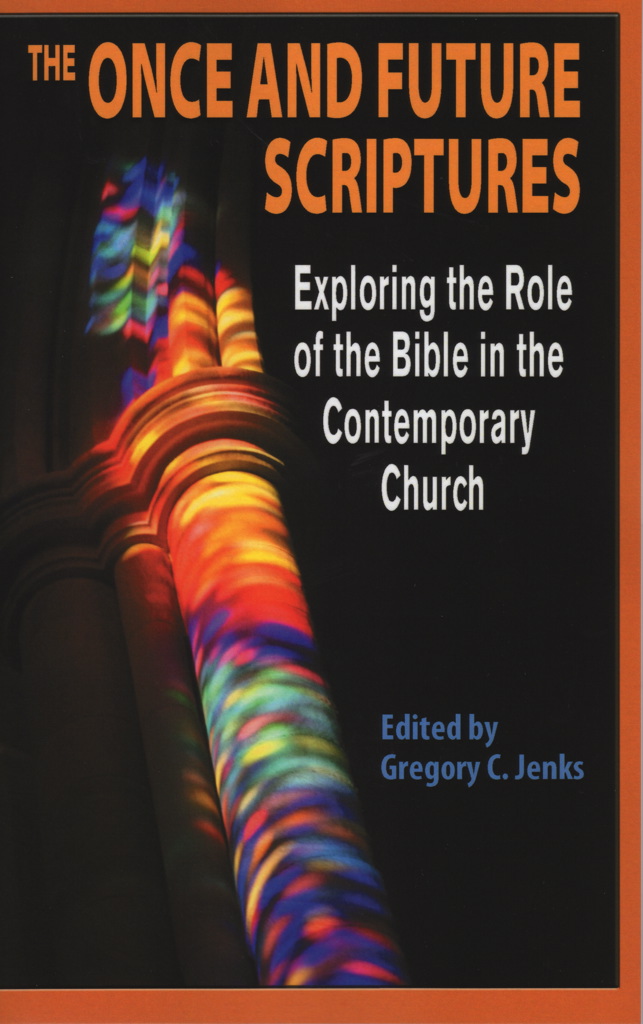
    The Once and Future Scriptures: Exploring the Role of the Bible in the Contemporary Church.

    Edited by Gregory C. Jenks | Foreword by Archbishop Phillip Aspinall
    Polebridge Press/Mosaic Publications, February 2013 | ISBN 978-159815-120-6

    Contributors: Peter Catt, Susan Crothers-Robertson, Marian Free, Gregory Jenks, Nigel Leaves, Steven Ogden, and Catherine Thomson.

    This collection of essays by priests from the Anglican Diocese of Brisbane explores the role of the Bible in the contemporary church. Embracing critical scholarship and the cultural challenges of our present times, senior clergy of the Diocese bring their hearts and their minds together in the service of the Gospel.

    Table of Contents

    Foreword
    Archbishop Phillip Aspinall

    Introduction
    Gregory C. Jenks

    1. The ‘problem’ of the Bible.
      Gregory C. Jenks
    2. Scripture as normative source in theology.
      Catherine Thomson
    3. Wisdom as well as facts.
      Steven Ogden
    4. Scripture, God-talk and Jesus.
      Nigel Leaves
    5. Scripture and formation for ministry.
      Susan Crothers-Robertson
    6. The Bible and liturgy.
      Marian Free
    7. Scripture, Science and the big story.
      Peter Catt

    Contributors

    Phillip Aspinall is Archbishop of Brisbane and Primate of the Anglican Church of Australia.

    Peter Catt is Dean of St John’s Anglican Cathedral, Brisbane. Peter has degrees in Science and Theology. While Dean of Grafton Cathedral he established the International Festival of Philosophy, Science and Theology.

    Susan Crothers-Robertson is Director of Formation at St Francis Theological College, Brisbane and an Adjunct Lecturer in the School of Theology at Charles Sturt University. Her doctoral research is investigating models of ministry formation within the Anglican Communion that are responsive to the realities of current and future church contexts.

    Marian Free has a PhD in New Testament from the University of Queensland, and is an Adjunct Lecturer in the School of Theology at Charles Sturt University. She teaches classes in New Testament and Christian Worship at St Francis Theological College. Marian is a Canon of St John’s Cathedral, Brisbane and Rector of St Augustine’s Parish, Hamilton in Brisbane.

    Gregory Jenks is a Senior Lecturer in the School of Theology at Charles Sturt University and Academic Dean of St Francis Theological College, Brisbane; Co-Director of the Bethsaida Excavations Project, Israel; and a Fellow of the Westar Institute, Willamette University. His publications include The Once and Future Bible: An Introduction to the Bible for Religious Progressives (2011) and The Origins and Early Development of the Antichrist Myth (1991).

    Nigel Leaves is Canon of St John’s Anglican Cathedral, Brisbane and an Adjunct Lecturer in the School of Theology at Charles Sturt University. He teaches undergraduate and postgraduate classes in Theology at St Francis Theological College. His publications include Religion Under Attack: Getting Theology Right! (2011), The God Problem: Alternatives to Fundamentalism (2006), Surfing on the Sea of Faith: The Religion and Ethics of Don Cupitt (2005), and Odyssey on the Sea of Faith: The Life and Writings of Don Cupitt (2004).

    Steven Ogden is Principal of St Francis Theological College, Brisbane, and an Adjunct Lecturer in the School of Theology at Charles Sturt University. He was formerly Dean of St Peter’s Cathedral, Adelaide. He is author of Love Upside Down: Life, Love and the Subversive Jesus (2011), I met God in Bermuda: Faith in the Twenty-First Century (2009), and The Presence of God in the World (2007).

    Cathy Thomson has a PhD in Theology from Flinders University of South Australia, and is currently the Rector of Christ Church, St Lucia in Brisbane.  A member of the Anglican-Lutheran International Commission, Cathy is an Adjunct Lecturer in the School of Theology at Charles Sturt University and teaches Theology at St Francis Theological College. She is co-editor of Ordination of Women: Interdenominational Perspectives (2006, with Victor C. Pfitzner), a contributor to Faithfulness in Fellowship (2001), and co-editor of Faithfulness in Fellowship: A Study Guide (2003, with Muriel Porter).

    Available from …

    The Cathedral Shop
    St John’s Anglican Cathedral, Brisbane
    07 3835 2281 or thecathedralshop@anglicanbrisbane.org.au

    Mosaic Resources


    Polebridge Press

  • A faith worth sharing

    During the past week some friends on Facebook were discussing the advertisements that St Francis Theological College in Brisbane has been running on a local radio station. I guess that means the advertisements worked, although I am yet to see if this will translate into new enrolments.

    There were two strands to the discussion.

    First of all, there was the surprise of recent SFC graduates in hearing that radio advertising was being used to promote the academic programs that we offer. This is not a marketing strategy we have used in the past, and people were genuinely surprised at the development.

    The other strand in the discussion expressed negativity towards St Francis College in particular, and to critical religion scholarship more generally, as not having anything life-giving to offer to people who are seeking for meaning in the lives and a greater depth to their own faith. Such criticism is neither new nor surprising in an age of resurgent conservatism.

    But it got me thinking.

    Yes, it was atypical for SFC to advertise on local community radio, and something of an experiment. At the same time, we were very conscious of the need to describe ourselves accurately so that people looking for a more traditional Bible College program did not mistake SFC as offering that kind of experience.

    The briefing of the advertising consultant took some extra time as we worked to find the right words to capture what we wished to say. In the end, the text of our very brief advertisement was as follows:

    Is it your dream to make a POSITIVE change in our rapidly changing world? St Francis Theological College could be your next step to make that change… and push your faith to the next level. St Francis Theological College offers a wide range of courses to equip you for ministry—Biblical Studies, Theology, Ministry Studies and more …  from Certificate to Masters degrees. For course and campus details see StFrancisCollege.com.au 

    Whether or not we succeeded in getting the description right, and irrespective of the enrolment enquiries generated by the advertisement, I want to reflect a little further on the assumption that liberal and progressive expressions of Christianity have no good news to share with people.

    For the purposes of this reflection, I shall use the five hallmarks of progressive Christianity identified by Hal Taussig in his 2006 study of 1,000 progressive faith communities in North America:

    1. Spiritual vitality and expressive worship
    2. An insistence on Christianity with intellectual integrity
    3. Transgression of traditional gender boundaries
    4. Christian commitment without exclusive claims to religious truth
    5. Strong ecological and social justice commitments

    In my view, those five characteristics  constitute an attractive and transformative expression of Christianity. They cut across the traditional boundaries of catholic, evangelical, pentecostal, and liberal Christianity. Ideally, people of faith whose primary identity is Catholic or Evangelical or Pentecostal would find much here that they can endorse as well.

    It is not the individual points but rather their combination into a coherent pattern of discipleship that makes progressive Christianity a distinctive expression of Christian faith in today’s world. This is good news, and it is good news that many parts of the Christian Church need; not to mention the wider community.

    One only has to voice the alternatives to glimpse why this way of being Christian is profoundly good news. Too many expressions of Christianity are characterised by liturgies that no longer speak to and from the human situation, uncritical acceptance of traditional beliefs and practices, deep fear of sexual difference, ugly religious competition, and a failure to care deeply for justice and the environment.

    Progressive Christianity seeks to escape religious naiveté while valuing our own spiritual tradition with its rituals, scriptures, and core values; to engage deeply and passionately with the quest for truth and the search for meaning; to value people for who they are rather than their gender or sexuality; and to participate in the mission of God in shaping a world that is just and sustainable.

    If pushed to reduce Hal Taussig’s five-part description to even simpler terms, I would argue that the heart of Christianity is compassionate generosity. If a single term is needed, then compassion does it for me.

    Jesus is supposed to have said that the health of a tree can be judged by the fruits that it bears. On that test, SFC scores well as a healthy local expression of progressive Christianity. We respect and value the Catholic Anglican tradition that we have received as a legacy from the past, and we welcome Anglicans of other traditions as well as people of any faith and no faith.

    Our goal is that anyone who studies with us grows in their own faith, and increases their capacity to think critically. I rejoice to see among our graduates confident and articulate Evangelicals, confident and articulate Catholics, confident and articulate Progressives, confident and articulate Pentecostals. Our alumni are a diverse lot, and I am proud of them all.

    We have good news to share with anyone who chooses us as a place to pursue their theological studies. We will not tell them what to believe or how to behave. But we shall certainly join them in the adventure of keeping alive the dangerous memory of Jesus and learning from each other how best to shape lives that are compassionate and generous.

  • Trends in Theological Education at SFC 1975-2010

    Trends in Theological Education at SFC 1975-2010

    “Trends in Theological Education at St Francis Theological College, Brisbane (1975–2010): A Participant-Observer report.” in From Augustine to Anglicanism: The Anglican Church in Australia and Beyond, edited by Marcus Harmes, Lindsay Henderson and Gillian Colclough, 133–145. (Toowoomba, Qld: Augustine to Anglicanism Conference/Anglicans in Australia and Beyond, 2010).

Exit mobile version