Author: Gregory C. Jenks

  • Christ has died

    Christ has died

    Good Friday
    14 April 2017
    Byron Bay


    Today we gather to commemorate the death of Jesus: most likely on Friday, 7 April 0030.

    We are not re-enacting the crucifixion, but we are remembering that tragic event and reflecting on its significance.


    Christ has died

    We are familiar with this affirmation that occurs in almost every Eucharist.

    Christ has died.

    This is one of the few ‘brute facts’ about Jesus where most people agree.

    Jesus was killed in Jerusalem on April 7 in the year 30 CE. Although we call this day ‘Good Friday’, the death of Jesus was a tragedy. Not a unique tragedy. He was neither the first nor the last to be killed by empire. His death was not more painful than some others have experienced. But it was a tragedy for him, for his family, and for his followers.

    The fact that this tragedy on Easter morning was reversed does not detract from its tragic character.

    We may be tempted to focus on the second and third lines of the Eucharistic affirmation:

    Christ is risen
    Christ will come again

    But first we need to confront the reality of the first line: Christ has died.

    The stark reality of that statement is something we need to acknowledge and embrace.

    We cannot get to the resurrection without first facing the fact that Jesus died. He was killed.

    This is not just a question of temporal sequence. While it is logically correct that there could be no Easter without Good Friday, that is not the point. Something deeper is happening here.

    We catch a glimpse of what is at stake if we try some alternative scenarios.

    “Jesus almost died in Jerusalem” does not work in the same way as “Christ has died”. “That visit to Jerusalem for Passover almost cost Jesus his own life,” simply does not do it.

    “Christ has died” is a stark statement of the brute fact at the heart of our faith.

    God let Jesus die.

    There was no divine rescue squad. No legions of angels intervened to prevent this tragic turn of events. There was no last minute reprieve no ram in the bush.

    Jesus is not James Bond achieving a remarkable turn around just before the movie ends. This was not a movie. It was real life. He died. God was silent, if not absent.

    Just as often happens in our world, Jesus died and there was no miracle to stop it from happening.

    Just as was the case for the 44 Christians killed in Egypt last Sunday.

    Just as was the case for the children gassed in Syria few days earlier.

    Just as remains the case for the children of Gaza under Israeli siege.

    Like Jesus we cry out, Where are you, God?

    That was the lived reality for Jesus.

    That is the lived reality for us.

    That is the lived reality for most people most of the time.


    Christ crucified

    Jesus died a particular kind of death: crucifixion.

    Imperial punishment – by Rome but only for non-Romans

    Political victim – reserved for bandits, outlaws and rebels

    Cruel and inhumane – a slow and painful death

    Shameful death – victim stripped of dignity and honour

    Social outcast – victim isolated from family and community

    Religious penalty – OT says anyone hung on a tree is cursed


    Don’t blame the Jews!

    This seems obvious, since only Rome could order a crucifixion. But for most of the last 2000 years Christians have blamed the Jews for the death of Jesus, and played down the responsibility of the Roman imperial authorities for the execution of Jesus.

    What happened to Jesus is an example of empire doing what empire does. Empire treats people as disposable assets. Empire crushes any resistance. Empire cannot imagine a world shaped by love rather than fear. Empire eliminates emerging leaders of dissent.


    God was in Christ

    The remarkable thing is not that the Roman empire took Jesus out, but that his followers came to see his crucifixion as the decisive moment of his life.

    Listen to these amazing words penned by Paul, a Roman citizen, about 25 years after Easter:

    From now on, therefore, we regard no one from a human point of view; even though we once knew Christ from a human point of view, we know him no longer in that way. So if anyone is in Christ, there is a new creation: everything old has passed away; see, everything has become new! All this is from God, who reconciled us to himself through Christ, and has given us the ministry of reconciliation; that is, in Christ God was reconciling the world to himself, not counting their trespasses against them, and entrusting the message of reconciliation to us. So we are ambassadors for Christ, since God is making his appeal through us; we entreat you on behalf of Christ, be reconciled to God. For our sake he made him to be sin who knew no sin, so that in him we might become the righteousness of God. [2 Corinthians 5:16–21 NRSV]

    In the totally bleak and hostile event they discerned the presence of God, quietly working for the reconciliation of the whole world.

    God was in Christ …

    • not just in his incarnation
    • not just in his wisdom
    • not just in his healings
    • not just in his compassionate welcome of outsiders

    … but in his cruel and lonely death by crucifixion.

    Even there God was present. Even on the cross we discover IMMANUEL, God with us.

    So we dare to believe that God is in our darkest moments. Not preventing them, but sharing them. Not turning the darkness into sunlight, but absorbing the darkness, the despair and the fear.

    Good Friday proclaims not a prosperity gospel, but a gospel of divine presence.

    The Romans thought they had crucified Jesus, but God was in Christ … so everything is different.

  • Breaking bread, sharing a cup

    Maundy Thursday
    13 April 2017
    Byron Bay

    A small group of people are gathered in an upstairs room in a modest house on the Western Hill of Jerusalem. It is Passover time in Jerusalem and the Holy City is full of pilgrims.

    When

    In the local imperial calendar it was the sixteenth year of Emperor Augustus.

    Writing about the beginning of Jesus’ ministry when he was baptised by John around a year earlier, Luke offers us a set of overlapping chronologies that help us determine the date for both the commencement and the end of Jesus‘ mission:

    … when Pontius Pilate was governor of Judea,
    and Herod was ruler of Galilee,
    and his brother Philip ruler of the region of Ituraea and Trachonitis,
    and Lysanias ruler of Abilene,  
    during the high priesthood of Annas and Caiaphas … [Luke 3:1–2]

    In the Jewish calendar this meal was late on the fourteenth day of Nisan—already Nisan 15 in Jewish ritual since the new day begins at sunset—in the year 3,790 from creation.

    In our terms, it was April 6 in the year of our Lord 30 (or, as we say these days, year 30 in the Common Era).

    Who

    The small group gathered in this borrowed room are also pilgrims visiting the Holy City for Passover.

    They are from the Galilee and have made the 100km walk over several days.

    Who was in the room?

    Well, we have Jesus and 12 male disciples. But there were others in the group around Jesus, including men not counted among the Twelve, as well as several women. The most notable of the women was Mary Magdalene, along with Mary the mother of Jesus. They were hardly going to be left out of the event!

    The Gospel writers focus on the men, as have the church artists over the years. But there is no reason to think the meal was limited to just the 13 males. Everything we know about Jesus suggests that the group would have been more diverse than that.

    Why

    These are Jews gathered to observe Passover, their most important religious ritual.

    Passover celebrates liberation and hope.

    Salvation in the distant past.
    Salvation here and now.
    Salvation in the distant future.

    Jesus has come to Jerusalem with his closest followers. They have gathered in this upper room. They are keeping the ancient rituals, and creating some new ones.

    On this night

    Almost 2000 years later we gather to remember and repeat that ancient ritual meal.

    On this night, we give thanks for the institution of the Eucharist, the Holy Communion, the Supper of the Lord. In this Eucharist—as in every Eucharist—we gather at the Table of the Lord, and we believe that Jesus is amongst us.

    This week our liturgical colour has been red for the passion of Christ, but tonight we have white vestments as we celebrate the origins of our Eucharistic rituals.

    The roots of our ritual reach deep back into Jewish tradition. All the way back to that first Passover when God liberated the Hebrew slaves in Egypt. We are not Jews, but Jesus was, so their God is our God. They blessed bread and wine to invoke God’s favour, and we do the same.

    But for us the bread and wine become the real presence of Christ among us, the one in whom God comes among us to answer our prayers and set us free.

    Jesus is not only to be found in the bread and wine.

    He is also to be found in the person beside us, in homeless, in the refugees, in the flood victims, in the sad, and in the happy.

    The stranger we welcome is Christ in our midst.

    The person whose foot we wash is Christ in our midst.

    The person we ignore is Christ in our midst.

    The face we see in the mirror is Christ in our midst.

    Conscious of Christ in our midst …

    • we hear again the new commandment:
      love one another as I have loved you
    • we participate in the ceremony of foot washing:
      brother/sister, let me serve you
    • we reflect on the betrayal and arrest of Jesus:
      those who live by the sword, die by the sword
    • we recall the flight of fearful disciples:
      before the cock crows you will deny me three times

    Eucharist as pattern for holy living

    Before we move to the more solemn aspects of this evening, let’s reflect on some ways in which the Eucharist offers a pattern for faithful living.

    The Eucharist is our primary ritual as Christians. It defines us and sustains us.

    As we have already noted, its roots go deep back into the Jewish scriptures. But Eucharist also grows out of the daily experience of Jesus and his disciples as they share informal meals by the side of the road.

    A Eucharist can be grand or simple, but it is a ritual for a pilgrim people. It is the ultimate portable ritual that requires no special holy place, because any place is holy when we break the bread together.

    Whether a High Mass in the Cathedral or a simple celebration in a nursing home, there is a pattern to the Eucharist that reflects, informs, and strengthens the pattern of our own lives.

    We do not have time to tease all these elements out, but notice how our order of service reflects the shape of our life as disciples:

    1. Gathering as people called together by God
    2. Reconciliation and forgiveness
    3. Listening for the word of the Lord
    4. Affirming our faith within the life of the church
    5. Prayers for others and for ourselves
    6. Offering our gifts, ourselves, our all
    7. Giving thanks for God’s blessings
    8. Feeding on Christ, the source of our life
    9. Sent out on mission

    May the pattern of our ritual tonight also be the pattern of living, day by day.

  • Different drum beats

    Palm Sunday (Year A)
    St Paul’s Anglican Church, Byron Bay
    9 April 2017

    Well, here we are …

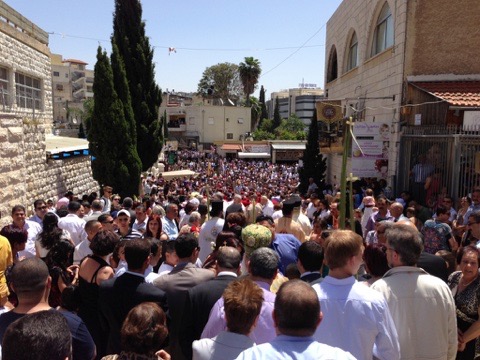
    With Christians around the world, we mark the beginning of Holy Week with the beautiful liturgy of the palms and at least a short procession.

    This is a different kind of service. It can be a bit chaotic at times. It is certainly longer than a ‘normal  Sunday’. But this is no normal day. This is the first day of Holy Week.

    The events of this week shape our identity as Christians.

    The events of this week are the very centre of our faith.

    For that reason, around the world today millions of Christians will join us in the observance of Palm Sunday.

    Because this is a year when the Eastern and Western calendars are in sync, there will be huge crowds in the Holy Land. To make this an even bigger week tomorrow is the eve of Passover, the night when the ancient paschal Seder will be observed by Jeweish households all around the world.

    Yes, this is a big week, but it is also a reminder that the people of God are divided and fearful. Instead of serving as a beacon of hope to the world, we hide our light under the bushel of religious tribalism.


    Flashback

    Around this time almost 2,000 years ago there was the original Palm Sunday procession.

    Jewish pilgrims were converging on the Jerusalem from near and far. Three times a year they were encouraged to be in the Holy City for the high Jewish festivals: Passover, Pentecost, and Tabernacles. But Passover was the big one. It celebrated the exodus from Egypt, liberation from slavery, and their unique calling to be the people of God.

    Among the Jewish pilgrims heading to Jerusalem was a group of Galileans led by Jesus of Nazareth.

    Jesus was bringing his prophetic message of the ‘kingdom (empire) of God’ from Galilee to Jerusalem, from the edges to the very centre of privilege and power.

    Jesus was living out—and inviting others also to live out—a new vision of God, a fresh glimpse of reality.

    This was the vision that would take him to the cross.

    This was the vision that sparked the birth of Christianity.

    This was a vision that the church too easily and too often forgets.

    Around the same time, even if not exactly the same day, another very different procession was making its way into Jerusalem on the western side of the city, the side nearest the Mediterranean Sea.

    Pontius Pilate, the Roman procurator for Judea and Samaria, was making his way to Jerusalem for Passover. He was not coming as a pilgrim, but as the Roman official responsible to keep all the pilgrims in order.

    There will be no liberation of the oppressed this Passover. Pilate is here to ensure that.

    The power of Rome has Jerusalem in its grip, and the ancient Jewish aspirations for liberation will be empty words again this Passover. Pilate is here to ensure that.

    Beyond the scope of their vision, the men at the head of these two processions were destined to meet within a few days time.

    One seemed very powerful.

    The other seemed very weak.

    The smart money was on the Empire. It always is.

    But God was with the little guy. God always is. That is the message of Passover.

    To help us tease out the significance of Jesus being in Jerusalem that first Palm Sunday, let’s watch a brief video clip from Michael Curry, Presiding Bishop of the Episcopal Church in the USA:

    2017 Easter Message from Michael Curry


    The beat of a different drum

    In that video clip, Michael Curry speaks of the ‘Jesus movement’. It is one of his favourite ways of speaking about the church.

    We are not best described as a multi-national institution operating for almost 2000 years and with vast resources. At our best, when we have not lost sight of the vision that Jesus embodied, we are the Jesus movement.

    The Jesus movement began with an alternative view of reality.

    Jesus saw the world differently. Jesus was counter-cultural. Jesus was out of step with his contemporaries.

    Palm Sunday invites us to be out of step. Palm Sunday calls us to walk against the grain, and not simply to go with the flow. Palm Sunday urges us to march to the beat of a different drum.

    Be warned.

    This is scary stuff.

    Holy Week was no Sunday School picnic.

    But Jesus calls us to see the world differently and then to act accordingly.

    In that choice to participate in the Jesus movement is the future of the church, and the future of the world.

  • Turning towards the cross

    Fifth Sunday of Lent (Year A)
    St Paul’s Church, Byron Bay
    St Oswald’s Church, Ewingsdale

    Today we enter the holiest period of the Christian year.

    In a week’s time we begin Holy Week, but today—a week out from Palm Sunday—we turn ourselves towards the cross. As Jesus set his face to go to Jerusalem (Luke 9:51), so the church invites us to turn our hearts towards the suffering, death and resurrection of Jesus.

    In traditional church terms, we are entering Passiontide. More about that shortly.


    Three High & Holy Festivals

    We have many holy days and festivals in the life of the church, but there are three that tower above all the others. They stand out from the pack, as it were.

    Christmas

    This is the first of the three, and it retains a strong grip on public consciousness as well. Even people with a minimal connection to the life of the church are aware that we are celebrating the incarnation, the coming of God among us in the person of Jesus.

    At the very heart of the Christmas celebrations is the sense of Emmanuel, God-with-us. Not just with us humans, but with all creation; since to become a human is also to become a child of the earth, and be part of the universal web of life.

    Not only are we formed from the star dust created at the Big Bang, but so was Jesus.

    God, Emmanuel, chooses to be immersed in the stuff of creation.

    Christmas not only invites us to see God in the Christ Child, but also to discern God all around us, between us, within us. This is an insight at the heart of Celtic Christianity, and we see it expressed so clearly in the great Celtic hymn, St Patrick’s Breastplate:

    Christ be with me,
    Christ within me,
    Christ behind me,
    Christ before me,
    Christ beside me,
    Christ to win me,
    Christ to comfort
    and restore me.
    Christ beneath me,
    Christ above me,
    Christ in quiet,
    Christ in danger,
    Christ in hearts of
    all that love me,
    Christ in mouth of
    friend and stranger.

    We are not alone in a universe with neither centre nor perimeter.

    Indeed, we are learning to appreciate the universe as in some sense the body of God, and God herself to be the beating, passionate heart at the centre of all that is. Emmanuel. God with us.

    This is one of the great theological insights of the Christian tradition.

    Easter

    This is the second of the three great Christian festivals, and it lasts several days.

    If Christmas offers us meaning, as children of a universe shaped and permeated by Emmanuel, then Easter offers us hope. More on that later, and throughout our Easter services.

    In brief, as Paul would say near the end of Romans 8: Nothing can separate us from God’s love …

    Pentecost

    The third of the three great Christian celebrations is Pentecost, or Whitsunday in traditional English language. We shall celebrate that festival around the time that my role here concludes, so let me just suggest at this stage that Pentecost celebrates the powerful presence of God’s Spirit in the world, in the church, and in our own lives.


    Passiontide

    From today onwards we can sense the approach of Easter.

    Our readings begin to focus on themes relating to death and new life.

    In many churches purple cloths will cover ornamentation considered too upbeat for such a solemn period of the year.

    Palms are cut and crosses are woven in preparation for Palm Sunday.

    We prepare to walk deeply into the mystery of our Lord’s passion, death and resurrection.

    This is not just an idea, it is something we do—and do together—as a community of faith.

    For clergy and lay ministers it includes the Chrism Eucharist in the Cathedral as we renew our commitment to ministry in service of the Christ, his people, and the world.


    Holy Week

    From Palm Sunday to Easter Day we mark the journey with special opportunities to gather for prayer and reflection. We do not just want to think about those final days before Jesus was killed, but—to the extent that we can—we want to enter deeply into the great story that lies at the heart of our faith (and our identity) as Christians.

    Palm Sunday – a celebration rich with colour and story

    Weekdays in Holy Week – daily Eucharists to engage deeply with the Gospel traditions

    Maundy Thursday – recalling the Last Supper, the feet washing, the lonely vigil, the arrest, the flight of the disciples

    Good Friday – choosing to stand at the foot of the cross

    Holy Saturday – gathering at Broken Head to light the holy fire and make the Easter Proclamation, Christ is risen!

    Easter Day – joining our worship with Christians around the world in this year when Eastern and Western Christians share the same date for Easter.

    The Valley of Dry Bones

    Our first reading from Ezekiel is the prophetic vision of a valley littered with dry bones.

    Such a scene suggests disaster, total disaster. In a culture where the dead are buried as soon as possible after death, a scene such as this suggests either a catastrophic military defeat or a major natural disaster. There have been no survivors. No-one remains to bury the dead.

    God asks Ezekiel, “Can these bones live?”

    It is a hopeless case. The obvious answer is, “No.”

    But God commands Ezekiel to speak to the bones, and a miracle occurs. It is a vision, not a description of an actual event. But it offered hope to the people of ancient Israel and Judah, that their nation would recover from the disasters that had befallen them.

    As we enter Passiontide, these ancient words invite us to see that even the Cross will not be the end of the story.

    Of course, coming at the end of a week when a cyclone has brought destruction and flooding in vast areas of our own country, this ancient vision rings with a sense of hope ass people begin to rebuild their lives.


    Lazarus

    The story of Jesus raising Lazarus back to life after he had been dead for 4 days is unique to the Gospel of John. Matthew. Mark and Luke all seem unaware of this episode, which is remarkable in itself.

    In the local church at Jerusalem, this story begins the celebration of Holy Week and Easter.

    For people of faith, the death and raising of Lazarus points to the death and rising of Jesus.

    The great Palm Sunday processions begins from the village of Bethany, which in Arabic is known as al-Eizariyya (the place of Lazarus). For Muslims and Christians alike, the name of this village is forever changed by the story of what happened there.

    Pray this week for the people of Bethany, al-Eizariyya.

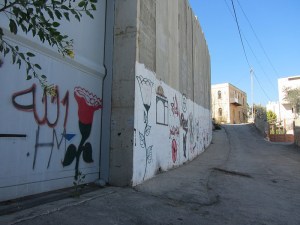
    Their village is now cut off from Jerusalem by a 10m concrete wall, erected by Israel to impose its definition of Jerusalem as a Jewish city on their Palestinian neighbours. As has happened now for several years, the ecumenical Palm Sunday procession next Sunday will not be able to start at Bethany, but will begin instead from Bethphage, which happens to be inside the Israeli wall of fear.

    Pray for a raising of people oppressed by military occupation for 50 years.

    Pray for the liberation of the occupiers whose hearts are turned to stone by fear.

    It has been too long. What can possibly change now?

    This too will pass. The dry bones will rise again, and a nation will find a fresh lease on life.


    People of Hope

    Today, and during the next two weeks, we are going to be reminded repeatedly that we are people of hope.

    We are sustained by hope even in the darkest days, because we believe that God turns death into life, reconciles those who are estranged, and vindicates the little people who seem to have little influence over the world in which we live.

    Further north we have watched in shock as Cyclone Debbie tore up communities and disrupted the lives of thousands of people.

    Closer to home we have seen homes, fields, roads and workplaces swallowed by raging flood waters during the past week as the remnants of that cyclone have brought massive rains to our own region.

    So this morning we pray for a blend of hope, courage and strength as people deal with continuing floods, clean up the mess, pick up the pieces of their lives, and rebuild.

    May the worst of times bring out the best from people, and may we discover yet again the power of God to sustain and revive us. That is, after all, our hope.

  • None so blind …

    St Paul’s Anglican Church, Byron Bay
    St Oswald’s Church, Broken Head
    FOURTH SUNDAY OF LENT
    26 March 2017

    Introduction

    Well, that was a long reading: all 41 verses of John chapter 9!

    It is part of a series of readings from John during these central weeks of Lent. All of them are lengthy readings, and there will be another long one next week:

    • Lent 2 – Nicodemus comes to speak with Jesus under cover of darkness
    • Lent 3 – the Samaritan woman encounters Jesus at Jacob’s well
    • Lent 4 – Jesus heals a man born blind
    • Lent 5 – Jesus raises Lazarus to life

    In these readings, we see John’s art as a storyteller on display. He begins with a simple event: a late-night visitor, a chance encounter at a village well, healing of a blind beggar, the death of a close friend.  John then describes some form of confusion or misunderstanding which Jesus seeks to resolve by further explanation, often in the form of a lengthy speech. In this case, we do not have the lengthy speech, but we do have a very elaborate account of the conflict that followed Jesus healing the man born blind.

    At first sight this is a very simple story. But—as we discovered when we teased it out during the Bible study on Wednesday morning—it is a rather more complex story that can be quite challenging when we pay close attention.

    John offers us a story that invites us to ask the question: Who is the blind person here? Who are the ones lacking the capacity to see what God is doing right in front of them?

    THE STORY

    Let’s review the story and then reflect on the sacred wisdom that God is offering us today.

    The story begins with a chance encounter of Jesus and his disciples with a blind beggar. Nothing unusual about that. Beggars were a common sight in the streets of first-century Palestine.

    The disciples travelling with Jesus demonstrate their profound lack of spiritual wisdom when they respond to the sight of the blind beggar. They ask,”Who sinned, this man or his parents, to cause this blindness?” That is very bad theology, and Jesus simply brushes it aside. The victims are not to be blamed. He was born blind. Our obligation is to do God’s work, not to add to their pain by heartless speculation about them being to blame for their predicament.

    Jesus heals the blind man.

    Well we expected that! This is, after all, the New Testament. But notice how Jesus went about this healing.

    In the other Gospels, Jesus often prefers for his miracles not to be widely reported. At times the beneficiary is sent home and told to remain silent.

    Not so in this story.

    Jesus goes out of his way to ensure his actions are noticed and that conflict with the local religious authorities (represented in this story by the Pharisees) is provoked.

    • No private healing out of the public eye.
    • A paste made of saliva and dirt is applied to the man’s eyes.
    • He is sent to the Pool of Siloam, a very conspicuous location.
    • All this happens on Shabbat.

    As the story unfolds the Pharisees react to this provocation. The extended middle section of chapter 9 is a series of interrogations as the healed man and his parents experience the hostility of Jesus’ opponents.

    • The healed man is interrogated.
    • His parents are summoned but refuse to cooperate.
    • The man is subjected to further questioning and then expelled from the Jewish community.

    Finally, as the story concludes, Jesus catches up with the guy he had healed earlier in the day. Their conversation brings the story to a close, and it ends with a remarkable—and highly confronting—statement by Jesus:

    I came so those who are blind may see,
    and so those who do see may become blind.

    What is John up to here? Why has he chosen to finish this healing story with such a statement?

    If we can engage with that question we may well stumble on the wisdom this text has to offer.

    SELECTIVE BLINDNESS

    As I reflected on this passage during the past week, I found myself thinking of the ancient English aphorism:

    There is none so blind
    as those who will not see.

    When I was searching for the history of this saying, one web website suggested that the lines were first used by the American singer, Ray Stevens in his 1970 song, ‘Everything is beautiful’.

    But in searching further I found that these words have a much longer pedigree, with the  earliest known version of this saying found in the writings of John Heywood in 1546:

    Who is so deafe, or so blynde, as is hee,
    That wilfully will nother here nor see.

    In John 9 there are none so blind as the Pharisees who simply do not wish to see what has happened in the experience of this man born blind. They are masters of the tradition, and this event lies outside their sacred knowledge.

    The temptation for us is to sit back with a sense of spiritual complacency.

    We are not like them. We can discern God at work in our midst. We can see clearly what is happening in our own lives.

    Unlike ‘them’ we do not suffer from selective, self-serving and so-very-convenient blindness.

    If only that were so.

    If only we were indeed free from spiritual myopia.

    WISDOM FOR TODAY

    How does this ancient story connect with us here in the Bay?

    Right now this parish community is at a critical moment in its history. The three or four months that I shall be serving here as your locum priest provide a window during which time we have some serious work to do.

    We need to glimpse a new future.

    That will be real challenge for us. It always is. But before we can call a new priest to serve here, this community needs to discern what is the work to which God is calling us, and not just the new priest.

    If we are able to glimpse a new future, even that will not be enough.

    We shall then need to find the courage to embrace the new and different future that we have glimpsed. That may be even more challenging than discerning what to do. But even that is not the end.

    We—and that really means, ‘you’—will also need the commitment required to pursue the new vision that we glimpse.

    That will be a long journey into an uncertain future.

    But it will begin with a new vision, the capacity to see into the future.

    So the question for us this morning is whether can see? Do we have a blind spot? Are we living with a collective case of spiritual myopia?

    Do we want to glimpse a different future for the Anglican Church in this community?

    Do we dare to look?

    That might be the blessing we seek from God as we come to the Table of Jesus for Holy Communion this morning. Open our eyes, Lord. Help us to see clearly. And give us the courage to embrace that future. Not for our sake, but the sake of those people in this community—whether locals or visitors—who need us to see and embrace a different way of being church here in the Bay.

    I do not yet know what that future will look like, but I am certain we shall never glimpse it unless we are willing to see what God has to show us.

  • A Sermon at the Well

    Second Sunday of Lent, Year A (19 March 2017)
    St Paul’s Anglican Church, Byron Bay

    It is not often we can identify the actual location of a Gospel episode, but today’s Gospel reading may be one of those rare times.

    Jesus’ conversation with a Samaritan woman in John 4 takes place at Jacob’s Well, the ancient water source for a series of Canaanite and Israelite villages now preserved under the archaeological site of Balata.

    The well still exists and has been venerated in a series of Christian churches, built one on top of the other. These days the web is located in a crypt below a large Orthodox Church build only in the last few decades.

    The well itself is very ancient, although the structures have been rebuilt and repaired after different phases of destruction over the years. As mentioned, the well is integrated with the nearby archaeological site of Balata, and that gives us increased confidence in the historicity of the well’s location.

    In today’s Gospel, the focus is not so much the antiquity of the well as the conversation between Jesus and the anonymous local woman that he meets at the well.

    In the biblical tradition, significant encounters often take place at wells. So anyone listening to this story in the ancient world will know immediately that they should expect something special to happen here.

    Let’s engage with the story and see what wisdom we may be able to draw from the ancient well of Scripture this morning.

    ENGAGING WITH THE TEXT

    Where is this story happening?

    The story is set in Samaria, a region with a troubled relationship with Jerusalem after centuries of deep religious rivalry between these two factions in the biblical community.  The Jewish Jesus in Samaria is rather like a Catholic priest in Ulster.

    The location is quite specific, as already mentioned. At the ancient well outside the village of Sychar.

    The well is a short distance outside the village, and the women will have come early in the day or late in the afternoon to draw water for their families.

    It is around noon.

    Only an outsider will come to draw water at that hour.

    Who is in this story?

    The lead character, of course, is Jesus. He is exhausted by his travels, but that is not the point of the story. Like many a male hero from the biblical narratives, he stops at the well and rests from his journey.

    The disciples play a minor role in this story, as Jesus has sent them away to the nearby village looking for supplies. By the time they return, the action is over.

    Then there is a woman with a complex personal history. She is a seeker, although not exactly a puritan. She has had a colourful history, but comes across as a feisty woman. This anonymous Samaritan woman is the central figure in our story.

    As an aside, let me mention that the later tradition could not leave this amazing woman nameless. She had seen the light, so to speak. She was given the name Photine (or sometimes Photina), which means “the luminous one”, as it is derived from the Greek word for ‘light’, φως (phos).

    What is happening in this story?

    At the heart of this story we see Jesus crossing boundaries:

    • The ethnic/nationalist hostility between Jews and Samaritans.
    • The gender divide between male and female in the Jewish world.
    • The additional gap between a holy man and a woman with a colourful sexual history.

    This story is about scandal, but we have so domesticated it that it now mostly functions as a pale echo of the original dramatic story. The disciples were rightly shocked to find Jesus speaking to such a woman when they returned from the village. We have been taught to think they were lacking in spiritual perception, but perhaps we are the ones who have not been able to see what is happening here.

    So let’s now stand back from the story and think about what is happening!

    REFLECTIONS

    None of this was in the mission plan for Jesus and his disciples as they made their way to Jerusalem. This was not how they usually did things in the Jesus group. Jesus was going off script. His handlers were getting anxious.

    • Do we think we are Jesus’ handlers?
    • Do we have a monopoly on the Jesus franchise in this place?
    • Do we have the only well from which people can draw the living water?

    Where are the places in the Bay where we may encounter people who will never be found inside these walls?

    • Are we willing to go off script?
    • Can we look beyond lifestyle to see the person?
    • Can we discern the fragment of the God story in their lives?
    • Can we call them on to the better rather than berate them for the past?
    • Can we be a safe place for people to explore the future into which God is calling them?
Exit mobile version