Month: February 2013

  • Bethsaida Study Leave

    In a couple of day’s time I will begin an extended period of time in Israel during a combination of study leave, recreation leave and on-site teaching for the annual Bethsaida archaeology project.

    From time to time I will post news and information on this blog site, but it will not be in the form of a daily journal until at least 16 June when the main group of Australian volunteers arrive.

    In very brief terms, as already indicated in a post on my Facebook page, I will be spending the next 4-5 months as follows:

    • I will be living at Tiberias, and commuting to Jerusalem every week or so for a few days a week, to work on the coins recovered from Bethsaida over the past 26 years and now held by the Israel Antiquities Authority.
    • During that period I also need to prepare two conference papers for the International Meeting of SBL at St Andrews in Scotland in mid-July. These will draw on the coin database, as a kind of ‘firstfruits’ from that research.
    • In amongst all that I plan to finish the draft of a new book.
    • Finally, I will have 5-6 weeks on the Bethsaida dig this year instead of the usual two week season. I am really looking forward to this increased involvement in the dig.

    No doubt my Arabic and my Hebrew skills will improve dramatically through this time, and that will contribute to my future teaching and research. As a sabbatical, I shall be aiming to keep my emails to a minimum, so I hope you will understand if I am not as accessible as usual.

  • Lent 3C (3 March 20143)

    Contents

    Lectionary

    • Isaiah 55:1-9 & and Ps 63:1-8
    • 1Cor 10:1-13
    • Luke 13:1-9


    Introduction

    This week’s Gospel focuses on the prophetic theme of repentance and also preserves echoes of a popular memory of Pilate as a cruel ruler.

    Josephus on Pontius Pilate

    The 1C Jewish historian, Flavius Josephus, refers to Pilate’s cruelty and nastiness as part his description of the events that would culminate in the Jewish-Roman War.

    Pilate and the Jews

    1. BUT now Pilate, the procurator of Judea, removed the army from Caesarea to Jerusalem, to take their winter quarters there, in order to abolish the Jewish laws. So he introduced Caesar’s effigies, which were upon the ensigns, and brought them into the city; whereas our law forbids us the very making of images; on which account the former procurators were wont to make their entry into the city with such ensigns as had not those ornaments. Pilate was the first who brought those images to Jerusalem, and set them up there; which was done without the knowledge of the people, because it was done in the night time; but as soon as they knew it, they came in multitudes to Caesarea, and interceded with Pilate many days that he would remove the images; and when he would not grant their requests, because it would tend to the injury of Caesar, while yet they persevered in their request, on the sixth day he ordered his soldiers to have their weapons privately, while he came and sat upon his judgment-seat, which seat was so prepared in the open place of the city, that it concealed the army that lay ready to oppress them; and when the Jews petitioned him again, he gave a signal to the soldiers to encompass them routed, and threatened that their punishment should be no less than immediate death, unless they would leave off disturbing him, and go their ways home. But they threw themselves upon the ground, and laid their necks bare, and said they would take their death very willingly, rather than the wisdom of their laws should be transgressed; upon which Pilate was deeply affected with their firm resolution to keep their laws inviolable, and presently commanded the images to be carried back from Jerusalem to Caesarea.
    2. But Pilate undertook to bring a current of water to Jerusalem, and did it with the sacred money, and derived the origin of the stream from the distance of two hundred furlongs. However, the Jews were not pleased with what had been done about this water; and many ten thousands of the people got together, and made a clamor against him, and insisted that he should leave off that design. Some of them also used reproaches, and abused the man, as crowds of such people usually do. So he habited a great number of his soldiers in their habit, who carried daggers under their garments, and sent them to a place where they might surround them. So he bid the Jews himself go away; but they boldly casting reproaches upon him, he gave the soldiers that signal which had been beforehand agreed on; who laid upon them much greater blows than Pilate had commanded them, and equally punished those that were tumultuous, and those that were not; nor did they spare them in the least: and since the people were unarmed, and were caught by men prepared for what they were about, there were a great number of them slain by this means, and others of them ran away wounded. And thus an end was put to this sedition.
    3. Now there was about this time Jesus, a wise man, if it be lawful to call him a man; for he was a doer of wonderful works, a teacher of such men as receive the truth with pleasure. He drew over to him both many of the Jews and many of the Gentiles. He was [the] Christ. And when Pilate, at the suggestion of the principal men amongst us, had condemned him to the cross, those that loved him at the first did not forsake him; for he appeared to them alive again the third day; as the divine prophets had foretold these and ten thousand other wonderful things concerning him. And the tribe of Christians, so named from him, are not extinct at this day.
    [Antiquities, XVIII.3.1-3]

    There is also a parallel account in The Jewish War:

    1. AND now as the ethnarchy of Archelaus was fallen into a Roman province, the other sons of Herod, Philip, and that Herod who was called Antipas, each of them took upon them the administration of their own tetrarchies; for when Salome died, she bequeathed to Julia, the wife of Augustus, both her toparchy, and Jamriga, as also her plantation of palm trees that were in Phasaelis. But when the Roman empire was translated to Tiberius, the son of Julia, upon the death of Augustus, who had reigned fifty-seven years, six months, and two days, both Herod and Philip continued in their tetrarchies; and the latter of them built the city Caesarea, at the fountains of Jordan, and in the region of Paneas; as also the city Julias, in the lower Gaulonitis. Herod also built the city Tiberius in Galilee, and in Perea [beyond Jordan] another that was also called Julias.
    2. Now Pilate, who was sent as procurator into Judea by Tiberius, sent by night those images of Caesar that are called ensigns into Jerusalem. This excited a very among great tumult among the Jews when it was day; for those that were near them were astonished at the sight of them, as indications that their laws were trodden under foot; for those laws do not permit any sort of image to be brought into the city. Nay, besides the indignation which the citizens had themselves at this procedure, a vast number of people came running out of the country. These came zealously to Pilate to Cesarea, and besought him to carry those ensigns out of Jerusalem, and to preserve them their ancient laws inviolable; but upon Pilate’s denial of their request, they fell (9) down prostrate upon the ground, and continued immovable in that posture for five days and as many nights.
    3. On the next day Pilate sat upon his tribunal, in the open market-place, and called to him the multitude, as desirous to give them an answer; and then gave a signal to the soldiers, that they should all by agreement at once encompass the Jews with their weapons; so the band of soldiers stood round about the Jews in three ranks. The Jews were under the utmost consternation at that unexpected sight. Pilate also said to them that they should be cut in pieces, unless they would admit of Caesar’s images, and gave intimation to the soldiers to draw their naked swords. Hereupon the Jews, as it were at one signal, fell down in vast numbers together, and exposed their necks bare, and cried out that they were sooner ready to be slain, than that their law should be transgressed. Hereupon Pilate was greatly surprised at their prodigious superstition, and gave order that the ensigns should be presently carried out of Jerusalem.
    4. After this he raised another disturbance, by expending that sacred treasure which is called Corban (10) upon aqueducts, whereby he brought water from the distance of four hundred furlongs. At this the multitude had indignation; and when Pilate was come to Jerusalem, they came about his tribunal, and made a clamor at it. Now when he was apprized aforehand of this disturbance, he mixed his own soldiers in their armor with the multitude, and ordered them to conceal themselves under the habits of private men, and not indeed to use their swords, but with their staves to beat those that made the clamor. He then gave the signal from his tribunal [to do as he had bidden them]. Now the Jews were so sadly beaten, that many of them perished by the stripes they received, and many of them perished as trodden to death by themselves; by which means the multitude was astonished at the calamity of those that were slain, and held their peace. [War, II.9.1-4]


    Pilate and the Samaritans

    1. BUT the nation of the Samaritans did not escape without tumults. The man who excited them to it was one who thought lying a thing of little consequence, and who contrived every thing so that the multitude might be pleased; so he bid them to get together upon Mount Gerizzim, which is by them looked upon as the most holy of all mountains, and assured them, that when they were come thither, he would show them those sacred vessels which were laid under that place, because Moses put them there So they came thither armed, and thought the discourse of the man probable; and as they abode at a certain village, which was called Tirathaba, they got the rest together to them, and desired to go up the mountain in a great multitude together; but Pilate prevented their going up, by seizing upon file roads with a great band of horsemen and foot-men, who fell upon those that were gotten together in the village; and when it came to an action, some of them they slew, and others of them they put to flight, and took a great many alive, the principal of which, and also the most potent of those that fled away, Pilate ordered to be slain.
    2. But when this tumult was appeased, the Samaritan senate sent an embassy to Vitellius, a man that had been consul, and who was now president of Syria, and accused Pilate of the murder of those that were killed; for that they did not go to Tirathaba in order to revolt from the Romans, but to escape the violence of Pilate. So Vitellius sent Marcellus, a friend of his, to take care of the affairs of Judea, and ordered Pilate to go to Rome, to answer before the emperor to the accusations of the Jews. So Pilate, when he had tarried ten years in Judea, made haste to Rome, and this in obedience to the orders of Vitellius, which he durst not contradict; but before he could get to Rome Tiberius was dead. [Antiquities, XVIII.4.1-2]

    It is not clear whether Luke 13:1-3 is a variant of the stories about Pilate that were known to Josephus, or an independent tradition. Gerd Lüdemann (Jesus, 2000:352) considers Luke to offer a garbled version of the Samaritan massacre, the event which led to Pilate’s recall.

    The event described in Luke 13:1-3 is not attested in any other source, but fits with what was commonly said about Pilate at the time. Whether a false report presented to Jesus by Pharisees–who may themselves have been acting in good faith or with ulterior motives–or an historical error by Luke, the alleged episode was credible in the tense realities of Roman-occupied Palestine.

    Quite apart from historical questions about the particular episode, the allegation reminds us of the brutality that was part and parcel of life in those circumstances. Jesus was neither the first nor the last Jew to be crucified by the Roman occupiers. He was one of 250,000 estimated victims. His suffering was no more brutal than that of thousands of other victims, and should not be made the focus of Christian interpretations of his death.


    The rock that followed them

    In 1 Cor 10:1-3, Paul draws on an ancient Jewish midrash about a miraculous rock that followed the tribes of Israel through the wilderness of Sinai, providing them with water for their sojourn.

    The tradition to which Paul refers is found in the targums to Numbers 21;16-20. In essence, the midrash addresses the question of how the water continued to be available to the Israelites even after they left the location of the rock from which Moses had miraculously drawn abundant water. Rather than imagine leaking rocks all over the Sinai desert, the ancient Jewish stiry tellers imagined this rock as one of the wonders of creation; indeed one of ten such special things created by God on the evening of the sixth day of creation.

    This miraculous rock followed the Israelites as they moved through the desert, and it was one of the three great exodus miracles (signs) given to Miriam, Aaron, and Moses.

    Where our minds question how a rock that supplied sufficient megaliters of water every day to support two million Israelites for 40 years could have failed to turn the Sinai green, Paul latches onto a quite different dimension of the legend. That mobile monolith was Christ—meeting their thirst then, just as he meets our thirst now. This is poetry not geology, myth not history; but all the more powerful for that—and, Paul suggests, a lesson for our instruction.

    Luke and the Good News of Repentance

    What ever the historical value of the tragic episodes recounted here, Luke has clearly used them to convey a message about making wise use of the time available for repentance:

    • 13:1-3 Galileans killed by Pilate
    • 13:4-5 Judeans killed by a collapsing tower
    • 13:6-9 The barren fig tree

    The concluding parable has a well-known parallel in the later Syriac versions of the much earlier (5C BCE) Story of Ahikar:

    And Ahiqar said to him, ‘O my boy! thou art like the tree which was fruitless beside the water, and its master was fain to cut it down, and it said to him, “Remove me to another place, and if I do not bear frult, cut me down.” And its master said to it, “Thou being beside the water hast not borne fruit, how shalt thou bear fruit when thou art in another place?”

    Luke is widely considered to be responsible for compiling this unit with its focus on repentance while there is time to do so, but there seems to be a strong sense that the parable itself may go back to Jesus.

    The Jesus Seminar voted the saying Pink; an outcome that suggests the “voice print” of Jesus can be discerned in this passage. In this case, the Fellows of the Seminar seem to have been persuaded by the surviving features of a story transmitted orally as well as by its “exaggerated hope” that God’s patience be sufficient to elicit repentance and reform.

    While his own methodological rigor would require John Dominic Crossan to exclude this saying from his inventory of historical Jesus materials (since it is attested only in a single source), Crossan still gives the passage a positive historical rating.

    The idea that Jesus proclaimed a message about the unstoppable love and mercy of God is one that most of us would find very attractive. It is therefore hard for us to reject from the core sayings of Jesus a text such as this. Just as we have stereotypes of Pilate and the brutality of the crucifixion, we have our personal and collective stereotypes of Jesus.

    One of the points where our stereotypes of Jesus clash with the canonical tradition is the story of Jesus cursing a fig tree that failed to provide him with fruit to relieve his hunger; even though it was not the season for figs. Scholars have considered the possible links between the cursing of the “barren” fig tree in Mark and Matthew, and this parable about a barren fig tree in Luke.

    After a detailed discussion of the tradition, John P. Meier (A Marginal Jew, II.884-96) concludes that “the story of the cursing of the fig tree has no claim to go back to the public ministry of the historical Jesus.” His suggestion for the development of the complex intertwining of words and deeds against the Jerusalem Temple and the cursing of the fig tree is as follows:

    In the beginning, quite early in the first Christian generation, the stories of Jesus’ triumphal entry, his cleansing of the temple, and the temple officials’ challenge to his authority were told as a single block of material, a narrative unit in which one story followed immediately upon the other. Perhaps we have here an early sign of a primitive yet already expanding Passion Narrative, reflected in different ways in both Mark’s and John’s tradition. As the passion tradition developed, a pre-Marcan author sought to emphasize that the cleansing of the temple was not an act of reform and purification but rather a prophetic judgment on the temple. He accomplished this by creating the story of the cursing of the fig tree and wrapping it around the account of the cleansing. By mutual interpretation, the two interrelated stories made clear that Jesus was not urging the temple’s reform but pronouncing the temple’s doom.

    Without necessarily accepting every element in that creative reconstruction of the prehistory of Mark 11, we can perhaps posit the parable of a barren fig tree—preserved as a saying of Jesus—as the creative spark for the process of enclosing the prophetic incident at the Temple within another symbolic narrative that drew on the ancient metaphor of the fig tree. Our short parable in this week’s lectionary may well have been the catalyst for the dramatic symbol of the cursed fig tree that was found without fruit when God came visiting!

    There is no opportunity for repentance in Mark’s version of the story. That may be one reason that Luke omitted the story of Jesus cursing the fig tree? (And why just one victim of Jesus’ fit of pique? Why not a curse upon all the fruitless fig trees on the hills around the city?)

    Perhaps Luke wanted to offer an interpretation of Jesus that offered hope to the poor without ostracizing his intended audience of wealthy and influential readers?

    Questions for reflection:

    • Where do we find the good news in the legacy of Jesus?
    • And how do we interpret it in ways that keep our comfortable church-attending selves reassured that all is well?


    Jesus Database

    Liturgies and Prayers

    For liturgies and sermons each week, shaped by a progressive theology, check Rex Hunt’s web site

    Other recommended sites include:


    Music Suggestions

    See David MacGregor’s Together to Celebrate site for recommendations from a variety of contemporary genre.
  • Lent 2C (24 February 2013)

    Contents

    Lectionary

    • Genesis 15:1-12, 17-18 and Psalm 27
    • Philippians 3:17-4:1
    • Luke 13:31-35 or Luke 9:28-36, (37-43)

    Despite the usual high degree of convergence in the lectionary texts during Lent, this week we see several options for the Gospel:

    • RCL: Luke 13:31-35
    • RCL alternative: Luke 9:28-36
    • RC: Luke 9:28b-36
    • ECUSA: Luke 13:(22-30)31-35
    • Australian Anglican: Luke 13:1-9

    If your community is using the Transfiguration readings this weekend, you may wish to consult the notes from the Last Sunday after Epiphany.

    This week’s notes will focus on the text in Luke 13:31-35, and specifically Jesus’ prophetic oracle against Jerusalem.

    Jesus and the Jerusalem Temple

    The traditional material dealing with Jesus’ words about the temple’s fate is particularly complex. That, in itself, may be an indicator of the sensitivity of the core question for Jesus’ earliest followers and especially so after the Jewish War of 66/73CE ended with the temple in ruins.

    There seem to be four intertwined traditions that have an explicit reference to the fate of the temple:

    1. A saying of Jesus threatening to destroy the temple
    2. A saying where Jesus foretells the siege of the city and its destruction
    3. A saying of Jesus predicting total destruction of the imposing structures (not one stone upon another)
    4. An incident where Jesus threatened or symbolically enacted the destruction of the temple

    The sources are cited in full in the Jesus Database but can be listed as follows:

    (1) Thom 71
    (2a) Mark 13:1-2 = Matt 24:1-2 = Luke 21:5-6*
    (2b) Luke 19:41-44*
    (2c) Mark 14:55-59 = Matt 26:59-61
    (2d) Mark 15:29-32a = Matt 27:39-43= (!)Luke 23:35-37
    (2e) Acts 6:11-14
    (2f) Mark 11:15-17 = Matt 21:12-13 = Luke 19:45-46
    (2g) Luke 13:34-35*
    (2h) Mark 13:14a = Matt 24.15a = Luke 21:20* (3a) John 2:13-17*
    (3b) John 2:18-22

    Texts marked with * are not in Crossan’s inventory of early Jesus traditions, but they are included in his Sayings Parallels:

    • 191. Jerusalem Indicted;
    • 449. Temple’s Symbolic Destruction;
    • 456. Temple’s Actual Destruction;
    • 457. Jerusalem Destroyed;
    • 466. Temple and Jesus.

    (Note: The item numbers in that collection do not match with numbers used in his later inventory that forms the basis of the Jesus Database.)

    Josephus, Jewish War 6.300-305

    The 1C Jewish historian, Flavius Josephus, has left us a fascinating description of prophecies against the city, this time featuring a later Jesus:

    Four years before the war [62 CE], when the city was at peace and enjoying the greatest prosperity, an uneducated peasant, one Jesus ben Hananiah came to the feast when all the people make booths for God [i.e., Sukkoth]. 301Suddenly he began to cry out through the temple:

    A voice from the East, a voice from the West,
    a voice from the four winds:
    a voice against Jerusalem and the temple,
    a voice against the bridegroom and the bride
    a voice against all the people!

    Crying this day and night he went through all the streets. 302But some of the prominent citizens, upset by this evil announcement, arrested the man and tortured him with many blows. But without a sound concerning himself or for the persons of his persecutors, he kept on crying the “voices” as before.
    303So thinking that the man was moved by some greater force, as indeed he was, the rulers brought him up before the Roman governor. 304Although he was there flayed to the bone by scourges, he neither begged nor wailed. But bending his “voices” to greater laments, he responded to each blow: “Woe to Jerusalem!” 305When Albinus,…who was then governor, asked him who he was and where he was from and why he uttered these things, he did not respond at all to these questions. But he would not stop repeating his lament for the city, until Albinus judged him a madman and released him.

    [SOURCE: Mahlon Smith, Into His Own ]

    Marcus J. Borg

    Borg devotes chapter 7 of his Conflict, Holiness and Politics in the Teachings of Jesus to a discussion of Jesus and the Temple, with an extended treatment of the texts found in this cluster.

    He begins with a brief study of Temple ideology in the Second Temple period, citing the interesting parallel from Paul in 1 Cor 3:16-17 which retains that traditional ideology even when reinterpreting “temple” as a reference to the physical body of the Christian:

    Do you not know that you are God’s temple and that God’s Spirit dwells in you?
    17If anyone destroys God’s temple, God will destroy that person. For God’s temple is holy, and you are that temple.

    Like Crossan (see below), Borg understands the “disruption in the Temple” as a prophetic or symbolic act (p. 182) that would never have been without some prophetic pronouncement to clarify its significance (p. 184).

    Borg then directs his attention to the prophetic saying as attested by the complex set of sayings relating to the fate of Jerusalem and its Temple that are placed on the lips of Jesus in our sources. He identifies 8 texts as example of “words against the Temple” and works his way through them carefully. Four of these sayings (Mark 14:58; 15:29-30; John 2:19; Acts 6:14) speak of Jesus as the agent of the Temple’s destruction and promise its replacement. They are also typically attributed to the enemies of Jesus. Another set of 4 sayings (Mark 13:2; Luke 19:42-44; 21:20-24; 13:34-35) are more likely to have originated from the prophetic oracle of Jesus that must have accompanied his symbolic act in the Temple. Borg also associates the enigmatic “desolating sacrilege” saying with this group.

    … if Jesus did not prophesy about Jerusalem, then who was the insightful prophet in that generation [after him] who was responsible for both this concern and this use of the Hebrew Bible? Of course, the rhetorical question does not imply that the oracles contain the ipsissima verba Jesus, but it does imply that they reflect the ipsissima vox Jesus. Quite probably the Jesus movement and perhaps the evangelist reworked the language of the threats, but without an initial impulse from Jesus, it is difficult to account for their presence in the primitive tradition. (p. 203)

    Then Borg draws upon the sayings of Jesus that speak of a threat of war coming on the inhabitants of Jerusalem: Luke 13:1-5; 23:27-31; 17:31 (= Mark 13:14b-16); Matt 26:52b.

    Unlike Crossan, Borg observes that Jesus’ prediction of the Temple’s destruction was not because Jesus opposed the Temple:

    … the destruction was not threatened because of an in-principle objection to Temple worship … Indeed, about the role of the Temple in Jewish worship (including sacrifice), Jesus did not say much. There is only the vague notion of “another Temple” coming from the mouths of accusers and mockers. Though the early Christian movement rapidly spiritualized the understanding of the Temple … there is little evidence for this in the synoptics. They never report that Jesus opposed the Temple on the grounds that it was obsolete, or that he objected to sacrifice in principle. Indeed, about the Temple as cult there is silence. (p. 211)


    John Dominic Crossan

    Crossan [Historical Jesus, 354-60] begins by noting the work of Jonathan Z. Smith (“The Temple and the Magician,” 1977) who established that a deep tension between traditional sacred places and the emerging role of the sacred person was typical of hellenistic societies in the last two centuries before the Common Era. Crossan goes on to outline the structural conflict between Jesus and the Temple as follows:

    Not only John the Baptist but, even more, Jesus, fit within that wider and profounder antinomy. John offered an alternative to the Temple but from another fixed location, from desert and Jordan rather than from Zion and Jerusalem. Jesus was, as we have seen, atopic, moving from place to place, he coming to the people rather than they to him. This is an even more radical challenge to the localized univocity of Jerusalem’s Temple, and its itinerancy mirrored and symbolized the egalitarian challenge of its protagonist. No matter, therefore, what Jesus thought, said, or did about the Temple, he was its functional opponent, alternative, and substitute; his relationship with it does not depend, at its deepest level, on this or that saying, this or that action. (p. 355)

    In seeking to unravel the complexities represented in this cluster of sayings, Crossan notes the “intensive damage control” to be observed in Mark 13, 14 and 15. Mark is at pains to argue that Jesus did not threaten to destroy the Temple himself; only his enemies make that assertion in Mark’s Gospel while Jesus (in ch 13) pointedly schedules the destruction of Jerusalem some time prior to the parousia of the Son of Adam. Still, as Crossan observes, that Markan spin only seeks to underline the fact that in certain Christian circles prior to and contemporary with Mark, there had been a belief that Jesus had said or done something to threaten destruction of the Temple and also that the destruction of the Temple was understood to be associated with the parousia.

    Behind the confused set of sayings about the fate of the Temple there lies the incident in which Jesus is described as taking some action to disrupt the functioning of the Temple. We seem to have two independent versions of this tradition: Mark (with Matt and Luke parallels) and John (where it occurs near the start of Jesus’ ministry). Mark’s version makes it clear that this event was a prophetic condemnation of the Temple, as the events in the Temple are bracketed by the story of Jesus cursing a useless fig tree and then returning to find it withered and dead.

    Crossan proposes that there was some historical action by Jesus that symbolically destroyed to Temple (at least to the extent of some disruption to its functioning), and that this action was accompanied by a prophetic saying by Jesus in which he foretold the complete and utter destruction of the site.

    Subsequently, according to Crossan, the story of the action in the Temple developed with various biblical texts being drawn into service to explain and justify Jesus’ actions. Meanwhile the saying came to reinterpreted as either a reference to the resurrection or to the parousia.

    Paula Fredriksen

    Fredriksen [Jesus of Nazareth, 207-14] discusses the so-called “Cleansing of the Temple” — a label she rejects but still uses as a sub-heading in her text. She works from a concern to counter any historical method that opposes Jesus to his contemporaries over issues of ritual observance. Drawing on Josephus’ description of the Jews’ universal piety and reverence for the Temple’s rites, Fredriksen asks “how then do we fit this report of Jesus’ action into the solid evidence we have that Jews everywhere overwhelmingly supported the Temple service?” (p. 209)

    In addition to other gospel accounts of Jesus’ attitude to the Temple, Fredriksen cites the widespread apocalyptic “expectation that, in the new age, in God’s kingdom, God would splendidly renew the current Temple or establish a new and more glorious one.” (p. 210) She then concludes that Jesus’ action in the Temple had a symbolic meaning:

    By overturning the tables, Jesus was symbolically enacting an apocalyptic prophecy: The current Temple was soon to be destroyed (understood: not by Jesus, nor by invading armies; but by God), to cede place to the eschatological Temple (understood: not built by the hand of man) at the close of the age. (p. 210)


    Jesus Seminar

    While “a substantial majority of the Fellows agreed that Jesus spoke some word against the temple” [The Five Gospels, 108], the weighted average reduced the outcome to Gray. Note the summary in Acts of Jesus (p. 121):

    The Fellows of the Jesus Seminar approved on three different occasions over a ten-year period the statement that Jesus performed some anti-temple act and spoke some word against the temple. More than a hundred scholars participated in these affirmations. In spite of the confidence that some historical event underlies the report of Mark, the Fellows have had serious difficulty in pinpointing what Jesus actually did.


    Gerd Lüdemann

    Lüdemann [Jesus, 77f & 87f] considers Mark 13 to be a Christian reworking of an earlier Jewish apocalypse created during the crisis over Claudius’ plans to erect a statue of himself in the Temple. However, he regards the saying in 13:2 as coming from traditional sources before it was used here by Mark. He also accepts the historicity of some incident in the Temple as the basis for the accusation that Jesus had threatened/announced its destruction.

    Muslim Jesus Traditions

    Tarif Khalidi [The Muslim Jesus, p. 91] provides the following example of how this memory of Jesus continued to function within the Muslim tradition long after the 1C:

    /71/ The disciples said, “Christ of God, look at the house of God—how beautiful it is!” He replied, “Amen, Amen, Truly I say to you, God will not leave one stone of this mosque upon another but will destroy it utterly because of the sins of its people. God does nothing with gold, silver, or these stones. More dear to God than all these are the pure in heart. Through them, God builds up the earth, or else destroys it if these hearts are other than pure. [mid-ninth century CE]

    Jesus Database

    Liturgies and Prayers

    For liturgies and sermons each week, shaped by a progressive theology, check Rex Hunt’s web site

    Other recommended sites include:


    Music Suggestions

    See David MacGregor’s Together to Celebrate site for recommendations from a variety of contemporary genre.

  • Lent 1C (17 February 2013)

    Contents

    Lectionary

    • Deuteronomy 26:1-11 & Ps 91:1-2,9-16
    • Romans 10:8b-13
    • Luke 4:1-13

    Introduction: Times and Seasons

    This week sees the beginning of the most tightly structured of the liturgical seasons as we move towards Easter:

    • SHROVE TUESDAY (in French, Mardi Gras or “Fat Tuesday”) has its origins in the need to consume any remaining eggs and fat prior to the commencement of the austerities of the Lenten fast. These days pancake parties provide an opportunity for a final celebration before we settle down to some serious spiritual efforts during Lent.
    • ASH WEDNESDAY marks the formal commencement of Lent, and is timed to allow 40 days of fasting without counting the Sundays (since they are always little festivals of the resurrection, and cannot be counted as a fast day). In the ancient church, people who had sinned so badly that they had been excluded from church life could prepare for readmission by public penance, including being marked with ashes as a sign of sorrow for their sins. From as early as 1,000 CE we find the rest of the community of faith was encouraged also to receive the ashes of repentance as a reminder that we have all sinned, and that all of us need constant forgiveness and restoration.
    • LENT is an extended period of personal and communal preparation for the great celebration of Easter. The idea of “giving something up for Lent” is familiar to a great many people, but these days we are often encouraged to take something up instead. The extra commitment that is the heart of our Lenten discipline may take the form of more regular attendance at worship, joining a study and discussion program, reviewing our personal priorities and values, or giving some additional time or financial support to peace and justice projects.
    • HOLY WEEK turns our attention to the commemoration of Jesus’ final days, beginning with the processions and songs of Palm Sunday through to his death on the cross and then the joy of Easter morning.

    The Scripture selections during this season will be as follows:

    Lent 1
    Deut 26:1-11 & Ps 91
    Romans 10:8b-13
    Luke 4:1-13

    Lent 2
    Gen 15:1-12,17-18 & Ps 27
    Phil 3:17-4:1
    Luke 13:31-35 or Luke 9:28b-36

    Lent 3
    Isa 55:1-9 & Ps 63:1-8, or Exod 3:1-8a, 13-15
    1Cor 10:1-13
    Luke 13:1-9

    Lent 4
    Josh 5:9-12 & Ps 32
    2Cor 5:16-21
    Luke 15:1-3,11b-32

    Lent 5
    Isa 43:16-21 & Ps 126
    Phil 3:4b-14
    John 12:1-8

    Jesus Tempted Three Times

    The idea of the hero facing various tests, including temptations to sell out to the dark side or to embrace a lesser good rather than pursue his high destiny, is a common theme in folk lore. Various parallels in Jewish texts, as well as similar traditions about the Buddha (and Muslim traditions about the temptations of Jesus), are listed at:

    Mark has a just a very brief tradition of Jesus being tempted in the wilderness:

    And the Spirit immediately drove him out into the wilderness.
    13He was in the wilderness forty days, tempted by Satan; and he was with the wild beasts;
    and the angels waited on him. [Mark 1:12-13]

    The Sayings Gospel Q — dated well before Mark by most NT scholars and thus a compilation more or less contemporary with the letters of Paul — already develops the tradition into a narrative with the familiar three episodes. The triple episodes most likely reflect the story-teller’s craft: both as an aid to his own memory and also for its impact on the audience. Despite the change in order of the Temple temptation, the close verbal similarity between the versions in Matthew and Luke is clear:


    The Jesus Seminar judgment on this tradition is seen in the following extract from The Acts of Jesus:

    In spite of the fact that these stories are legends, the Fellows were about evenly divided on whether Jesus went on a vision quest in the desert, or whether he fasted for an extended period and got hungry as a result. It seems plausible that he did so as he worked out his relation to John the Baptist and contemplated the future of his own work. Simple plausibility, however, can be a cruel friend to historical reconstruction, tempting the historian to assert facts when there is only speculation …
    In each temptation Jesus quotes from Deuteronomy … where Moses is described receiving the Law from Yahweh on Mount Sinai. The temptation story is thus a retelling of that ancient story but substituting Jesus for Moses. Just as Moses and Israel were tempted during their forty years in the wilderness, so Jesus was tempted during his forty days in the wilderness. Israel was tempted by hunger; that hunger was sated by the “manna that fell from heaven” each day. Jesus is tempted by hunger but refuses to turn stones into bread. Israel was tempted by idolatry; Jesus is tempted to worship Satan. In Jewish lore, this kind of retelling, or reimagining, is called haggadah.
    In Matthew, the temptations of Jesus are arranged in a spatial progress from low to high: first he is taken to the desert, then placed on the pinnacle of the temple, then carried to a high mountain. This corresponds to the progression in Matthew’s gospel: Jesus’ ministry begins in the desert and ends on a mountain in Galilee from which he ascends. Luke has altered the order of the temptations in order to have Jesus wind up in Jerusalem: for Luke Jerusalem is the navel of the earth, where the story begins and ends.

    John Dominic Crossan [The Historical Jesus] offers the following comments on the social location of those responsible for shaping this tradition:

    The basis of that triple temptation is an opposition between magic and exegesis, between miraculous activity and exegetical citation. Miracles are dismissed, obliquely, as self-serving acts such as turning stones into bread when one is hungry, as temptations such as descending from the pinnacle of the Temple, or as demonic collusion such as gaining the world by obeying Satan. Jesus overcomes Satan, and even his quotation of Psalm 91:11-12, by three separate quotations from Deuteronomy 8:3, 6:16, and 6:13. But that opposition between magic and exegesis also represents a distinction in class. Even though, in Lenksi’s typology, the peasant class is not the only one that could appreciate magic, it would take the retainer class to appreciate the scribal exactitude of such exegetical quotations. Peasants would, know, in their Little Tradition, the general themes and dominant emphases of the Great Tradition. But their illiteracy would preclude the fuel of citation practiced here by Satan and Jesus. All such precise search and verbatim application presume not only developed literacy but also exegetical dexterity. A retainer-class believer is now interpreting the peasant-class Jesus.

    Jesus Database

    Liturgies and Prayers

    For liturgies and sermons each week, shaped by a progressive theology, check Rex Hunt’s web site

    Other recommended sites include:

    Music Suggestions

    See David MacGregor’s Together to Celebrate site for recommendations from a variety of contemporary genre.

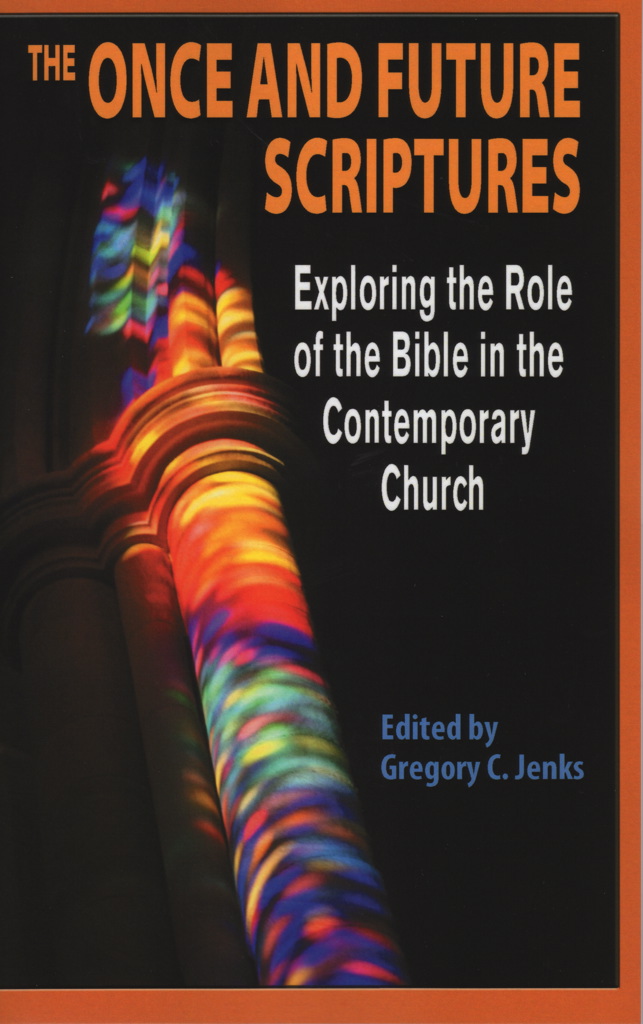
  • The Once and Future Scriptures

    OnceFutureScriptures_smallThe Once and Future Scriptures: Exploring the Role of the Bible in the Contemporary Church.

    Edited by Gregory C. Jenks | Foreword by Archbishop Phillip Aspinall
    Polebridge Press/Mosaic Publications, February 2013 | ISBN 978-159815-120-6

    Contributors: Peter Catt, Susan Crothers-Robertson, Marian Free, Gregory Jenks, Nigel Leaves, Steven Ogden, and Catherine Thomson.

    This collection of essays by priests from the Anglican Diocese of Brisbane explores the role of the Bible in the contemporary church. Embracing critical scholarship and the cultural challenges of our present times, senior clergy of the Diocese bring their hearts and their minds together in the service of the Gospel.

    Table of Contents

    Foreword
    Archbishop Phillip Aspinall

    Introduction
    Gregory C. Jenks

    1. The ‘problem’ of the Bible.
      Gregory C. Jenks
    2. Scripture as normative source in theology.
      Catherine Thomson
    3. Wisdom as well as facts.
      Steven Ogden
    4. Scripture, God-talk and Jesus.
      Nigel Leaves
    5. Scripture and formation for ministry.
      Susan Crothers-Robertson
    6. The Bible and liturgy.
      Marian Free
    7. Scripture, Science and the big story.
      Peter Catt

    Contributors

    Phillip Aspinall is Archbishop of Brisbane and Primate of the Anglican Church of Australia.

    Peter Catt is Dean of St John’s Anglican Cathedral, Brisbane. Peter has degrees in Science and Theology. While Dean of Grafton Cathedral he established the International Festival of Philosophy, Science and Theology.

    Susan Crothers-Robertson is Director of Formation at St Francis Theological College, Brisbane and an Adjunct Lecturer in the School of Theology at Charles Sturt University. Her doctoral research is investigating models of ministry formation within the Anglican Communion that are responsive to the realities of current and future church contexts.

    Marian Free has a PhD in New Testament from the University of Queensland, and is an Adjunct Lecturer in the School of Theology at Charles Sturt University. She teaches classes in New Testament and Christian Worship at St Francis Theological College. Marian is a Canon of St John’s Cathedral, Brisbane and Rector of St Augustine’s Parish, Hamilton in Brisbane.

    Gregory Jenks is a Senior Lecturer in the School of Theology at Charles Sturt University and Academic Dean of St Francis Theological College, Brisbane; Co-Director of the Bethsaida Excavations Project, Israel; and a Fellow of the Westar Institute, Willamette University. His publications include The Once and Future Bible: An Introduction to the Bible for Religious Progressives (2011) and The Origins and Early Development of the Antichrist Myth (1991).

    Nigel Leaves is Canon of St John’s Anglican Cathedral, Brisbane and an Adjunct Lecturer in the School of Theology at Charles Sturt University. He teaches undergraduate and postgraduate classes in Theology at St Francis Theological College. His publications include Religion Under Attack: Getting Theology Right! (2011), The God Problem: Alternatives to Fundamentalism (2006), Surfing on the Sea of Faith: The Religion and Ethics of Don Cupitt (2005), and Odyssey on the Sea of Faith: The Life and Writings of Don Cupitt (2004).

    Steven Ogden is Principal of St Francis Theological College, Brisbane, and an Adjunct Lecturer in the School of Theology at Charles Sturt University. He was formerly Dean of St Peter’s Cathedral, Adelaide. He is author of Love Upside Down: Life, Love and the Subversive Jesus (2011), I met God in Bermuda: Faith in the Twenty-First Century (2009), and The Presence of God in the World (2007).

    Cathy Thomson has a PhD in Theology from Flinders University of South Australia, and is currently the Rector of Christ Church, St Lucia in Brisbane.  A member of the Anglican-Lutheran International Commission, Cathy is an Adjunct Lecturer in the School of Theology at Charles Sturt University and teaches Theology at St Francis Theological College. She is co-editor of Ordination of Women: Interdenominational Perspectives (2006, with Victor C. Pfitzner), a contributor to Faithfulness in Fellowship (2001), and co-editor of Faithfulness in Fellowship: A Study Guide (2003, with Muriel Porter).

    Available from …

    The Cathedral Shop
    St John’s Anglican Cathedral, Brisbane
    07 3835 2281 or thecathedralshop@anglicanbrisbane.org.au

    Mosaic Resources

    MosaicResources


    Polebridge Press

    logo_PP_Eagle

  • Transfiguration Sunday (10 February 2013)

    Contents

    Lectionary

    • Exod 34:29-35 & Ps 99
    • 2Cor 3:12-4:2
    • Luke 9:28-36, (37-43)

    Introduction: Transfiguration Sunday

    In the Revised Common Lectionary the Sunday before Ash Wednesday is designated as Transfiguration Sunday, to provide a fitting conclusion to the Epiphany season. In communities that follow this sequence, the traditional Transfiguration theme on the Second Sunday of Lent is replaced by a more generic lenten set of lections. In Roman Catholic parishes and some other faith communities, the readings for Proper 5C will be used on this day.

    Transfiguration: the Underlying Tradition

    Crossan identifies the resurrection scene from GPeter as part of a very early document that he calls the Cross Gospel, and which he argues was the original passion narrative:

    GPet 35-40 (= ch2 9-10)

    /34/ Early, at first light on the sabbath, a crowd came from Jerusalem and the surrounding countryside to see the sealed tomb. /35/ But during the night before the Lord’s day dawned, while the soldiers were on guard, two by two during each watch, a loud noise came from the sky, /36/ and they saw the skies open up and two men come down from there in a burst of light and approach the tomb. /37/ The stone that had been pushed against the entrance began to roll by itself and moved away to one side; then the tomb opened up and both young men went inside.

    /38/ Now when these soldiers saw this, they roused the centurion from his sleep, along with the elders. (Remember, they were also there keeping watch.) /39/ While they were explaining what they had seen, again they see three men leaving the tomb, two supporting the third, and a cross was following them. /40/ The heads of the two reached up to the sky, while the head of the third, whom they led by the hand, reached beyond the skies. /41/ And they heard a voice from the skies that said, “Have you preached to those who sleep?” /42/ And an answer was heard from the cross: “Yes!” [Complete Gospels]

    In the Synoptic Gospels, the Transfiguration story appears as an event during Jesus’ lifetime with slight variations as set out this horizontal line synopsis.

    Finally, there is the reference to the Transfiguration from 2 Peter 1:17–18:

    17For he received honor and glory from God the Father
    when that voice was conveyed to him by the Majestic Glory, saying,
    “This is my Son, my Beloved, with whom I am well-pleased.”
    18/We ourselves heard this voice come from heaven,
    while we were with him on the holy mountain. [Complete Gospels]

    Comments

    In Mark’s original narrative — from which Luke develops his version of this story — the event which stands before the “six days later” is a comment by Jesus concerning the coming of the Son of Man in the glory of his Father with the holy angels, after which Jesus is represented as saying, “Truly I say to you, there are some standing here who will not taste death before they see the kingdom of God has come with power.” Since there is no reason to assume that the location of the transfiguration is due to anything other than Mark’s editorial decisions, the proximity between the promise and its possible fulfillment in the transfiguration is worth noting. While we tend to think of winged creatures in white gowns when we read “holy angels” the original meaning is closer to “holy messengers” and could easily encompass Moses and Elijah.

    The transfiguration itself is difficult to categorise. It seems to have some echoes of the baptism traditions with the heavenly voice affirming the beloved Son. Yet many scholars have wondered if this is not a displaced (and possibly garbled) Easter appearance story. The other alternative, that it may be an authentic religious experience that Jesus underwent and which was witnessed by a handful of his most intimate followers, also needs to be kept in mind.

    Bruce Chilton (in Rabbi Jesus) has argued that Jesus was initiated into the Jewish mystical traditions while a disciple of John the Baptist. While that cannot be established beyond question, we should not exclude the possibility that Jesus’ own sense of identity and mission was formed and nourished by profound religious experiences. Certainly others in the early Christian movement had such experiences, in which Jesus himself played a critical role.

    The words of the Jewish Jesus scholar, David Flusser, concerning Jesus’ baptism are worth noting here:

    We can well imagine the holy excitement of that crowd who had listened to the words of the Baptist. Having confessed their sins and awaiting the gift of the Holy Spirit to cleanse their souls from all the filth of sin, they plunged their bodies into the cleansing water of the river. Can it be that none of them would have had a special pneumatic-ecstatic experience in that hour when the Spirit of God touched them? (Jesus, p. 40)

    … many scholars are right in thinking that in the original account, the heavenly voice announced to Jesus, “Behold, My servant, whom I uphold, My chosen, in whom My soul delights; I have put My Spirit upon him, he will bring forth justice to the nations” (Isaiah 42:1). This form is probably the original, for the reason that the prophetic word fits the situation. (Jesus, p. 41)

    The gift of the Holy Spirit assumed a significance for Jesus that was different than for others who were baptized by John. Heavenly voices were not an uncommon phenomenon among the Jews of those days, and frequently those voices were heard to utter verses from scripture. Endowment with the Holy Spirit, accompanied by an ecstatic experience, was apparently something that happened to others who were baptized in John’s presence in the Jordan. (Jesus, p. 42)

    If, however, the heavenly voice intoned the words of Isaiah, Jesus must have understood that he was being set apart as the servant of God, the Chosen One. For him, the gift of the Holy Spirit, which was part of John’s baptism, held another special significance that was to become decisive for his future. None of the designations Son, Servant or Chosen One were exclusively messianic titles–the last two could also denote the special status of the prophetic office. By these titles, Jesus learned that he was now called, chosen, set apart. Nothing we have learned casts any doubt upon the historicity of Jesus’ experience at his baptism in the Jordan. (Jesus, p. 42)

    The presence of just the inner circle may be an authentic memory, or a bit of promotion to bolster their standing within the community. Given Mark’s generally critical attitude to the apostolic circle, it is unlikely that he added their names to the tradition. That detail was most likely already in the story as he received it and Luke has simply preserved the information intact.

    The location of the transfiguration up a high mountain is what the tradition would lead us to expect. High mountains were sacred places and thus ideal sites for theophanies. According to Jewish tradition, Moses spent 6 weeks (40 days) up the “mountain of God” in Sinai when getting a replacement copy of the Ten Commandments. Elijah retired to a mountain cave for his theophany. While no specific location is named in the gospels, later tradition chose to identify the “mount of the transfiguration” as Mt Hermon, the highest peak in the Galilee.

    More recently, Mt tabor has been celebrated as the site for the Transfiguration story. The wild taxi ride up the narrow winding road to the summit is almost enough to induce a vision of God in the contemporary pilgrim, but the clam setting at the top of this mountain invites us into reflection and an experience of holy silence.

    The appearance of Moses and Elijah alongside Jesus is a powerful claim to spiritual continuity with the most sacred traditions of ancient Israel. Interestingly, Luke does not follow Mark when he lists Elijah first. This reverses their chronological sequence in the biblical narrative, and flies in the face of later views of the relative significance of Moses and Elijah. However, that may reflect the significance of Elijah as the expected prophet of the End times. In general terms, their presence alongside Jesus speaks to the claim that Jesus was fulfilling the Law and the Prophets.

    Jesus Database

    Liturgies and Prayers

    For liturgies and sermons each week, shaped by a progressive theology, check Rex Hunt’s web site

    Other recommended sites include:

    Music Suggestions

    See David MacGregor’s Together to Celebrate site for recommendations from a variety of contemporary genre.